High-yield planting methods and key techniques for Pinellia ternata
How to plant Pinellia ternata for high yield? Please provide guidance. To achieve high yield when planting Pinellia ternata, the following key measures should be grasped: intercropping and relay cropping. Pinellia ternata prefers a warm, humid climate, can tolerate cold and shade, but is not drought-tolerant and fears strong light. Therefore, Pinellia ternata can be planted on gentle slopes with partial shade, or intercropped with wheat or in broadleaf...
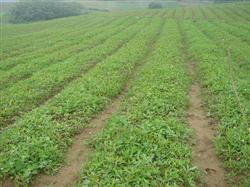
How to plant Pinellia ternata for high yield? Please provide guidance
To achieve high yield when planting Pinellia ternata, the following key measures should be grasped:
Intercropping and relay cropping. Pinellia ternata prefers a warm, humid climate, can tolerate cold and shade, but is not drought-tolerant and fears strong light. Therefore, Pinellia ternata can be planted on gentle slopes with partial shade, or intercropped with wheat or in broadleaf fruit tree orchards, and can also be intercropped with tall-stemmed plants such as corn, rapeseed, sorghum, and legumes. In this way, Pinellia ternata is managed at the same time as crops or economic forest fruits are managed, which both makes rational use of the land and increases benefits.
Carefully cultivate improved varieties. Excellent seeds are an important guarantee for obtaining high yield when planting Pinellia ternata. First, select superior individual plants with pure variety characteristics, free from pests and diseases, and with robust growth as mother plants for seed collection. Second, the mother plants used for seed collection should be cultivated separately with strengthened water and fertilizer management. Third, to prevent variety mixing, separate harvesting and separate storage should also be carried out. Finally, promptly harvest mature, plump, large, and heavy tubers as seeds.
Cover with plastic film in early spring to raise seedlings ahead of time. According to experiments, when sprouting is promoted at 20°C to 25°C, and planting is carried out with plastic film mulching when most bud sheaths turn white, seedlings emerge 30 days earlier than when neither sprouting is promoted nor film is applied; and 25 days earlier than when sprouting is not promoted and only plastic film is applied. At the same time, sprouting promotion plus film mulching increased yield by 52.6% compared with the control, while no sprouting promotion with only film mulching increased yield by 29.8% compared with the control. Planting after buds are sprouted allows Pinellia ternata seeds to complete the internal physiological changes before germination in advance, and covering with plastic film raises the ground temperature and reaches the temperature required for seedling emergence earlier, so the buds quickly grow out of the ground. In addition to preserving moisture, increasing temperature, and advancing seedling emergence, sprouting promotion with film mulching can also loosen the soil, which is beneficial to root growth and development, enables the plants to resist drought and waterlogging, and always maintains vigorous absorption and physiological functions, laying the foundation for high yield of Pinellia ternata.
When covering with film, the plastic film should be laid flat and tightly against the ridge of the bed, compacted with soil, and made tight, flat, and firm. When the air temperature stabilizes at 15°C to 18°C and about 50% of seedlings have emerged, remove the plastic film to prevent high temperatures inside the film from scorching young seedlings. Before removing the film, seedling hardening should be carried out first. The method is to open the film at both ends of the bed at noon to ventilate and dissipate heat, then seal it again in the evening, and after several consecutive days remove it completely.
Covering the bed surface during the high-temperature period delays seedling collapse. After mid-to-late June, the high-temperature season gradually begins. Keeping the bed surface moist and delaying the withering time of the aboveground parts of Pinellia ternata as much as possible is an important measure to increase the yield of Pinellia ternata. According to experiments, when rice straw and wheat straw (bran) were respectively covered from mid-May to mid-June each year, only 5% collapsed by late July, with good growth, while the control group had a collapse rate as high as 78%. From this it can be seen that ground covering can correspondingly prolong the growth period of Pinellia ternata, and the photosynthesis period is also relatively prolonged, so more photosynthetic products accumulate in the tubers, and the larger the tubers produced, the higher the yield, with a yield increase of 123.78% compared with the control. Moreover, weeds in the covered area were significantly fewer than in the uncovered area, and the incidence of leaf rot was significantly reduced, which is also an important reason for the yield increase of Pinellia ternata. If rainfall is heavy and soil moisture is excessive, the covered wheat straw should also be removed in time to prevent rot of underground tubers and reduced yield.
Intertillage and weeding. Pinellia ternata plants are short, so during the growth period the soil should be loosened and weeds removed frequently to avoid weed infestation. The depth of intertillage should not exceed 5 cm to avoid damaging the roots. Because the roots of Pinellia ternata grow around the tubers, and its root system is concentrated in the 12 cm to 15 cm surface soil layer, intertillage should be shallow rather than deep, and weeds should be removed early, when small, and completely. When Pinellia ternata is planted in early spring and covered with plastic film, weeds such as foxtail grass, crabgrass, goosegrass, lovegrass, nutgrass, amaranth, small bindweed, lambsquarters, and purslane also emerge at the same time as its seedlings, and in large numbers, affecting the yield of Pinellia ternata. Therefore, acetochlor can be selected to control pre-emergence weeds of Pinellia ternata. Spraying herbicide on the ground in early spring and then covering with plastic film has a very good control effect on many kinds of weeds (for specific usage, operate according to the provisions in the drug instructions). In addition, in artificial cultivation of Pinellia ternata, different herbicides can also be selected according to different seasons. For spring-planted Pinellia ternata, quizalofop-p-ethyl is suitable, and for autumn planting, either quizalofop-p-ethyl or acetochlor can be used.
Spraying medicinal fertilizers to promote high yield. Practice shows that spraying sodium sulfite solution during the high-temperature and drought period can increase the yield of Pinellia ternata. This is because when the summer temperature continues to reach as high as 30°C, due to high temperature and strong light, the respiration of Pinellia ternata becomes too strong, and the substances consumed exceed those accumulated by photosynthesis, leading to destruction of the protoplasmic structure of cells and "seedling collapse." For Pinellia ternata production, "seedling collapse" shortens the growth period of Pinellia ternata and seriously affects its yield. Therefore, taking measures in production to delay or reduce summer "seedling collapse" of Pinellia ternata is an important condition for achieving high yield and high quality. In cultivation, in addition to taking appropriate shading and sprinkler irrigation to reduce light intensity, air temperature, and ground temperature, a 0.01% solution of the plant respiration inhibitor sodium sulfite can also be sprayed, and a mixed solution of 0.01% sodium sulfite, 0.2% urea, and 2% superphosphate can also be sprayed, to inhibit the respiration of Pinellia ternata and reduce the consumption of photosynthetic products, thereby delaying and reducing "seedling collapse," which can achieve obvious yield-increasing effects.
Click to get more Pinellia ternata planting techniques
Click to get more medicinal herb planting techniques