Greenhouse Cultivation Methods and Technical Key Points for Pinellia ternata
How to grow Pinellia ternata in a greenhouse? Please introduce the methods. Pinellia ternata, also known as three-leaf pinellia, three-step jump, and hemp jade fruit, is a commonly used Chinese medicinal herb, with wild distribution throughout both northern and southern China. In recent years, due to people's reclamation and utilization of barren hillsides and the heavy use of herbicides in farmland, its ecological environment has been damaged, resources have been decreasing year by year, and prices...
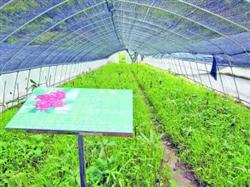
How to grow Pinellia ternata in a greenhouse? Please introduce the methods
Pinellia ternata, also known as three-leaf pinellia, three-step jump, and hemp jade fruit, is a commonly used Chinese medicinal herb, with wild distribution throughout both northern and southern China. In recent years, due to people's reclamation and utilization of barren hillsides and the heavy use of herbicides in farmland, its ecological environment has been damaged, resources have been decreasing year by year, and prices have been continuously rising. According to surveys, Pinellia ternata commodities are currently scarce in the seventeen specialized medicinal herb markets nationwide, with supply falling short of demand, and market prices holding firm at 36-42 yuan/kg. Therefore, the market prospects for artificial cultivation of Pinellia ternata are very broad. In recent years, relevant scientific and technical personnel at the GAP cultivation base of our Chinese medicinal herb association have, through introduction and cultivation experiments, successfully domesticated wild Pinellia ternata, achieving a yield of 160 kg per mu (dry product). After deducting costs, the profit per mu exceeds 3500 yuan, achieving good economic benefits. The key points of its introduction and cultivation technology are now introduced as follows:
I. Selection of planting site.
Pinellia ternata prefers a mild and humid climate, is cold-tolerant and shade-tolerant but not drought-tolerant, and is suitable for cultivation on hillsides and flat land. It can be intercropped with fruit trees, and can also be intercropped with tall-stemmed plants such as corn, rapeseed, and wheat. Sandy soil is best for planting; heavy clay and low-lying waterlogged plots are not suitable for cultivation.
II. Planting.
The suitable sowing period for Pinellia ternata is from November in winter to April of the following spring. Before sowing, in conjunction with land preparation, apply 2000 kg of barnyard manure or compost and 25 kg of superphosphate per mu, plowing them into the soil as base fertilizer. At sowing time, plow and turn once more, then break up the soil finely and rake it level to make beds. Pinellia ternata is mainly propagated by tubers and bulbils. Tuber propagation is best; plant immediately after digging, digging holes at a row spacing of 17-20 cm and plant spacing of 7-10 cm, planting two to three tubers per hole, using 40-50 kg of tubers per mu. Do not cover with too much soil; 1-2 cm is appropriate. After covering with soil, water promptly if the soil is dry. For bulbil propagation, in summer and autumn when the old leaves are about to wither and the bulbils under the leaf stalks have matured, take the mature bulbils and plant them in rows, with the same row and plant spacing as tuber propagation.
III. Field management
(1) Weeding:
Before the seedlings close the rows, weed promptly. The depth of intertillage should not exceed 5 cm to avoid damaging the roots. Because the roots of Pinellia ternata grow around the tubers, with the root system concentrated in the 12-15 cm surface soil layer, intertillage should be shallow rather than deep.
(2) Fertilization:
After the seedlings emerge completely, apply 1000 kg of human and livestock manure water at 1:3 per mu. During the bulbil formation stage, apply 2000 kg of human and livestock manure per mu. When the daughter pinellia exposes new buds and the mother pinellia sheds its shell and grows new roots, splash irrigate with manure water at 1:10. Afterwards, according to the growth situation, apply 25 kg of decomposed cake fertilizer, 20 kg of superphosphate, and 10 kg of urea per mu.
(3) Pest and disease control:
The diseases to which Pinellia ternata is relatively prone are leaf spot disease and viral disease. For leaf spot disease, spray with Bordeaux mixture at 1:1:120 or 65% zineb at 500 times dilution, once every 7-10 days, for 2-3 consecutive times. For viral disease, irrigate with 5% lime milk, and promptly pull out diseased plants and burn them in a centralized manner. The main pest is the red hawk moth. The control method is spraying with 90% crystalline trichlorfon at 800-1000 times dilution, once every 5-7 days, for 2-3 consecutive times.
IV. Harvesting and processing.
The growth period of Pinellia ternata is 180-210 days. For tuber propagation, depending on the sowing season, it can be harvested in the same year or the following year. Generally, harvest after the stems and leaves wither and the plants fall over in summer and autumn. Choose a sunny day and carefully dig out the tubers, avoiding damage. Shake off the mud and sand and place them in baskets, covering them well. Do not expose them to strong sunlight, otherwise the skin will be difficult to remove. During processing, first grade the fresh pinellia into large, medium, and small sizes, then put them separately into hemp bags, gently strike them a few times on the ground, then pour them into a vat of clean water and rub repeatedly until the outer skin is completely removed, then take them out and sun-dry until fully dry.
Pinellia ternata is generally sown from February to April in spring. Because the temperature is relatively low at this time, the seed tubers sprout slowly. Therefore, before sowing, the seed tubers can be pre-sprouted indoors on a hotbed, maintaining the pre-sprouting temperature at around 20°C, and buds will emerge in 15 days. Alternatively, the seed tubers can be placed outdoors in a plastic greenhouse at 20-25°C and treated continuously for 15 days. When the bud sheaths are found to turn white, sow the seed tubers with buds into the previously prepared field, cover with plastic film. The plastic film only needs to cover the rows where the seed tubers are planted. Once the seedlings emerge evenly, the film can be removed.
Click to get more Pinellia ternata cultivation techniques
Click to get more medicinal herb cultivation techniques