Cultivation Methods and Key Technical Points for the Chinese Medicinal Herb Angelica dahurica
How do you cultivate the Chinese medicinal herb Angelica dahurica? What are its environmental requirements? An introduction to Angelica dahurica cultivation techniques: 1. Biological characteristics of Angelica dahurica. Angelica dahurica prefers warm and humid conditions with plenty of sunlight; it fears high temperatures, can tolerate cold, and has strong adaptability. 1. Light requirements. Experimental studies have found that light can promote the germination of Angelica dahurica seeds...
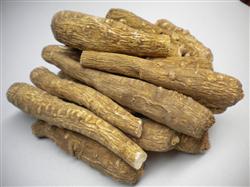
How do you cultivate the Chinese medicinal herb Angelica dahurica? What are its environmental requirements? An introduction
Angelica dahurica cultivation techniques:
1. Biological characteristics of Angelica dahurica
Angelica dahurica prefers warm and humid conditions with plenty of sunlight; it fears high temperatures, can tolerate cold, and has strong adaptability.
1. Light requirements
Experimental studies have found that light can promote the germination of Angelica dahurica seeds; sufficient light makes the above-ground parts grow vigorously, and consequently the underground main root becomes thick and long. Plants grown in shaded locations are shorter, have a smaller leaf area index, and their main roots do not grow thick.
2. Temperature requirements
During growth and development, Angelica dahurica has a relatively wide range of temperature adaptation. Seed germination prefers alternating temperatures; under constant temperature the germination rate decreases noticeably. The optimal alternating temperature range for seed germination is 10-25°C; in winter, under moist soil conditions, seedlings can withstand low temperatures of -6°C to -8°C. In areas north of the Yellow River, the above-ground parts wither in winter and the plant overwinters as a perennial root, while in areas south of the Yangtze River the above-ground parts can still survive the winter, only growing more slowly, and only when the hot summer arrives do the leaves sometimes turn yellow and wither.
3. Water requirements
Moist soil is the standard; it fears both drought and waterlogging. Lack of water after sowing will affect emergence; drought during the seedling stage easily causes missing plants, and low winter temperatures make frost damage likely. The vegetative growth period requires more water. Too much water in the mid-to-late growth period easily causes root rot, but lack of water makes the roots prone to lignification, affecting the quality of the medicinal material.
4. Soil requirements
Sandy loam, black sandy soil, or alluvial loam with deep soil layers and loose texture is best. Planting in rather clayey or compacted soil easily leads to short main roots with many forks, affecting yield and quality.
5. Phenological periods
Angelica dahurica is generally sown in autumn. Under suitable temperature and humidity conditions, seedlings emerge in about 15-20 days. The seedlings grow slowly at first and overwinter as small plants; the second year is the vegetative growth period, with the plants growing most vigorously in April-May and the roots growing fastest from late April to June. After mid-July the plants gradually turn yellow and die, and the nutrients in the above-ground parts have all been transferred to the underground roots, entering a brief dormant state (this is the best time to harvest the medicinal material). In late August, when the weather turns cool, the plants grow new leaves again and continue into the third year's reproductive growth period. They begin bolting in late April, bloom successively from mid-May to early June, and the seeds mature in sequence from late June to mid-July. Because flowering and seed production consume a large amount of nutrients, the roots of plants kept for seed often become lignified and hollow or even rot, and cannot be used medicinally. The germination rate of mature seeds in the autumn of the same year is 70%-80%; seeds from the following year have a very low germination rate or even fail to germinate.
When cultivating Angelica dahurica, roots are harvested at 2 years and seeds at 3 years; the two cannot be harvested together.
2. Site selection and land preparation
Angelica dahurica is not demanding about the previous crop; even continuous cropping land where the previous Angelica dahurica crop grew well can be used. It is best to choose sandy loam that is level, sunny, with a deep cultivated layer, loose and fertile, and well-drained.
After the previous crop is harvested, apply 2500-5000 kg of decomposed compost or barnyard manure, 100 kg of cake fertilizer, and 50 kg of phosphate fertilizer per mu as base fertilizer; fertile land may be given less. After applying, plow to a depth of more than 1 chi (approx. 33 cm); after plowing, sun the soil to let it weather fully, then plow once more. Because the roots of Angelica dahurica grow relatively deep, when preparing the land, plow deeply and harrow finely, and make the fertility of the upper and lower soil layers uniform, to prevent excessive fertility in the surface soil causing many fibrous roots and affecting yield and quality. After leveling and fine harrowing, make beds 15-20 cm high and 1-2 m wide; the bed surface should be level to facilitate irrigation and drainage, and the surface soil should be level and fine to help seedlings emerge.
Section 3: Propagation methods of Angelica dahurica
Propagated by seed, generally by direct sowing; transplanting is not suitable, as transplanted plants have many forked roots and poor main root growth, affecting yield and quality.
1. Sowing time
In production, sowing time must be strictly observed; sowing at the right time is one of the important steps for obtaining high yields. Sowing too early makes the seedlings grow too vigorously before winter, and the following year some plants will bolt and flower early, with roots becoming lignified or rotting and unusable medicinally, thus affecting yield. Sowing too late brings falling temperatures that affect germination and emergence, and the seedlings are prone to frost damage, grow poorly, and yield low. Because seeds from the previous year have a low germination rate while fresh seeds have a high germination rate, fresh seeds harvested in the current year must be selected for sowing in production. Autumn sowing is generally the main method; spring sowing gives low yields and poor quality. The suitable sowing time varies with climate and soil fertility. When temperatures are high, sow later; otherwise, sow earlier. Fertile soil allows slightly later sowing; the opposite calls for slightly earlier sowing.
The suitable autumn sowing time varies by location. According to local practices, in Henan autumn sowing is around White Dew, in Hebei between End of Heat and White Dew, in Sichuan between White Dew and Autumn Equinox, and in Zhejiang 10 days before Cold Dew; in areas with higher temperatures, Autumn Equinox to Cold Dew is suitable. Spring sowing is done between March and April.
2. Sowing methods
Drilling, hill sowing, and broadcasting are all acceptable, but drilling is generally most common.
1. Drilling method: mostly used in Zhejiang, Henan, and Hebei. With row spacing of 25-30 cm, open shallow furrows (about 4-5 fen, approx. 1.3-1.7 cm deep), sow the seeds evenly into the furrows, and cover with a thin layer of fine soil. Generally, 1-1.5 kg of seed is used per mu.
2. Hill sowing method: mostly used in Sichuan. With row spacing of 30-35 cm and hill spacing of 23-27 cm, open hills with flat bottoms, sow 7-10 seeds per hill, using 0.5-0.8 kg of seed per mu.
3. Broadcasting method: used in Zhejiang. Scatter the seeds evenly over the already harrowed bed surface, then cover with a thin layer of soil and rice straw. However, this method is rarely used at present.
Before sowing, the seeds may be soaked in warm water overnight, or mixed evenly with sandy soil and piled moist for 1-2 days before sowing. There are also reports of spraying seeds with a 2% potassium dihydrogen phosphate aqueous solution, stirring and then sealing the seeds for 8 hours so the solution is fully absorbed by the seeds before sowing, which can promote earlier emergence with uniform and higher emergence rates. Generally, seedlings emerge within 15-20 days after sowing. There are also reports that using plastic film mulch can advance the emergence period by about 10 days compared with the control group, with uniform emergence, and the emergence rate is 4% higher than the control group. However, if sowing is done at the suitable sowing time and there is no obvious abnormal severe weather, plastic film mulch is generally unnecessary.
After sowing, generally cover with a thin layer of fine soil and press lightly so the seeds make close contact with the soil, then evenly spread about 1000 kg of decomposed barn manure; some do not cover with soil after sowing but immediately apply about 1000 kg of dilute human and animal manure water per mu, then cover with plant ash mixed with human and animal manure water so the seeds are not exposed, and then press with a wooden board or tread lightly to aid germination.
Section 4: Field management of Angelica dahurica
1. Thinning and final thinning
Angelica dahurica seedlings grow slowly, and in the year of sowing, thinning is generally not done. After the seedlings turn green again in early spring of the second year, when the seedlings are about 5-7 cm tall, carry out the first thinning, removing the overly dense and weak seedlings. For drilling, leave one plant about every 5 cm; for hill sowing, leave 5-8 plants per hill. For the second thinning, leave one plant about every 10 cm or leave 3-5 plants per hill. Around Qingming, when the seedlings are about 15 cm tall, carry out final thinning, with a plant spacing of 13-15 cm or leaving 3 plants per hill, staggered in a triangle to facilitate ventilation and light penetration. During final thinning, pull out the large seedlings that are growing too vigorously with blue-white leaf stalks, to prevent early bolting and flowering. The number of thinnings can be 1-3 times depending on the specific situation.
2. Intertillage and weeding
This should be done together with thinning and final thinning. Before final thinning, weeds can be removed by hand or with a shallow hoe; during final thinning, weed, loosen the soil, and thin at the same time, then gradually deepen later. The number of times depends on the degree of soil dryness and moisture and the growth of weeds. When loosening the soil, be sure not to damage the main root, otherwise the plant is prone to disease. Once the leaves gradually grow larger and the bed surface is closed and shaded, weeding is no longer necessary.
3. Topdressing
Angelica dahurica is tolerant of fertilizer, but generally little or no fertilizer is applied before spring, to prevent excessively vigorous seedling growth and early bolting and flowering. After spring, vegetative growth becomes vigorous, and topdressing can be done 3-4 times. The 1st and 2nd times are after thinning and intertillage, and the 3rd and 4th times are after final thinning and before the rows close. Fertilizing should be done on sunny days; it is not suitable to fertilize on the day just after rain clears or after intertillage and weeding. Fertilizer types may include human and animal manure, decomposed cake fertilizer, pen manure, urea, and so on. For the first fertilization, the fertilizer should be thin and small in amount, for example, applying 10 loads of dilute human and animal manure per mu; afterward it can gradually be made more concentrated and increased, for example 30-40 loads. The application before the rows close can include phosphate and potassium fertilizers, such as 20-25 kg of superphosphate, to promote thick and strong roots. There are reports that in the topdressing before the rows close, applying 25 kg of calcium magnesium phosphate fertilizer and 5 kg of potassium chloride, followed immediately by earthing up, can prevent lodging and promote growth.
The number of topdressings and the amount each time can also depend on the growth of the plants. If, when the rows are about to close, the leaves are light green and not very vigorous, another topdressing can be applied; or if at this time the leaves are dark green and growth is vigorous, topdressing can be stopped.
4. Irrigation and drainage
Angelica dahurica likes water but fears waterlogging. After sowing, if the soil is dry, water immediately; afterward, if there is no rain, water every few days to keep the bed surface moist before the seedlings emerge, which helps emergence. During the seedling stage, the soil should also be kept moist to prevent yellow leaves and the formation of many lateral roots. Before the seedlings overwinter, water thoroughly once. Henan has the experience that "wet freezing is best; dry freezing does not easily survive," and Hebei has the experience that "in winter Angelica dahurica only dies of dryness, not of freezing." After spring of the following year, irrigate at appropriate times along with topdressing, and especially in the dog days keep moisture sufficient. If in the rainy season there is standing water in the field, open ditches promptly to drain it, to prevent root rot from waterlogging and the occurrence of disease.
5. Removing bolting plants
In May of the second year after sowing, some plants will bolt and flower; their roots cannot be used medicinally, and the seeds they produce cannot be used as seed, because their next generation will bolt early. Therefore, to reduce the consumption of nutrients in the field, bolting plants should be pulled out promptly when found.
Appendix: Measures to prevent early bolting of Angelica dahurica
In production, some Angelica dahurica plants often bolt and flower early in the second year, generally 10%-20%, and in severe cases more than 30%, seriously affecting the yield and quality of the product. Based on traditional cultivation experience in producing areas and some scientific experimental studies, it is believed that taking the following measures can reduce the bolting rate to 3%-5% and increase income by about 50 kg per mu on average.
1. Rational pruning and selection and breeding of good seed
This is the fundamental way to prevent early bolting of Angelica dahurica.
Seeds produced in different parts of the same plant have different characteristics. Seeds produced at the top of the main stem's flower stalk are relatively plump and have the highest bolting rate; seeds produced on secondary and tertiary branches are shrunken and small, of poorer quality, with a low bolting rate, but after sowing both the emergence rate and the seedling survival rate are relatively low; seeds produced on primary branches are of the best quality, with the highest emergence rate and seedling survival rate, and also a low bolting rate; overly mature seeds also easily bolt and flower early. Therefore, during the flowering period of seed plants, adopt the following pruning method: cut off the inflorescences on the main stem and on secondary and tertiary branches, and retain the inflorescences on primary branches. This ensures the nutrient supply to the primary branch inflorescences, makes the embryo development mature and consistent, and reduces individual differences among seeds, so that after sowing, sprouting is uniform, management is convenient, and the plants also have excellent traits.
Click to get more Angelica dahurica cultivation techniques
Click to get more medicinal herb cultivation techniques