What are the cultivation techniques for Salvia miltiorrhiza (Danshen)? A detailed explanation of the planting methods
What are the cultivation techniques for Salvia miltiorrhiza (Danshen)? Please introduce the following methods for growing Salvia miltiorrhiza: Propagation and germplasm selection - select excellent Salvia miltiorrhiza varieties or strains (with a tanshinone content of no less than 0.2% and a salvianolic acid B content of no less than 3.0%) as propagation material. Seed seedling raising - pre-sowing preparation: deep-plow the seedling land 30cm...
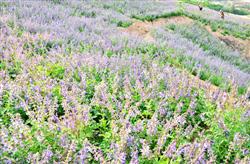
What are the cultivation techniques for Salvia miltiorrhiza (Danshen)? Please introduce
Salvia miltiorrhiza (Danshen) can be grown by referring to the following methods:
Propagation and germplasm selection
Select excellent Salvia miltiorrhiza varieties or strains (with a tanshinone content of no less than 0.2% and a salvianolic acid B content of no less than 3.0%) as propagation material.
Seed seedling raising - pre-sowing preparation
Deep-plow the seedling land more than 30cm, apply 1500kg to 2000kg of decomposed organic fertilizer per mu, rake fine, level, and make beds with a bed surface width of 1.2m.
Sowing
Sow from the end of March to the end of April, using 1.5kg of seeds per mu, mix evenly with fine sand at 2 to 3 times the amount, broadcast on the seedbed, and cover with fine soil 1cm to 1.5cm thick so that the seeds are not visible. Cover fully with wheat straw, dry grass or other crop straw for shading, and water moderately to keep warm and preserve soil moisture.
Seedling stage management
After sowing, keep the seedbed moist; seedlings emerge in 12d to 15d. After the seedlings emerge, remove the covering grass and carry out one intertillage and weeding. In early to mid-June, apply a topdressing to strengthen the seedlings, using 10kg to 15kg of urea per 667m2.
Rhizome (reed head) cutting propagation
Each autumn when harvesting Salvia miltiorrhiza, select thick, red, non-rotting, plump, disease-free and pest-free one-year-old roots as seed roots, store them in moist sand, dig out the seed roots in early March of the following year, cut them into root segments of about 6cm to 8cm, insert them into a sand bed in a greenhouse, and keep the sand bed moist.
Transplanting - land selection and land preparation
Select a sandy loam plot whose previous crop was a grass-family crop, with relatively fertile soil, a deep soil layer, relatively high terrain, and good drainage. Land preparation is the same as for the seedbed; make beds with a bed width of 1.2m.
Planting
Starting in late April, select robust plants with good root growth for transplanting, with a plant spacing and row spacing of 20cm to 25cm x 25cm to 30cm, a hole depth of 8cm to 10cm, cover with soil and press firm, and water an appropriate amount of settling water after planting, planting 1000 to 13000 plants per 667m2.
Field management - intertillage and weeding
In May and June, when weeds first begin to grow, carry out field weeding twice respectively; it is better to hoe shallowly rather than deeply, and remove the weeds from the field for disposal. After August, because Salvia miltiorrhiza grows vigorously and intertillage is impossible, the weeds can only be pulled out promptly. The use of herbicides is prohibited.
Topdressing - in late June, during the vigorous growth period of the plants, apply 20kg of urea per 667m2. In mid-to-late July, spray fertilizer on the leaves with 0.2% to 0.3% potassium dihydrogen phosphate or 2% superphosphate extract.
Drainage and irrigation - promptly drain accumulated water after rain to prevent root rot. Water promptly in case of drought.
Bud removal - except for seed-production fields, remove buds in stages and batches when buds appear; it is better to do it early rather than late. Be careful not to damage the stems and leaves when picking.
Pest and disease control - for chemical control, observe the safety interval for pesticide use; for pesticide varieties not indicated, use is prohibited 30 days before harvest.
Root rot
Agricultural control - implement crop rotation, rotating with grass-family crops for more than 2 years.
Select seed stock - use disease-free seed stock
Health cultivation - strengthen fertilizer and water management, and cultivate robust seedlings.
Chemical control - apply pesticide in furrows at sowing or planting: use 2kg each of 50% carbendazim wettable powder and 50% thiram wettable powder per 667m2, mix evenly with 10kg of fine sandy soil to make medicated soil, together with 3kg to 4kg of 3% phoxim granules, spread along the planting furrow at sowing or planting, and then sow or plant. This controls damping-off and root rot, and can also control various underground pests and nematode diseases.
Chemical control during the growth period: during the disease period, drench the roots with 800-times 50% carbendazim solution or 1000-times 70% thiophanate-methyl solution, drenching about 250ml of medicinal solution per diseased plant, once every 7d to 10d, for 2 to 3 consecutive times. Alternatively, spray with 500-times 70% thiophanate-methyl solution or 600-times 75% chlorothalonil solution, spraying once every 10d, for 2-3 consecutive sprays. Emphasize spraying the medicinal solution onto the stem base.
Click to get more Salvia miltiorrhiza planting techniques
Click to get more medicinal herb planting techniques