How to grow purple salvia miltiorrhiza? Detailed planting methods and techniques
How should purple salvia miltiorrhiza be planted? Here is how purple salvia miltiorrhiza can be planted: 1. Site selection and land preparation. (1) For the seedling bed, choose a plot with high terrain and loose soil. Make high ridges and apply decomposed farmyard manure or compost as base fertilizer. (2) For the planting site, choose a plot with deep soil, loose and fertile texture, relatively high terrain and good drainage for planting...
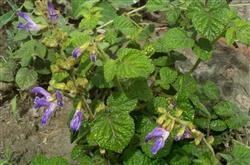
How should purple salvia miltiorrhiza be planted? Please explain
Purple salvia miltiorrhiza can be planted as follows:
1. Site selection and land preparation. (1) For the seedling bed, choose a plot with high terrain and loose soil. Make high ridges and apply decomposed farmyard manure or compost as base fertilizer. (2) For the planting site, choose a plot with deep soil, loose and fertile texture, relatively high terrain and good drainage for planting. (3) For mountain land, choose a sunny low-slope plot.
2. Seedling raising. In late March, make a bed 1.3 m wide, open furrows crosswise at a row spacing of 33 cm for drilling, with furrow depth 1 cm. Mix the seeds with fine sand and sow them into the furrows, cover with soil only until the seeds are no longer visible, cover with plastic film after sowing, punch holes in the film to release seedlings after emergence, thin the seedlings when they are 6 cm tall, and transplant in late May.
3. Transplanting. Spring planting is done in mid-May, and autumn planting in late October. Early transplanting leads to early rooting and early greening the following year. On the bed surface, dig holes at a row spacing and plant spacing of 33 x 23 cm. The hole depth depends on root length. Apply base fertilizer at the bottom of the hole and plant 1-2 seedlings propagated from seed (that is, seedling plants) per hole.
4. Seed propagation Same as seedling raising.
Field management : 1. Cultivation, weeding and topdressing Three times a year, carry out intertillage, weeding, earthing up and application of manure.
2. Removing flower buds To concentrate nutrients in the roots, cut off all flower buds except in seed-production plots.
3. Drainage and irrigation Drain promptly during the rainy season and irrigate by furrow or water promptly during dry weather.
Pest and disease control:
1. Leaf spot disease Dark brown spots appear on diseased parts, and in severe cases the leaves wither and die. For control, practice crop rotation; spray 0.3% potassium dihydrogen phosphate or carbendazim, thiophanate-methyl, or zineb.
2. Root rot disease Lateral roots or fibrous roots turn brown and rot, causing the whole plant to die. Irrigate with 50% carbendazim 800-1000 times solution or 50% thiophanate-methyl 1000 times solution.
3. Root-knot nematode disease Due to parasitism by root-knot nematodes, many tumor-like growths form on the roots, causing the plant to develop slowly and eventually the whole plant to wither and die. For control, rotate with cereal crops; apply 3% isofenphos-methyl.
4. Silver-marked noctuid The larvae feed on salvia miltiorrhiza leaves, and in severe cases the leaves are eaten bare. For control, burn residual branches and diseased leaves after harvest; spray 10% fenvalerate 2000-3000 times solution; 40% omethoate 1000 times solution; 90% trichlorfon 1000 times solution to kill them.
Harvesting and processing:
For vegetative propagation, dig in November of the same year or before sprouting in spring of the following year. For seed propagation, digging can be done from October to November of the second year until before early spring sprouting of the third year. After digging out, sun-dry in the field, remove soil and transport back. Do not wash with water. Dry in the sun until 50% dry, tie into small bundles, pile for 2-3 days to let them sweat, then spread out and sun-dry until completely dry. Remove fibrous roots and trim the rhizome, cut off the fine tail ends, and it becomes a commercial product.
Click to get more salvia miltiorrhiza planting techniques
Click to get more medicinal herb planting techniques