-
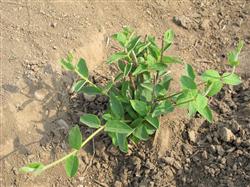
Honeysuckle Cutting Propagation Methods and High-Yield Cultivation Measures
The flower buds, flowers, and leaves of honeysuckle can all be used as medicine, clearing heat and reducing inflammation; the vines are used medicinally to treat rheumatic bone pain; the flowers can be used to extract aromatic oil and to make honeysuckle distillate; it is also a tree species for landscaping and garden ornamental cultivation. 1. Honeysuckle cutting propagation. Honeysuckle can be propagated by seed, and also by cuttings and root division...
-
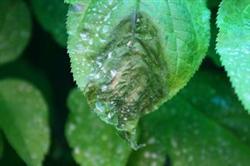
Detailed Explanation of the Occurrence and Control Methods of Ginseng Phytophthora Blight
This year the rainfall has been heavy, and the high temperature and high humidity are very suitable for the reproduction of the ginseng Phytophthora blight pathogen. The suitable temperature for the onset of ginseng Phytophthora blight is induced under soil temperatures of 10-30°C; soil temperatures of 20-26°C are most suitable for the disease to occur, while below 5°C and above 30°C the disease stops occurring. The main pathogen causing ginseng Phytophthora blight is the fungus of the genus Phytophthora in the subdivision Mastigomycotina...
-
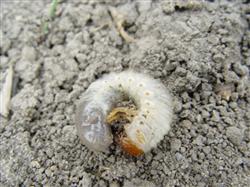
What are the control methods for ginseng white grubs?
White grubs are the larvae of large scarab beetles. They are voracious pests that can cause damage continuously. In spring, they begin activity when the soil temperature at 10 cm below the surface reaches 5°C; the optimal average soil temperature for activity is 13-18°C. Above 23°C they gradually move to deeper soil layers, and when the soil temperature drops in autumn to their suitable activity temperature, they move back up to the upper soil layers. Daily life...
-
What are the control methods for ginseng click beetles?
The insect's scientific name is the click beetle, also known as wireworm, jinci rake, yellow youyan, etc., and its adult is also called the snapping beetle. It belongs to the order Coleoptera, family Elateridae. It causes the most serious damage to ginseng. It generally begins activity after the soil thaws, and the larvae mainly damage the underground root and stem parts of ginseng, generally in the layer from the ginseng root to 10 cm below the surface...
-
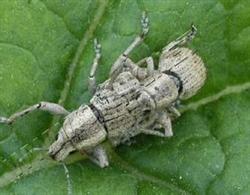
What are the control methods for the ginseng large gray weevil?
The large gray weevil, also known as the snout beetle or "tula lv", has an adult body length of 9-12 mm, grayish-yellow or grayish-black, densely covered with grayish-white scales. The head and rostrum are densely covered with golden shiny scales. The pests occurring this year mainly feed on tender stems and leaves on the soil surface during the seedling emergence period, causing great damage. When disturbed, they feign death and drop to the ground, causing damage in the early morning and evening....
-
Ginseng Disease Prevention and Control Methods and Key Technical Points
Ginseng is a plant of the genus Panax in the family Araliaceae, mainly produced in China's Jilin, Liaoning, Heilongjiang and other provinces. Its roots, stems, leaves and fruits are used as medicine, and it has the functions of greatly tonifying vital energy, strengthening the heart and rescuing from collapse, benefiting the heart and restoring the pulse, promoting fluid production and calming the mind. There are many types of ginseng diseases, more than 20 in China, and those that currently occur commonly and cause serious damage in production include...
-
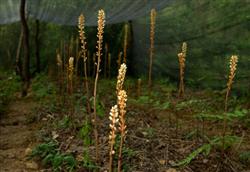
Causes of Gastrodia elata Trait Degradation and Control Methods
Degradation of Gastrodia elata traits often manifests as decreased yield of arrow gastrodia, with individuals becoming smaller and slender; a substantial reduction in the yield of rice gastrodia and white gastrodia, which turn ginger-yellow or light brown, with poor stress resistance, and the original yield and traits cannot be fully expressed. The causes are generally as follows: 1. Multiple generations of asexual reproduction. Generally after 5 to 6 generations of asexual reproduction...
-
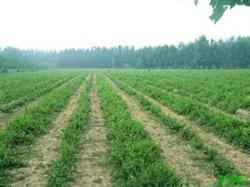
Detailed Explanation of Honeysuckle Propagation Methods and Technical Key Points
I. Cutting Propagation Honeysuckle cutting propagation can be carried out in spring, summer, and autumn. In autumn, it is suitable to do so from early September to mid-October. The nursery plot should be a sandy loam or loam soil with flat terrain, deep soil, and convenient drainage and irrigation. Before propagation, apply 3-5 cubic meters of decomposed organic fertilizer per mu, and 50 kg of superphosphate or calcium magnesium phosphate...
-
Symptoms and control methods of southern blight in mint
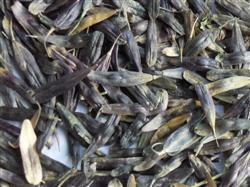
Isatis root seeds have a lifespan of 2 years. After more than 2 years, the seeds do not germinate; even if a small portion germinates, they soon die, which is called "failure to establish seedlings." Therefore, new seeds should be purchased whenever possible. Generally, newly produced Isatis root seeds (also called daqingzi) are blue-black in appearance, have good gloss and are shiny, with a relatively strong fresh fragrance,...
-
Detailed explanation of asexual propagation techniques for Gastrodia elata, cultivation methods for Chinese medicinal herbs
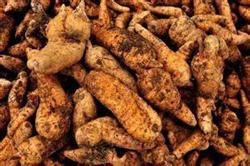
Cultivation techniques for Gastrodia elata f. glauca. Gastrodia elata f. glauca has good morphology, a high dry-to-fresh ratio (3 jin of fresh product dries into 1 jin of dried product), and excellent quality, and its price is three to four times higher than that of Gastrodia elata f. elata and Gastrodia elata f. viridis. The reason the price of Gastrodia elata f. glauca is high is also because, whether under artificial cultivation or in the wild, the regions and quantities of its distribution are very few. Therefore, artificial...
条件筛选