-
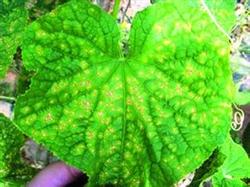
What are the control methods for cucumber target leaf spot?
Cucumber target leaf spot is a fungal disease, and the pathogen is Corynespora cassiicola, so it is also called Corynespora leaf spot. It has been reported in various parts of China in the past, but it was not very serious. In recent years, with the continuous development of protected cultivation, the disease has worsened year by year and has become an important leaf disease in protected cucumber production, and may also cause damage to tomatoes and many other vegetables.
-

Detailed Explanation of the Planting Methods and Field Management Points for Lambsquarters
Planting Methods for Lambsquarters
-

Detailed Explanation of the Planting Methods and Key Technical Points for Water Shield
Planting Methods for Water Shield
-
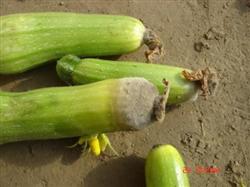
What are the control methods for zucchini gray mold?
In recent years, the area of zucchini grown in solar greenhouses has been relatively large, and the occurrence of zucchini gray mold often causes tender squash to rot, affecting yield and profitability. Therefore, measures should be taken for integrated control. Grafting for disease prevention. Using Yunnan black-seeded squash (Cucurbita ficifolia) as rootstock and zucchini as scion for grafting can increase zucchini's resistance to...
-
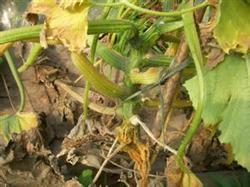
What are the control methods for zucchini brown spot disease?
There are mainly two diseases that can cause stalk rot in zucchini: the first is gummy stem blight. This disease mainly infects zucchini at the stem nodes; the infected area is initially dark brown, then gradually turns black, and the lesion tends to split open, exuding a white gelatinous substance; in the later stage the diseased stem shrivels and splits longitudinally, resembling tangled hemp. The second...
-
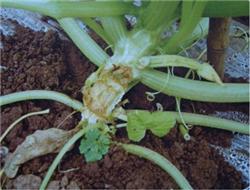
What are the control methods for zucchini soft rot?
Zucchini soft rot mainly damages the root and stem parts and the fruit (the zucchini itself). During the fruiting stage, the stems and the base of the leaf stalks first become water-soaked; especially at natural cracks or wounds on the root and stem, they gradually soften, the diseased part becomes sunken, and the internal tissue rots, forming a grayish-brown viscous substance with a foul odor. The water in the affected part evaporates,...
-
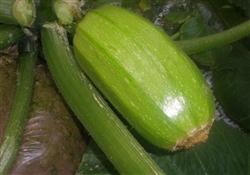
What to Do About Flower and Fruit Drop in Zucchini? A Detailed Guide to Prevention Methods
When zucchini fruits grow short and thick, it seriously affects their quality and reduces growers' income. Experts suggest that in winter and spring, short and thick zucchini fruits should be prevented early. In winter and spring, the air temperature and soil temperature in greenhouses are relatively low, light is weak, the photosynthetic efficiency of zucchini is low, and the plant's nutrient accumulation is limited. In addition to this...
-
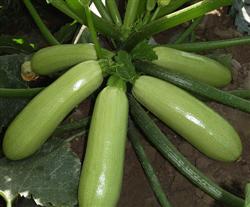
Different base fertilizers for zucchini mean different fertigation methods
In the middle and late stages of zucchini growth in a solar greenhouse, poor indoor ventilation and light transmission, a closed crop canopy, and weak photosynthetic capacity make plants prone to early senescence and low yields. In recent years, vegetable growers in Dongkan Town, Binhai County, Jiangsu, have worked out a set of vine-pressing cultivation techniques that allow the zucchini growing period to be extended from September of the first year to June of the following year, with a yield of 10,000 per mu...
-
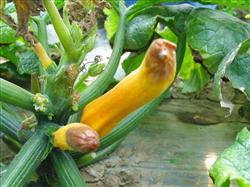
What are the control methods for zucchini cottony leak?
Disease characteristics: Zucchini cottony leak mainly damages the fruit, and sometimes damages leaves, stems and other parts. When leaves are affected, dark green, round or irregular water-soaked lesions first appear, and under high humidity they look as if scalded by boiling water. When fruit is affected, oval, water-soaked dark green lesions first appear. Under dry air conditions, the lesions turn...
-
How to fertilize Chinese cabbage and radish? Master the nutrient requirements and fertilization methods
Chinese cabbage is an important leafy vegetable. Chinese cabbage has a very high yield, reaching over 5000 kg per mu, so it has relatively high fertilizer requirements. The ratio of the three is 1:0.4:1.1. Therefore, like other leafy vegetables, Chinese cabbage requires adequate nitrogen nutrition during the vegetative growth period, which is particularly important for promoting the formation of large leaves and increasing the photosynthetic rate...
条件筛选