-
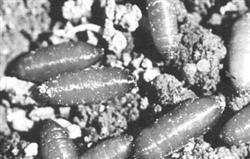
A Detailed Explanation of the Occurrence Patterns and Control Methods of Garlic Root Maggots
Root maggots is the collective term for the larval stage of Diptera pests that damage garlic and other crops. In recent years, the occurrence of garlic root maggots has shown a trend of increasing year by year. Root maggot damage can cause garlic yield reduction and has a major impact on garlic quality, with severe damage leading to serious economic losses. Garlic root maggots (larvae) generally gather on garlic roots and...
-
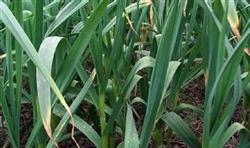
How to Control Onion Maggots in Garlic in Winter? A Full Breakdown of Practical Methods
Thoroughly remove plant residues. Onion maggots have a strong attraction to diseased and dead plant residues, especially rotting garlic plants, so at garlic harvest the garlic residues in the field, at the field edges and along roadsides should be completely removed and destroyed, to reduce the food source for the maggots and at the same time reduce the number of insects remaining in the field. Regulate water and fertilizer and the sowing schedule to disrupt...
-
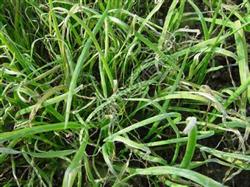
Control Methods and Technical Key Points for Gray Mold in Greenhouse Chinese Chives
When humidity inside a greenhouse for Chinese chives is high, gray mold is likely to occur. After the disease develops, pale grayish-brown to white spots gradually appear on the leaves from the tip downward, on both the upper and lower surfaces; after expanding, they become elliptical or spindle-shaped lesions and merge with each other into large dead patches. When air humidity is above 85% and the temperature is 15°C~20°C, warm and humid conditions favor the occurrence of this disease.
-
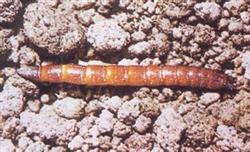
What are the control methods for wireworms in Chinese chives?
Apply a root drench with 50% phoxim at 1000x dilution, 80% trichlorfon at 1000x dilution, 50% phoxim-cypermethrin emulsifiable concentrate at 4000x dilution, 20% fenvalerate at 300x dilution, or 2.5% deltamethrin at 3000x dilution. Alternatively, before sowing or transplanting, mix the above agents with poisoned bait and broadcast it, or use a seed dressing agent for coating.
-
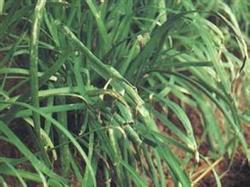
What are the control methods for gray mold in Chinese chives?
In protected cultivation, fumigate with 10% Procymidone smoke agent at 250 g per mu; for foliar spraying, use 50% Procymidone wettable powder at 1000 times dilution, 2% Wuyimycin (BO-10) at 150 times dilution, 40% Huimeiwang at 500 to 800 times dilution, 10% Polyoxin at 500 to 700 times dilution, and 50% Vinclozolin at 1200 to 1400 times dilution.
-
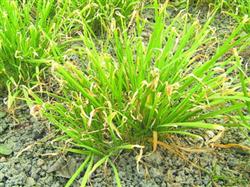
Diagnosis, Identification and Control Methods of Gray Mold in Chinese Chives
How to control gray mold in greenhouse Chinese chives. Gray mold in Chinese chives, also known as "white spot leaf blight" and "white spot rot", is the main disease of greenhouse Chinese chives. It should be controlled early to reduce losses and increase profits. The occurrence conditions and control methods of gray mold in Chinese chives are briefly summarized as follows: 1. Occurrence conditions 1. Chi...
-
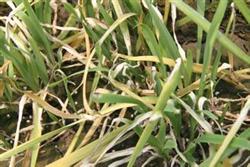
Control Methods and Technical Key Points for Chive Blight
Treat seeds with 25% metalaxyl at 0.3% of the seed weight. After disease onset, use 64% oxadixyl mancozeb at 600 times dilution, 69% dimethomorph mancozeb at 600 to 800 times dilution, 50% iprodione at 500 times dilution, and 77% copper hydroxide at 600 to 700 times dilution, applied alternately, once every 5 to 7 days, for 2 to 3 treatments.
-
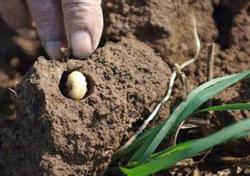
How to treat white grubs in chives? Detailed control methods
Drench the roots with a 1000-fold dilution of 50% phoxim, a 1000-fold dilution of 80% trichlorfon, a 4000-fold dilution of 50% phoxim-cypermethrin emulsifiable concentrate, a 300-fold dilution of 20% fenvalerate, or a 3000-fold dilution of 2.5% deltamethrin. Alternatively, before sowing or transplanting, mix the above pesticides with poisoned bait and broadcast it, or use a seed coating agent for coating.
-

Detailed Guide to Chinese Cabbage Planting Time and Methods
Chinese Cabbage Planting Time and Methods
-
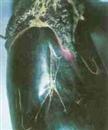
What are the methods to prevent lumpy fruit in greenhouse eggplants?
When the temperature in a solar greenhouse is too low, eggplants often develop lumpy fruit. The lumps are mainly concentrated at the front end of the fruit and appear as finger-like protrusions 0.5-1 cm high. When the fruit is broken open, it is found that in the places where the lumps have formed, there is a relatively large gap between the peel and the flesh. Causes: the greenhouse temperature is too low, especially under unusual weather conditions, when for 3 consecutive...
条件筛选