-
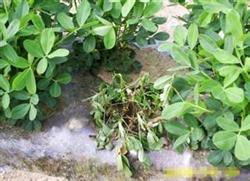
How to prevent and control peanut bacterial wilt? These methods must be mastered
The period of peanut flowering and peg penetration is the outbreak period of peanut bacterial wilt, and during this period attention should be paid to spraying for control. Control method: when peanuts begin to show buds, spray the leaf surface once every 10-15 days with a 1500-fold 70% hymexazol aqueous solution, or a 600-fold 20% thiodiazole-copper aqueous solution, evenly wetting all leaves, until water droplets begin to...
-
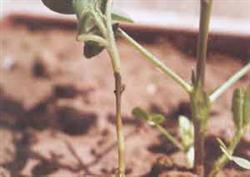
How to prevent and control peanut southern blight? Detailed practical methods
Peanut southern blight generally begins to occur in large numbers in early to mid-June. Comprehensive control measures are as follows: for lower-lying fields, dig good ditches to help drain standing water and lower the water table; sloping peanut fields should also have good ditches so that water does not accumulate after rain. Apply more calcium and potassium fertilizer. After the initial flowering stage, in combination with building up soil and hilling the beds, apply 40-5...
-
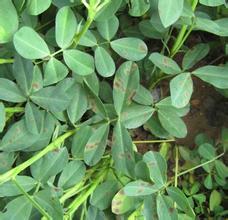
Control Methods and Technical Key Points for Peanut Web Blotch
Peanut web blotch, also known as brown stripe disease and cloud-pattern blotch disease, often occurs mixed with leaf spot disease, and can cause early defoliation of peanut leaves, severely affecting peanut yield. I. Disease occurrence pattern The disease mostly begins during the flowering stage, with the peak period from pod setting to maturity, mainly damaging leaves, initially producing circular or irregular...
-
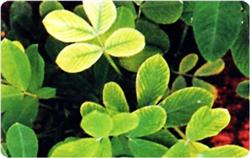
Detailed Explanation of Pest Control Methods During Peanut Growth
I. Causes of Iron Deficiency in Peanuts Peanut is one of the crops relatively sensitive to the iron element. Although iron is not a component of chlorophyll, it is an indispensable condition for chlorophyll synthesis, a constituent of the cytochrome oxidase and peroxidase related to respiration, and participates in the oxidation-reduction processes within the plant. Due...
-
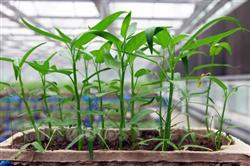
How to fertilize water spinach? Master these methods for high yield and good quality
Water spinach (Ipomoea aquatica) is not strict about soil, but soil that is rich in water and nutrients and has strong water- and fertilizer-holding capacity is more favorable. Water spinach grows vines and leaves rapidly, has a high nutrient demand and strong tolerance to fertilizer. With sufficient fertilizer and water, high quality and high yield can be achieved, but seed-production plots should have fertilizer and water controlled, otherwise the plants easily grow leggy and fail to flower. The base fertilizer for water spinach is mainly farmyard manure and dung...
-
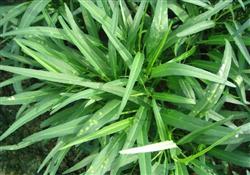
What to do when water spinach gets white rust? Detailed control methods
①Use disease-free seeds or treat seeds with 0.3% of seed weight of ridomil-mancozeb seed dressing. ②This disease is limited to infecting Convolvulaceae vegetables; after 2~3 years of crop rotation, the control effect is good. ③Pay attention to field drainage and thin out plants for ventilation. ④At the early stage of the disease, spray 48% metalaxyl-mancozeb wettable powder, 40% metalaxyl-copper wettable powder...
-
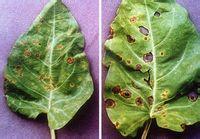
Symptom Identification and Control Methods of Brown Spot Disease in Water Spinach
Symptoms initially appear as small yellowish-brown spots, which later expand into circular to oval, or irregular dark brown lesions, 4-8 mm in diameter, with distinct edges. In severe cases, the lesions merge with each other, and the diseased leaves turn yellow, wither and die. Disease conditions: It is prone to occur in rainy and humid weather or during off-season cultivation. Control methods...
-
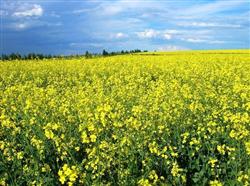
How to prevent and control weeds in rapeseed? Master the occurrence characteristics and control methods
The amount of nitrogen, phosphorus and potassium absorbed by rapeseed is nitrogen greater than potassium, and potassium greater than phosphorus. For every 1000 kg of rapeseed produced, it needs to absorb 2.76 kg of nitrogen, 0.33 kg of phosphorus and 2.06 kg of potassium. The absorption ratio of nitrogen, phosphorus and potassium is 8.38:1:6.24. A deficiency of the trace element boron will produce boron deficiency symptoms. Rapeseed plants...
-
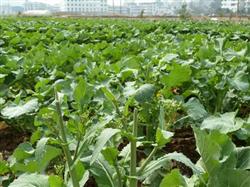
How to prevent fertilizer damage in rapeseed? Introduction to practical methods
1. Reform fertilization methods based on the principles of being practical, useful, and effective. Advocate the application of compost fermented with effective microorganisms and decomposed organic fertilizer, using layered application or full-layer deep application. According to the planned cropping sequence and total fertilization amount for the year, it can be applied all at once during deep plowing. Adopt formula fertilization technology, and properly manage the ratios of nitrogen, phosphorus, and potassium as well as trace...
-
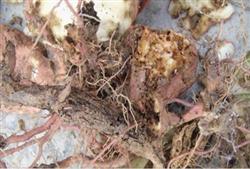
Two Methods for Poisoning and Killing Underground Pests of Sweet Potato
When sweet potatoes are damaged by underground pests, they become riddled with pest entry holes and tunnels, cannot be processed or eaten, and rot more quickly, causing reduced yields. In production, the following methods can be promptly adopted for poisoning and control to improve yield and quality. 1. Spray Lorsban. During the growth and development period of sweet potatoes, spray the leaves once every 10-15 days with a 1000-fold Lorsban aqueous solution...
条件筛选