How to manage a cherry orchard? Detailed explanation of planting techniques and fertilization methods
How to manage a cherry orchard and how to fertilize? Please provide guidance. The following introduces soil treatment and fertilization methods for cherry orchards for reference: 1. Soil management. Soil management must first have a good foundation before planting, especially in mountain orchards, where level terraces are required and large holes should be dug for planting. After planting, continuous improvement of the soil is also needed...
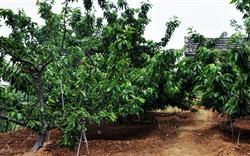
How to manage a cherry orchard and how to fertilize? Please provide guidance
The following introduces soil treatment and fertilization methods for cherry orchards for reference:
I. Soil management
Soil management must first have a good foundation before planting, especially in mountain orchards, where level terraces are required and large holes should be dug for planting. After planting, the soil still needs continuous improvement. When the soil's fertility, water, air, microorganisms and other factors are good from the surface to the deep layers, the sweet cherry root system will be well developed and will also be distributed relatively deep, which is beneficial to the growth and development of the aboveground part.
1. Expanding holes and deep plowing
Mountain orchards generally have relatively shallow soil layers and poor soil, which affects root extension; plain orchards generally have thick soil layers, but poor aeration. Through expanding holes and deep plowing, the soil layer can be deepened and aeration improved. Combined with applying organic fertilizer, it can improve soil structure, promote microbial activity, benefit root growth and improve the ability to absorb fertilizer and water. Method of expanding holes and deep plowing: in the first few years after young trees are planted, start from the edge of the planting hole and expand outward every year or every other year, digging a ring-shaped trench about 50 cm wide and 60 cm deep, removing stones from the trench, and filling it with good soil and farmyard manure. In this way, it is gradually expanded until the deep plowing trenches between two trees connect. The sweet cherry root system also extends year by year. Expanding holes and deep plowing should be done before the roots extend, so the roots will not be damaged. The time for deep plowing can be in late autumn and early winter, after leaf fall, combined with autumn and winter fertilization.
2. Intertillage and soil loosening
Intertillage and soil loosening is a measure of soil management during the cherry growing period, usually carried out after irrigation and after rain. On the one hand, it can cut soil capillaries, conserve water, promote soil aeration and prevent soil compaction; on the other hand, it can eliminate weeds and reduce competition from weeds for water and fertilizer. The depth of intertillage and soil loosening is about 5 cm to prevent damage to thick roots.
3. Orchard intercropping
During the young tree period, in order to make full use of land and sunlight and increase income, cash crops can be appropriately intercropped between rows. The intercrops should be short-stemmed crops that help improve soil fertility, such as legumes like peanuts and mung beans. Crops that affect the growth of sweet cherries, such as wheat, corn, sorghum and sweet potato, should not be intercropped. When intercropping, enough tree discs should be left, and the tree row width should be left at 2 m. The intercropping time should not exceed 3 years at most, generally 1-2 years, based on the principle of not affecting tree growth.
4. Tree disc mulching
Tree disc mulching is covering the soil surface under the tree with cut weeds, wheat straw, corn stalks, rice straw and other materials, generally 2000-3000 kg per mu. If the grass source is insufficient, the tree disc can be mainly covered, and the mulch thickness is 18-20 cm. The mulching time can be before the rainy season; rain can fix the grass so that wind does not blow the mulch away, and at the same time rainwater can promote the decomposition of the mulch. Tree disc mulching has many advantages. First, it can preserve moisture, reduce evaporation from the soil surface, and at the same time maintain a relatively stable soil temperature. It can raise soil temperature in spring and autumn and cool it in summer. It prevents high temperatures from damaging surface roots. More importantly, it can suppress weeds, reduce labor for weeding, increase soil organic matter, promote soil microbial activity, change the physical and chemical properties of the soil, and benefit root growth. Tree disc mulching is most suitable for mountain orchards. Flatland orchards with heavy soil and waterlogged lowlands are not recommended for grass mulching, because after mulching it is easy for water to accumulate in the rainy season and cause waterlogging damage. In addition, when controlling pests and applying pesticides, the mulch should also be sprayed at the same time to eliminate pests hidden in the grass.
II. Rational fertilization
1. Fertilization periods
Cherries have different fertilizer requirements at different tree ages and in different periods. For young trees under 3 years old, the tree is in the crown expansion period, vegetative growth is vigorous, and the demand for nitrogen is high during this period, so nitrogen fertilizer should be dominant, supplemented with an appropriate amount of phosphorus fertilizer, to promote crown formation. For young trees 3-6 years old and in the initial fruiting stage, the tree should be shifted from vegetative growth to reproductive growth and flower bud differentiation should be promoted. Therefore, in fertilization, attention should be paid to controlling nitrogen, increasing phosphorus and supplementing potassium. Trees 7 years old and above enter the full fruiting period, the tree consumes more nutrients, and the annual fertilization amount increases. Nitrogen, phosphorus and potassium are all needed, but during the fruit growth stage potassium fertilizer should be supplemented, which can increase fruit yield and quality.
In the same period of the year, because the sweet cherry fruit growth period is short, it has the characteristics of rapid and concentrated fertilizer demand. From leaf expansion, flowering and fruit development to maturity, all are concentrated in April to June, and flower bud differentiation is also concentrated in a relatively short period after harvest. On the one hand, this requires strengthening fertilizer and water management in spring; on the other hand, it requires the tree to accumulate a lot of nutrients in the previous year to meet the needs of early spring growth and flowering. Therefore, fertilization of cherry trees should attach importance to the two key periods: autumn fertilization and spring topdressing.
2. Foliar spraying before leaf fall
In autumn (late September to early October), half a month before leaf fall, 2% urea can be sprayed. At this time the leaves are thick and the temperature is low, so even at high urea concentration no phytotoxicity will occur, but the spraying time should be after 3 p.m. There is dew at night in autumn, which is conducive to foliar absorption. Cherries, like other fruit trees, decompose the nutrients in the leaves into a soluble state before leaf fall and then transport them to the branches and roots, so that the branches and roots accumulate more nutrients in winter, which is good for plumping flower buds and enhancing cold resistance.
3. Applying base fertilizer in autumn
Autumn base fertilizer is generally applied from September to late October, preferably before leaf fall. Applying base fertilizer early is conducive to fertilizer maturation, can exert fertilizer efficiency early the next spring, and scientists believe it is conducive to healing broken roots, improving the absorption capacity of the root system and increasing the nutrient reserves in the tree. The amount of base fertilizer applied should account for 70% of the annual fertilization amount. The amount applied should be determined according to tree age, tree vigor, fruiting amount and fertilizer type. For young trees, generally about 25-50 kg of barnyard manure is applied per tree, and for large trees in the full fruiting period, about 100 kg of barnyard manure is applied per tree. The amount of high-quality chicken manure, pig manure or human excrement and urine can be smaller, while the amount of soil mixed compost such as weeds and leaves should be larger. The method of applying base fertilizer is: for young trees, a ring-shaped trench application can be used, digging a trench 50 cm wide and 40-50 cm deep at the outer periphery of the crown, at the projection area, and applying the fertilizer into it. For large trees, it is best to use radial trench fertilization, that is, digging radial trenches outward from 50 cm away from the trunk, narrow inside and wide outside, shallow inside and deep outside. The width and depth at the end near the trunk are 30 cm, and at the end away from the trunk are 40-50 cm. The trench length should exceed the crown projection by about 20 cm. The number of trenches is 4-6, and the position of the fertilization trenches should be changed each year.
1. Ring-shaped fertilization 2. Radial fertilization
3. Digging fertilization trenches for fertilization
4. Topdressing
Topdressing is carried out during the cherry tree growing period and is divided into two methods: soil topdressing and foliar spraying. Soil topdressing is the main method and can be done twice: once before flowering. For large trees in the full fruiting period, 1.5-2.5 kg of compound fertilizer can be applied, or 30 kg of human excrement and urine, or 1.0 kg of urea can be applied. Dig trenches for application and water after application. This topdressing can promote flowering and leaf expansion, increase fruit set rate and accelerate fruit growth; the second topdressing is after cherry harvest. This is the flower bud differentiation period, and also a period when tree nutrients need to be supplemented after flowering and fruiting. Each tree can be applied with 60-70 kg of decomposed human excrement and urine, or 2 kg of compound fertilizer. The above fertilization methods can be applied in holes, in trenches, or poured into the root zone under the tree with irrigation water. Foliar topdressing has a fast effect and is very necessary for sweet cherries with a short fruit growth period, and is also a supplement to soil topdressing. Foliar topdressing is concentrated in the period from after flowering to before fruit ripening, and is very useful for increasing fruit set rate, increasing yield and improving quality.
Before flowering, 0.3% urea can be sprayed; during the flowering period, 0.3% borax can be sprayed; from the fruit expansion stage to the coloring stage, 0.3% potassium dihydrogen phosphate can be sprayed 2-3 times. In addition, the American Opur organic active liquid fertilizer produced by Beijing Shunyi Opur Biochemical Products Factory can be sprayed 2-3 times at 600 times dilution, which is very effective for fruit coloring and increasing sugar content and quality. Foliar spraying should be carried out in the afternoon near evening, and the spraying area should mainly be the underside of leaves, to facilitate absorption through the leaf stomata.
Click to get more cherry tree planting techniques
Click to get more fruit planting techniques