How to fertilize pear trees for good growth? A detailed guide to scientific fertilization methods
How should pear trees be fertilized for good growth? Please explain the fertilization methods. For planting pear trees, you can refer to the following methods for fertilization: 1. Apply more organic fertilizer to build up soil fertility and improve the soil. Organic fertilizer not only contains the various nutrients needed for pear tree growth, but can also improve soil structure, increase the soil's nutrient buffering capacity,...
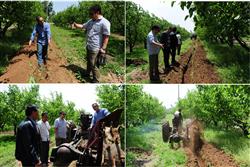 How should pear trees be fertilized for good growth? Please explain the fertilization methods
For planting pear trees, you can refer to the following methods for fertilization:
1. Apply more organic fertilizer to build up soil fertility and improve the soil. Organic fertilizer not only contains the various nutrients needed for pear tree growth, but can also improve soil structure, increase the soil's nutrient buffering capacity, increase the soil's water-holding capacity, improve soil aeration, and reduce resistance to root growth in the soil, which is beneficial to the growth and development of pear trees.
2. Application of nitrogen fertilizer. Nitrogen is one of the nutrient elements that pear trees need in relatively large amounts. For every 100 kg of fruit produced, about 0.4-0.6 kg of nitrogen is absorbed. The use of nitrogen fertilizer has a great impact on the growth and development of pear trees. Within a certain range, applying appropriately more nitrogen fertilizer can increase the number of branches and leaves of pear trees, strengthen tree vigor, and increase yield. However, if nitrogen fertilizer is applied excessively, it will cause excessive growth of shoots, which not only causes nutritional imbalance for fruit setting but also induces the occurrence of physiological diseases such as calcium deficiency.
Among the three major elements nitrogen, phosphorus, and potassium, young pear trees relatively need more nitrogen, followed by potassium, and absorb less phosphorus, about 1/5 of the nitrogen amount. After fruiting, the ratio of nitrogen to potassium absorbed by pear trees is basically similar to that of young trees, but the amount of phosphorus absorbed increases somewhat, about 1/3 of the nitrogen amount. Fertilization should differ accordingly. Generally, during the young tree stage of pear trees, depending on tree size, the annual nitrogen fertilizer application rate is 5-10 kg per mu calculated as pure nitrogen, and after entering the fruiting stage it gradually increases to 15-20 kg; for individual varieties with higher fertilizer requirements, it can be increased to 25 kg.
The absorption of nitrogen by pear trees is greatest during the new shoot growth period and the young fruit enlargement period, followed by the second fruit enlargement period, and relatively less after fruit harvest. Therefore, nitrogen fertilizer application mainly has three periods. The first fertilization period is applying a certain amount of nitrogen fertilizer after bud break and before flowering, which can increase the fruit-setting rate, promote the growth of branches and leaves, help increase the leaf-to-fruit ratio, and maintain the balance between vegetative growth and reproductive growth. This is especially true for young trees and weak-vigor fruiting trees, where topdressing nitrogen fertilizer can promote branch and leaf growth and strengthen tree vigor; the general application rate is about 1/5 of the annual nitrogen fertilizer application rate. However, for fruit trees with relatively strong vigor, it is generally not suitable to topdress nitrogen fertilizer at this stage, to prevent excessive vegetative growth of pear trees and affect fruit set. The second fertilization period is after the peak new shoot growth period and before the second fruit enlargement period. Appropriately topdressing nitrogen fertilizer together with phosphorus and potassium fertilizer helps increase yield and improve quality; however, do not topdress too early, to prevent excessive vegetative growth of branches and leaves and affect the sugar content and quality of pear fruit; the fertilization rate at this stage is about 1/5 of the annual nitrogen fertilizer application rate. The third fertilization period is timely topdressing before pear fruit harvest, which can prepare for bud break, flowering, and fruit set the following spring; generally the application rate at this stage is about 1/5 of the annual nitrogen fertilizer amount. For pear trees with weaker vigor and more fruit, if basal fertilizer cannot be applied in time after harvest, an appropriate additional amount of nitrogen fertilizer can be applied, along with phosphorus and potassium fertilizer, to restore tree vigor, ease the nutrient deficiency of the tree, and prepare for the growth and development of pear trees the following year.
3. Apply phosphorus and potassium fertilizer in appropriate amounts. Phosphorus and potassium are also nutrient elements that pear trees need in relatively large amounts. For every 100 kg of fruit produced, about 0.1-0.25 kg of phosphorus pentoxide and 0.4-0.6 kg of potassium oxide are needed. Tests on fruiting pear trees show that combined application of phosphorus and potassium fertilizer increases yield by 50%-85% compared with applying nitrogen fertilizer alone. Applying phosphorus and potassium fertilizer can not only increase the yield of pear trees, but also promote the growth and development of the root system and increase the coordinated transport of photosynthetic products in leaves to stems, roots, fruits, and other parts. At the same time, phosphorus fertilizer has a very significant root-inducing effect. Moderately deep application of phosphorus fertilizer can promote roots to extend into deeper soil layers, significantly improve the drought resistance of fruit trees, and reduce the occurrence of diseases.
When the soil has relatively high available phosphorus and potassium content, adding phosphorus and potassium fertilizer often has no fertilizer effect on pear trees. Only by paying attention to the combined application of nitrogen fertilizer with phosphorus and potassium fertilizer can better results be achieved.
4. Reasonably apply trace element fertilizers such as boron, zinc, and iron. Applying boron fertilizer can significantly reduce the occurrence of fruit cracking in pear trees, increase the fruit-setting rate, and reduce the formation of corky areas in the flesh. For pear trees with potential boron deficiency and mild boron deficiency, spray once with a borax aqueous solution at a concentration of 0.3%-0.4% at full bloom. For soil with severe boron deficiency, 100-250 g of borax can be applied to the soil per tree before bud break, with an effective period of up to 3-5 years. If a borax aqueous solution at a concentration of 0.3%-0.4% is then sprayed once at full bloom, the effect is even better.
Applying zinc fertilizer has a very significant effect on correcting leaf spot disease and little leaf disease in pear trees. Generally, the recovery rate of diseased branches reaches more than 90%. It can increase the fruit-setting rate of pear trees, increase pear fruit yield, and can also raise the content levels of nitrogen, phosphorus, calcium, and other elements in leaves. A relatively effective spraying method is to spray in time after disease onset with a mixed solution of 0.2% zinc sulfate and 0.3%-0.5% urea. It can also be sprayed 3 weeks after pear trees drop flowers in spring, or before germination, spraying with a 6%-8% zinc sulfate aqueous solution can provide a certain preventive effect. The effect of soil application of zinc sulfate is relatively poor. Applying chelated zinc fertilizer has a better effect, but the cost is relatively high. Generally, the more economically effective control method is still mainly spraying. Applying large amounts of organic fertilizer can, to a certain extent, play a role in reducing zinc deficiency symptoms.
Click to get more pear tree planting techniques
Click to get more fruit planting techniques