-
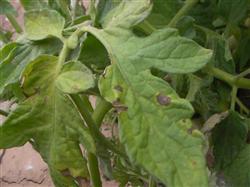
Control Methods and Technical Key Points for Early Blight in Cherry Tomatoes
Early blight is a major disease of cherry tomatoes, widely distributed and commonly occurring, mainly in open fields in autumn, and also occurring occasionally in protected cultivation. Generally 30%-50% of plants are diseased, and in severe cases 100% become diseased, with some branches and leaves necrotizing due to the disease, significantly affecting cherry tomato production. This disease mainly damages leaves, and in severe cases also infects...
-
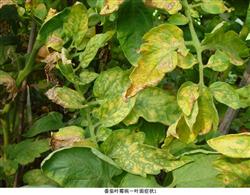
How to prevent and control leaf mold in cherry tomatoes? Detailed explanation of prevention and control methods
Cherry tomatoes grown in greenhouses are often attacked by leaf mold, and vegetable growers should pay attention to prevention and control. I. Symptoms It mainly damages leaves, and in severe cases also damages stems, flowers and fruits. When leaves are infected, irregular or elliptical light yellow chlorotic spots appear on the leaf surface, and a white mold layer first forms on the diseased part of the leaf underside, later the mold layer becomes grayish brown or...
-
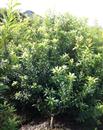
Four Cultivation Methods for Controlling Excessive Vegetative Growth of Waxberry (Chinese Bayberry) Trees
Waxberry trees planted on deep, fertile soil will, if allowed to grow naturally, develop excessive vegetative growth, causing most of the tree's nutrients to be consumed by the growth of branches and leaves, which leads to phenomena such as few or difficult-to-form flower buds, and the tree entering the fruiting stage late or producing low yields. There are four measures for controlling excessive vegetative growth of waxberry trees: 1....
-
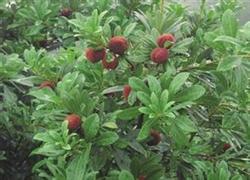
Organic Bayberry Cultivation Techniques, Lecture 2: Detailed Explanation of Cultivation Methods
V. Fertilization 1. Fertilization timing and amount: According to the age of the bayberry tree, growth vigor and soil conditions, adopt scientific formula fertilization. 2. For young trees, focus on "promoting" growth, emphasizing the application of quick-acting fertilizers, with a nitrogen, phosphorus, potassium ratio of about 1:0.8:0.8, to promote shoot growth...
-
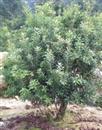
What are the main pests of bayberry (Chinese bayberry)? A detailed guide to integrated control methods
I. Bayberry crown gall disease 1. Symptoms: Bayberry crown gall disease is a bacterial disease. It mainly affects the branches and trunks of 2-3 year old fruiting trees, mostly forming tumors on the branches and trunks. The tumors are nearly spherical, varying in size, very hard and suberized, and brown to dark brown. Generally, the tumors on the branches and trunks begin to enlarge in early April, and in July-August...
-

What to Do About Empty Chestnut Burrs? Causes and Control Methods Explained
Causes of Empty Chestnut Burrs and How to Prevent and Control Them
-
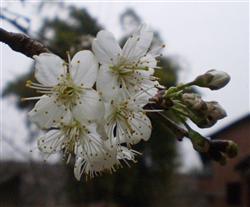
What are the management methods for cherries from flowering to before ripening?
The flower and fruit management of cherries is mainly reflected in pollination and fruit retention, flower and fruit thinning, and fruit protection before harvest. Cherry is a fruit tree with low self-fruitfulness. To ensure fruit set, in addition to configuring pollinizer trees properly when establishing the orchard, artificial pollination and the use of flower-visiting insects to assist pollination should also be done well to increase the fruit-setting rate. At the same time,...
-
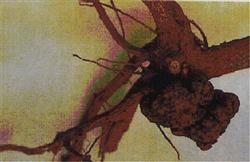
How to prevent and treat cherry crown gall? A detailed guide to prevention and treatment methods
Based on your description, 1. Dig out the diseased trees and clear away the remaining roots. 2. Apply organic fertilizer. 3. Dip the roots in K84 before planting the trees. 4. Backfill the soil, preferably with topsoil. 5. You can change the tree pits.
-
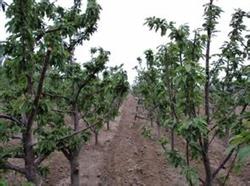
Identification and Control Methods for Common Cherry Diseases and Pests
Many of the diseases and pests affecting cherries are the same as those of other stone fruit trees, so their control methods can be used for reference. The main diseases harming cherries are shot hole disease, crown and root collar rot, and gummosis. Crown and root collar rot mostly occurs on trees in their first fruiting stage, causing the crown and root collar to decay. Control methods: mainly avoid piling soil around the root collar for long periods, and control underground pests that gnaw and wound the bark. At the same time, check frequently; when diseased plants are found, scrape and treat them promptly, and after scraping, disinfect with Bordeaux mixture or lime sulfur mixture. For severe crown and root collar rot, the aboveground growth can also be restored through spring bridge grafting. The main pests harming cherries include the red-necked longhorn beetle, the golden-line jewel beetle, the small clearwing moth, the spherical scale insect, and the phalera caterpillar. The small clearwing moth has one generation per year, and its larvae cause damage within the cortex of large branches. Control measures mainly include spraying during the peak emergence period of adults, whitewashing the branches and trunk to prevent egg laying, and promptly spraying or digging out larvae when their frass is found in the field.
-
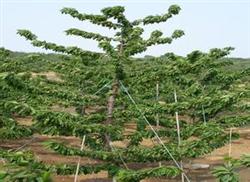
Cherry post-harvest management methods and key points of summer pruning techniques
Pinching new shoots: To promote flower bud differentiation and prevent excessive vegetative growth, the method of pinching new shoots should be adopted for control. That is, pinch the new shoots that have not stopped growing, and the pinching position is generally bounded by the half-leaf point; after pinching, growth stops for 10-15 days and then secondary shoots emerge, and when they grow to 15-20 cm, a second pinching is carried out,...
条件筛选