What are the main pests of bayberry (Chinese bayberry)? A detailed guide to integrated control methods
I. Bayberry crown gall disease 1. Symptoms: Bayberry crown gall disease is a bacterial disease. It mainly affects the branches and trunks of 2-3 year old fruiting trees, mostly forming tumors on the branches and trunks. The tumors are nearly spherical, varying in size, very hard and suberized, and brown to dark brown. Generally, the tumors on the branches and trunks begin to enlarge in early April, and in July-August...
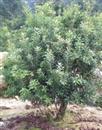 Bayberry not only has high medicinal and edible value, but is also an excellent evergreen foliage and fruit ornamental tree species. According to statistics, the total cultivated area of bayberry in China has now exceeded 213,000 hectares. However, along with large-scale planting, due to poor management and various other reasons, bayberry has suffered damage from many kinds of pests, causing serious economic losses.
I. Main pest species
1. Piercing-sucking type.
① Parlatoria camelliae (white peach scale). The nymphs and female adults fix themselves on both sides of the main veins of the leaves and on 1-year-old or 2-year-old young twigs, piercing and sucking to cause damage, causing the leaves to lose their luster and gradually turn brown and die, and the pierced twigs also gradually dry up and die, appearing as if "scorched by fire", leading to weakened tree vigor and reduced fruit yield and quality. When the damage is severe, the entire tree can die. In Zhejiang, Nanjing and other places, it has 2 generations per year, with the damage period from June to September.
② Pseudaulacaspis cockerelli (mango white scale). The female adults and nymphs damage the main veins of leaves, young shoots and the base of petioles, sucking their sap and causing sooty mold. When the damage is light, yellow spots appear on leaves and other tissues, affecting photosynthesis and yield; when the damage is severe, it often causes leaves to wither or even die. In the Zhejiang region, it has 2 generations per year, with peak damage periods from mid-May to mid-July and from mid-September to late October.
③ Lepidosaphes ulmi (oystershell scale). The nymphs and adults gather on branches more than 2 years old and on the main trunk to suck sap, causing poor plant growth and even failure to form flower buds and bloom. The bark of damaged branches is often shrunken and easily broken, and in severe cases the entire branch dries up and dies. It has 1-2 generations per year, with the peak damage period from early June to early July.
2. Chewing type.
① Clania minuscula (tea bagworm). Because of its aggregated distribution and damage, it has obvious damage centers. The larvae bite and eat leaves, young shoots inside the bag, or scrape and feed on the bark of branches and trunks and the fruit skin, causing local branch clusters to become bare. The number of generations varies by region, mainly 2 generations per year, with the peak damage period in July-August.
② Buzura suppressaria (oil tung looper). The 1st and 2nd instar larvae like to start feeding on the epidermis and mesophyll from the leaf margin or leaf tip. After damage by the 3rd instar larvae, notches are formed, and after the 4th instar they can consume the entire leaf. The number of generations varies by region.
③ Adoxophyes orana (small yellow leaf roller). The larvae spin silk on young leaves, tying the leaves into a larval nest, and feed inside it. After the young shoots of bayberry are damaged, normal growth and development and leaf photosynthesis are affected. When the damage is severe, the young shoots appear reddish-brown and scorched. The number of generations differs among regions.
3. Trunk-boring type.
① Xyleborus saxeseni (small granulate ambrosia beetle). On damaged trunks, bore holes and yellowish-white excrement can be observed, and the damaged parts give off a watery foul odor. After bayberry is damaged, few new shoots emerge, tree vigor declines significantly, and in severe cases a large number of leaves fall, yield decreases, and the tree may even die. It has 1-2 generations per year.
② Anoplophora chinensis (citrus longhorned beetle). The larvae can damage the xylem and root system at the base of the trunk, while the adults feed on leaves, causing leaf notches. The number of generations varies by region.
II. Integrated control
1. Agricultural and physical control. In combination with agricultural operations such as pruning, remove larvae, pupae, bags and heavily damaged pest-infested branches and trunks; apply more phosphorus and potassium fertilizer to enhance the tree's resistance to pests; most adults are phototactic, so black-light lamps can be hung at night for trapping and killing; adults such as the citrus longhorned beetle like to crawl to the base of the trunk to lay eggs and have a death-feigning habit, so these characteristics can be used to manually capture and kill adults and eggs; according to the freshness of the excrement outside the ventilation holes of trunk-boring pests, methods such as hooking and killing with wire can be used.
2. Biological control. Biological control mainly relies on the protection of natural enemies. The main natural enemies of piercing-sucking pests include Aphytis chrysomphali, Aphytis proclia, Anicetus beneficus, Anicetus annulatus, Chilocorus kuwanae and Chilocorus japonicus, etc. The main natural enemies of chewing pests include Xanthopimpla konowi, Xanthopimpla punctata, Xanthopimpla pedator, Brachymeria species, Telenomus species and tachinid flies, etc. The main natural enemies of trunk-boring pests include parasitic wasps, ants and birds, etc. In addition to using natural enemies, fungi, bacteria and viruses can also be used for control.
3. Chemical control. When pest damage is severe and manual removal cannot solve the problem, chemical control can be adopted. The principle of control is to choose high-efficiency and low-toxicity chemical agents, emphasize the combined use of multiple agents, and avoid long-term use of a single agent.
① Piercing-sucking type. During the peak hatching period of the first-generation nymphs, 50% fenitrothion emulsifiable concentrate at 1500 times dilution, or 25% quinalphos emulsifiable concentrate at 500-1000 times dilution, or 20% buprofezin emulsifiable concentrate at 1500-2000 times dilution, or 28% Jiebao emulsifiable concentrate at 1200 times dilution, etc. can be selected for spray control.
② Chewing type. Tea bagworm: in the early stage of larval damage, use 50% malathion emulsifiable concentrate at 1000-1500 times dilution, or 0.3% high-penetration abamectin emulsifiable concentrate at 1500-2000 times dilution, or Bacillus thuringiensis wettable powder at 500 times dilution, etc. for spray control. Oil tung looper: in the early stage of larval damage, use 10% permethrin, or 35% endosulfan emulsifiable concentrate at 2000-3000 times dilution, or 10% bifenthrin emulsifiable concentrate at 5000 times dilution, etc. for control. Small yellow leaf roller: in the early stage of larval damage, use 50% fenitrothion emulsifiable concentrate at 1000 times dilution, etc. for control.
③ Trunk-boring type. Small granulate ambrosia beetle: use 48% chlorpyrifos emulsifiable concentrate at 1000 times dilution, or 48% chlorpyrifos emulsifiable concentrate + waterproof coating at 5-10 times dilution to brush the damaged parts. Citrus longhorned beetle: dip cotton in dichlorvos and other agents, insert it into the bore hole and seal it tightly with mud; the control effect is very good; according to the adult's habit of feeding on young leaves to supplement nutrition during the damage period, spraying 25% carbaryl wettable powder at 1.5-3.75 kg/ha during the peak emergence period of adults, etc. all have good control effects.