-
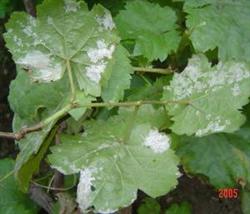
Detailed Explanation of Grape Downy Mildew Symptoms and Identification Methods
Symptom identification: It is a fungal disease, mainly affecting leaves, new shoots and young fruit. On affected leaves, pale yellowish-brown water-soaked spots with indistinct edges first appear; the lesions gradually expand into irregular or slightly rounded large yellowish-brown patches, up to 1-3 cm in diameter, with indistinct edges. Multiple lesions can merge into large patches, and in wet...
-
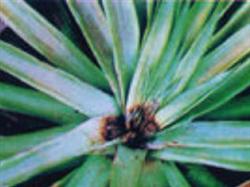
How to prevent and control pineapple heart rot? Introduction to practical methods
This disease mainly affects seedlings, but can also affect mature plants. In affected plants, the leaves are still greenish at first, only slightly darker and duller in color, while the central leaves are yellowish-white. Afterward, the leaf color gradually turns yellow or reddish-yellow, the leaf tips dry up, and a water-soaked rotting area develops at the leaf base. The most important characteristic of this disease is that the central leaves can be pulled out easily....
-
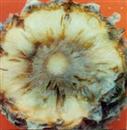
What are the control methods for pineapple fruitlet brown rot?
Pineapple fruitlet brown rot, also known as black heart disease, is a disease that occurs commonly in pineapple-growing regions worldwide, and is more prevalent in Cayenne-type pineapples. The disease mainly affects ripe fruit. Symptoms: the appearance of affected fruit is no different from healthy fruit, but symptoms can be seen when cut open. Infected fruitlets turn brown or form black...
-
What to Do About Phosphorus Deficiency in Sugarcane? Symptom Identification and Control Methods
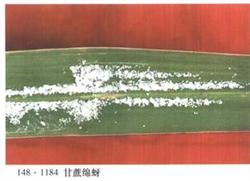
In the mid-to-late growth stages of sugarcane in Jinggu County, it is prone to damage by sugarcane woolly aphids. If control is not timely, it can cause severe yield reduction in sugarcane. Sugarcane woolly aphids gather on the back of leaves along both sides of the midrib, sucking sap, causing sugarcane leaves to wither and yellow, and excrete honeydew on the leaves, inducing sooty mold, affecting normal leaf photosynthesis...
-
Methods and Technical Key Points for Controlling Root Rot in Papaya Seedlings
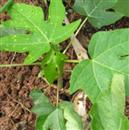
Papaya is a subtropical crop, propagated by seedlings and transplanting. Analysis suggests the main causes of root rot at the seedling stage are: water accumulation in the seedbed after rain, excessively high fertilizer concentration during the seedling stage, nematode invasion of the roots, and infection by root rot pathogens. Control measures: 1. The papaya root system carries out respiration in the soil. Under oxygen-deficient conditions, anaerobic respiration...
-
How to Protect Papaya from the Cold in Winter? Detailed Guide to Frost Protection Methods
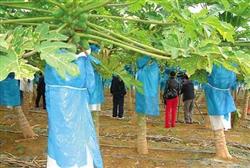
Papaya is a tropical crop that thrives in hot climates and is intolerant of low temperatures and frost. When the temperature drops below 5°C, frost damage occurs, so it is very important to take the following protective measures: Apply a heavy overwintering fertilizer. For each tree, apply 10-15 kg of organic fertilizer made from a mixture of decomposed human and animal manure and plant ash, plus 1.5 kg of phosphate fertilizer, at a distance of 80-100 cm from the main trunk, dig a ring-shaped trench 20 cm deep and 35 cm wide, mix the fertilizer thoroughly with the soil that was dug out, and then fill it back into the trench.
-
Control Methods and Technical Key Points for Papaya Brown Rot
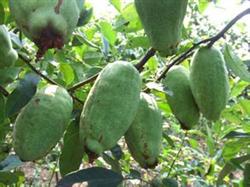
Generally planted in rows in the ground, but can also be grown as potted specimen plants. The best planting time is before bud break in early spring or after leaf fall in early winter. When lifting seedlings from the nursery, keeping the root system intact is one of the keys to successful planting. Generally, large seedlings for planting should be kept with a soil ball, while small seedlings should retain some native soil depending on the situation. After planting, the seedlings should be...
-

Papaya Planting, Cultivation Methods and Technical Key Points
Planting and Cultivation 1. Site selection and land preparation: Choose a sunny, fertile, moist and well-drained location for planting. It can also be planted at field edges and corners, on hillsides, and around houses. For block planting, dig holes at a spacing of 1 m x 2 m, and apply 5-10 kg of farmyard manure mixed with soil in each hole as base fertilizer. Seedling nursery land...
-
Detailed Explanation of Papaya (Chaenomeles) Cultivation Techniques and Management Methods
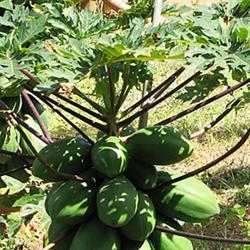
(1) Varieties. Papaya (Chaenomeles) varieties. (2) Land conditions. Altitude 300 to 900 m, soil type yellow-brown earth, soil layer thickness over 50 cm, soil pH 5.3 to 7.0, organic matter content ≥1.0%. (3) Cultivation management. 1. Seedling propagation: seedling propagation by seed. Raising seedlings is divided...
-
Key Cultivation Techniques and Planting Management Methods for Papaya
Papaya is a perennial deciduous shrub or small tree of the genus Chaenomeles in the rose family. It is mainly distributed in East China as well as Hubei, Jiangxi and other places, and is also cultivated in Henan and Hebei. Papaya is used both as food and medicine, mainly for medicinal purposes. The mature fruit of papaya is used as medicine; it is sour, astringent and warm in nature, and contains saponins, flavonoids, malic acid, tartaric acid, citric...
条件筛选