How to Fertilize a Persimmon Tree Well? A Detailed Guide to Scientific Fertilization Methods
How to fertilize a persimmon tree well? Please give guidance. The persimmon tree is a fruit tree that is widely cultivated, easy to manage, long-lived and high-yielding. It originated in our country, and is also cultivated in Japan, Korea and other countries. The persimmon tree is a deciduous tree, with a tree height of more than 10 m, a crown spread of about 16 m, and a lifespan of several hundred years. I. Root nutrition of the persimmon tree...
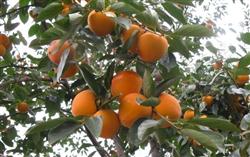
How to fertilize a persimmon tree well? Please give guidance
The persimmon tree is a fruit tree that is widely cultivated, easy to manage, long-lived and high-yielding. It originated in our country, and is also cultivated in Japan, Korea and other countries. The persimmon tree is a deciduous tree, with a tree height of more than 10 m, a crown spread of about 16 m, and a lifespan of several hundred years.
I. Characteristics of root nutritional growth of the persimmon tree
The root system of the persimmon tree varies with the rootstock. With Date Plum (Diospyros lotus) rootstock, the root system is relatively shallow, with many fine roots, long and persistent root hairs, and lateral roots extending very far, so it is tolerant of poor soil and drought. With persimmon rootstock, the root system is distributed relatively deep, with fewer lateral roots and fine roots, and is tolerant of moisture but not of cold. The root system has 2-3 growth peaks in a year, growing most vigorously in the rainy season, and stops in November.
Persimmon likes warmth, has a strong root system, and has strong and wide-ranging nutrient absorption capacity, so it is not strict about soil requirements. However, loam or clay loam with deep soil layers, a groundwater level below 1 m, and good water and fertilizer retention is preferable. The persimmon's requirement for soil pH varies with the type of rootstock. Date Plum is suitable for neutral soil, and can also tolerate slightly acidic or slightly alkaline conditions, while wild persimmon rootstock is suitable for slightly acidic soil. A range of pH 50.-6.8 is more suitable. The total salt content of the soil must not exceed 0.1%-0.13%; when there is more CL⁻ and SO42⁻ in the soil, it is unfavorable for the growth of the persimmon tree.
II. Fertilization techniques for the persimmon tree
(I) Fertilization timing. The fertilizer requirement period of the persimmon tree proceeds in sync with the development of organs such as new shoot growth, flowering and fruiting. In production, there are several key fertilization periods: "flower-promoting fertilizer", "flower-and-fruit-stabilizing fertilizer" and "fruit-fattening fertilizer".
1. Base fertilizer. Generally applied before and after fruit harvest (September-October) or at bud break (March), and application before fruit harvest is best. The base fertilizer is mainly organic fertilizer, applied at 1/2 of the annual amount, and attention should be paid to combined application of nitrogen, phosphorus and potassium fertilizers; combining with watering gives better fertilizer efficiency.
2. Topdressing. Mainly quick-acting nitrogen, phosphorus and potassium fertilizers, human manure and urine, etc. It can be applied in several periods.
Pre-flowering topdressing: topdressing from late April to early May is preferable. Topdressing too early or too much easily causes flower and fruit drop.
Post-flowering topdressing: after the persimmon tree flowers, mainly quick-acting nitrogen fertilizer, followed by phosphorus fertilizer; some trace element fertilizers can also be applied together by spraying.
Fruit-fattening fertilizer: at the stage of persimmon fruit enlargement and flower bud differentiation; generally from late June to mid-July, mainly nitrogen fertilizer, with an appropriate amount of phosphorus and potassium fertilizer.
Late fruit growth stage: after mid-August, to increase the nutrient accumulation of the tree; too early will stimulate the occurrence of autumn shoots.
(II) Fertilization amount. Generally, for a very large tree bearing about 1000 kg, apply 300-600 kg of high-quality organic fertilizer per year. For 3-5 year old young trees, apply 100 kg of organic fertilizer, plus 0.2 kg of ammonium sulfate. Table 7-26 is for reference only.
Table 7-26 Application amounts of the three elements nitrogen, phosphorus and potassium for persimmon (180 trees/hectare)
Three elements 1 year (kg) 5 years (kg) 10 years (kg) 15 years (kg) 20 years (kg)
N 1.88 3.76 7.52 9.40 11.13
P 1.33 2.26 4.51 3.76 6.77
K 1.50 3.01 6.01 7.52 9.02
(III) Fertilization methods
1. Soil fertilization. It varies according to the development and extension of the root system and the type of fertilizer and soil. There are ring, radial and whole-orchard fertilization methods.
2. Foliar topdressing. The time, frequency and concentration of foliar topdressing depend on the growth cycle and tree vigor. Usually it can be sprayed 2-3 times during spring shoot growth, before flowering and after flowering. Before flowering, 0.3%-0.5% urea solution ?? 0.1%-0.5% boric acid; after flowering, 0.3%-0.5% urea solution ?? 0.2%-0.3% monopotassium phosphate; at the peak fruit growth stage in late June, spray a mixed solution of urea and phosphorus-potassium fertilizer 1-2 times. During the second fruit enlargement and coloring stage, spray quick-acting nitrogen and 0.2%-0.3% phosphorus-potassium fertilizer (ammonium phosphate, potassium chloride, potassium sulfate, etc.) 1-2 times.
Click to get more persimmon tree cultivation techniques
Click to get more fruit cultivation techniques