What methods can promote chestnut fruiting?
What methods can promote chestnut fruiting? Here is an introduction. To promote chestnut fruiting, you can refer to the following methods: 1. Increase boron fertilizer application, with remarkable results. Through experiments, combined with chemical fertilizer application, use 100-150 grams of borax per tree evenly mixed into urea, dig a ring-shaped ditch about 1 m from the trunk with a depth and width of 15-20 cm each...
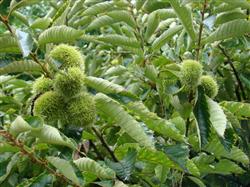
What methods can promote chestnut fruiting? Here is an introduction
To promote chestnut fruiting, you can refer to the following methods:
1. Increase boron fertilizer application, with remarkable results. Through experiments, combined with chemical fertilizer application, use 100-150 grams of borax per chestnut tree evenly mixed into urea, dig a ring-shaped ditch about 1 m from the trunk with a depth and width of 15-20 cm each, apply the fertilizer evenly into the ditch and cover it with soil and firm it at once. The results show that compared with no boron application, the fruiting rate increased by 8%, the yield per unit area increased by nearly 10%, and the seeds were plump, bright in color, and high in quality.
2. Preserve water and protect roots, strictly prohibit deep plowing. Many farmers, for convenience and to expand the area for intercropping, use oxen to plow the land, even plowing to less than 30 cm from the trunk. The tree roots are either cut off by plowing or lifted up. Plowing 2-3 times a year not only makes chestnut trees grow slowly, but is also unfavorable for achieving high yields. In addition, the flowering and bur-forming period of chestnut is also a period of large water demand. If there is a drought year, new roots have not yet grown, and old roots have been cut off by plowing, not only will the number of burs decrease, but the empty and shriveled rate will naturally be high, which will inevitably lead to reduced yield. Therefore, protect roots and preserve water, and prohibit plowing with oxen.
3. Moderate intercropping, using short-term crops to support long-term crops. Intercropping must adhere to the principle of not neglecting both chestnut and intercrops. In selecting crop varieties, dwarf varieties should be the main choice, such as soybeans, medicinal herbs, etc. As the saplings grow (about 5 years), it can be combined with livestock farming, and some perennial shade-tolerant and barren-tolerant forage grasses can be interplanted.
Click to get more chestnut tree planting techniques
Click to get more fruit planting techniques