-
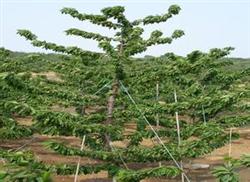
Cherry post-harvest management methods and key points of summer pruning techniques
Pinching new shoots: To promote flower bud differentiation and prevent excessive vegetative growth, the method of pinching new shoots should be adopted for control. That is, pinch the new shoots that have not stopped growing, and the pinching position is generally bounded by the half-leaf point; after pinching, growth stops for 10-15 days and then secondary shoots emerge, and when they grow to 15-20 cm, a second pinching is carried out,...
-
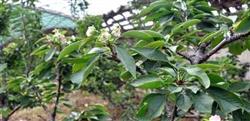
Detailed Explanation of Key Technical Points for Post-Bloom Management of Cherry Trees
Sweet cherries bloom in spring and fruit in summer. Recently, many cherry growers have called to ask about post-bloom management techniques for cherry trees. In response, the reporter visited Zhang Zhicheng, an expert on miscellaneous fruits at Northwest A&F University. Zhang Zhicheng reminds farmers that sweet cherries mature successively more than 30 days after bloom, and the period from post-bloom to fruit maturity is currently a critical stage for technical management...
-
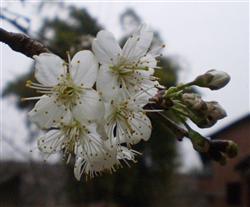
What are the management methods for cherries from flowering to before ripening?
The flower and fruit management of cherries is mainly reflected in pollination and fruit retention, flower and fruit thinning, and fruit protection before harvest. Cherry is a fruit tree with low self-fruitfulness. To ensure fruit set, in addition to configuring pollinizer trees properly when establishing the orchard, artificial pollination and the use of flower-visiting insects to assist pollination should also be done well to increase the fruit-setting rate. At the same time,...
-

Detailed Explanation of Key Field Management Techniques for Peppers
Field Management Techniques for Peppers
-

Detailed Explanation of Post-Harvest Management Techniques for Chestnut
Post-Harvest Management Techniques for Chestnut
-
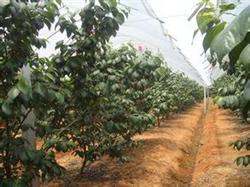
What are the key points of soil management measures in cherry orchards
Although large cherries have a well-developed root system, they have no taproot, only a large number of fibrous roots and hair roots distributed horizontally at about 20-30 cm underground, so the timing and method of fertilization must be well understood. Large cherries are best fertilized 3-4 times a year. The first fertilization should be completed within 10 days after the fruit is finished. 40 days after the fruit is finished...
-

-
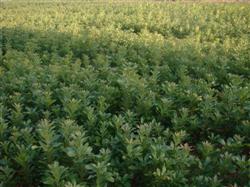
A detailed guide to bayberry cultivation techniques: master all the key points of planting and management
Biological characteristics of cultivation: It prefers a warm, humid, cloudy and misty climate. It is not tolerant of strong light or cold. It is best planted on north- or east-facing mountain slopes in deep, loose, fertile, well-drained acidic yellow soil. Cultivation techniques: There are many cultivars; by fruit color they can be divided into white, red, pink...
-
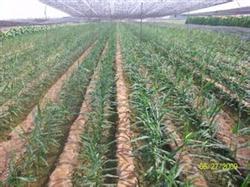
How to Grow Ginger in Northern China for High Yields? A Detailed Guide to Cultivation and Management Techniques
I. Pre-planting Preparation 1. Fine soil preparation and adequate basal fertilizer. It is advisable to choose a plot with fertile soil, good irrigation conditions, and no ginger blast disease, and to avoid continuous cropping as much as possible. On the basis of winter ploughing, carry out fine soil preparation early in spring, so that the soil is free of visible and hidden clods, loose on top and firm below. Increase the application of organic fertilizer, using high-quality chicken manure, manure from livestock pens free of diseased residues, cake fertilizer, and plant ash in combination; along with soil preparation, broadcast 4 cubic meters of high-quality decomposed chicken manure or 5000-10000 kg of high-quality pen manure as basal fertilizer. In high-fertility and high-water plots, open furrows at a row spacing of 60-65 cm ready for sowing, and apply 100 kg of soybean cake, 50 kg of ternary compound fertilizer, 50 kg of potassium sulfate, 2 kg of zinc fertilizer, and 1 kg of boron fertilizer in the furrows as seed fertilizer.
-
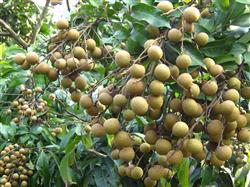
Management Techniques for Lychee and Longan After Fruit Harvest
The use of potassium chlorate to promote flowering in longan was first pioneered in Taiwan, China, and its commercial application for off-season longan cultivation began in Thailand. In recent years, longan-producing areas across our province have also been experimenting with potassium chlorate to promote flowering for off-season longan cultivation. Some have achieved certain economic benefits, but most orchards have seen poor or even no...
条件筛选