-
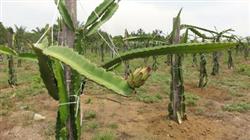
What are the key field management techniques for dragon fruit?
Dragon fruit begins to flower and bear fruit about 12-14 months after planting, and can flower 12-15 times per year. The fruiting period runs from April to November, and fruit can be harvested 30-40 days after the flowers fade. A single fruit generally weighs 500-1000 grams. In the second year after planting, each column produces more than 20 fruits, and by the third year it enters the full fruiting stage. With a relatively high level of management, 667 sq m...
-
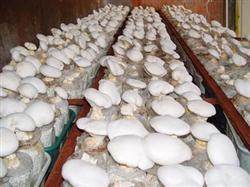
Detailed Explanation of Key Cultivation and Management Techniques for the White Lingzhi Mushroom (Pleurotus nebrodensis)
The white lingzhi mushroom (Pleurotus nebrodensis) is extremely sensitive to temperature. Its mycelium has a relatively wide temperature tolerance range and can survive at 4-37°C, with 23-28°C being optimal. The fruiting temperature range is 0-25°C. In the early growth stage, the primordium stage is best at 8-13°C, and in the later stage, young mushroom growth is best at 15°C. The mycelial growth of the white lingzhi mushroom requires...
-
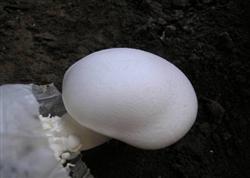
Detailed Explanation of the Key Points of New Cultivation and Management Techniques for Bailing Mushroom
Bailing mushroom, due to its unique edible and medicinal value, has seen its substrate input in northern China increase year by year in recent years, and a prosperous situation in both production and sales has emerged, making it one of the preferred mushroom types for the vast number of beginner mushroom growers to develop edible fungus production. Poor mushroom shape, etc. In this regard, here we combine the introduction of production technology key points to give...
-
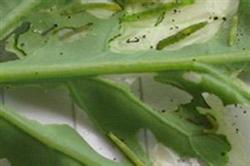
What are the field management measures for wheat and rapeseed during the overwintering period?
The diamondback moth is one of the main pests on rapeseed. In the central Jiangsu region, it can occur 3-4 generations in a single rapeseed growing season, with overlapping generations. When temperatures rise above 12°C (March-April), it is the peak period of damage. When rapeseed seedlings have 8-10 leaves, field inspections should be carried out. When larvae reach 20 or more per square meter, pesticide control should be applied immediately, ...
-
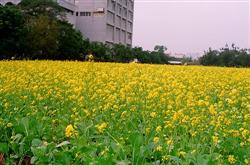
New tricks for winter management of rapeseed: master the methods to help it overwinter
Generally, the boron content in cruciferous crops is higher than in monocotyledonous crops; usually, crops with a high boron content also have a high boron requirement. Boron can promote the normal development of the reproductive organs of boron-loving crops such as rapeseed, accelerate pollen germination and pollen tube elongation, and facilitate fertilization and seed setting. When boron is deficient, these organs may wilt...
-

Detailed Explanation of Key Points on Muscovy Duck Breeding and Management Techniques
Breeding and Management of Muscovy Ducks
-
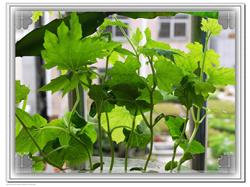
Bitter Melon Seedling Stage Management Methods and Technical Key Points
How to manage bitter melon at the seedling stage? Please advise on the following points to note during the bitter melon seedling stage: 1. Intertillage, weeding and earthing up: generally after planting and watering to help the seedlings recover, carry out the first intertillage when the surface soil is slightly dry and no longer sticky. If there are strong winds or the soil is dry, water thoroughly once more before intertilling. The second intertillage can be done...
-
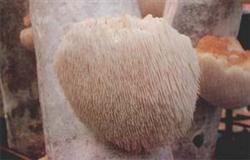
Detailed Explanation of Hericium erinaceus Cultivation Techniques and Management Key Points
Hericium erinaceus, also known as monkey head mushroom, hedgehog mushroom, cauliflower mushroom or Yamabushi mushroom, was originally a precious edible fungus hidden deep in dense forests. The fruiting body is round and thick, often hanging from tree trunks, covered with needle-like spines, and its shape closely resembles a monkey's head, hence the name. Hericium erinaceus has tender flesh and a fragrant aroma, delicious and tasty, with color, flavor and fragrance all of superior quality...
-
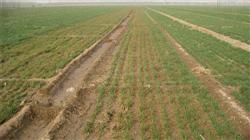
Spring Field Management Measures for Winter Wheat in Northern Xinjiang
Green-up Stage Management: After the beginning of spring (late March to early April), carry out spring harrowing in a timely manner, with a harrowing depth of 5 cm. Harrowing with a smoothing harrow or diagonal harrowing is preferable. Green-up fertilizer should be applied just before or at the early stage of wheat green-up, and it is advisable to apply more to weak seedlings, less or none to strong seedlings, and none to excessively vigorous seedlings. For wheat fields where the total number of stems per mu before winter is less than 400,000 and the wheat seedlings are growing weakly, late...
-
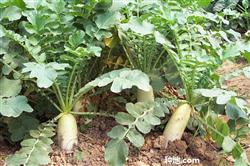
What are the key technical points for white radish planting and management?
How should white radish be managed during cultivation? Please advise. For growing white radish, you can refer to the following techniques: 1. Thinning. After the seedlings emerge, they grow rapidly, so thinning must be done in time; otherwise crowding and shading will occur, causing spindly growth. Thinning should be done early, generally 2 times. The first thinning is at 2 to 3 true leaves, and the principle is to remove the poor and keep the good. At the "belly breaking" stage, select...
条件筛选