Detailed Explanation of Key Technical Points for Post-Bloom Management of Cherry Trees
Sweet cherries bloom in spring and fruit in summer. Recently, many cherry growers have called to ask about post-bloom management techniques for cherry trees. In response, the reporter visited Zhang Zhicheng, an expert on miscellaneous fruits at Northwest A&F University. Zhang Zhicheng reminds farmers that sweet cherries mature successively more than 30 days after bloom, and the period from post-bloom to fruit maturity is currently a critical stage for technical management...
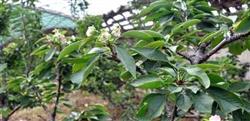
Sweet cherries bloom in spring and fruit in summer. Recently, many cherry growers have called to ask about post-bloom management techniques for cherry trees. In response, the reporter visited Zhang Zhicheng, an expert on miscellaneous fruits at Northwest A&F University. Zhang Zhicheng reminds farmers that sweet cherries mature successively more than 30 days after bloom, and the period from post-bloom to fruit maturity is currently a critical stage for technical management. Growers must do a good job in the following aspects of management.
Fruit thinning: After physiological fruit drop, small fruits, deformed fruits, damaged fruits and excess fruits on slender branches should be thinned out, so as to give the tree a reasonable load, balance tree vigor, improve the nutrient supply to the retained fruits, and help improve fruit quality.
Pinching: During the fruit enlargement stage, when new shoots grow to about 20 cm, severely pinch the new shoots (remove more than 1/2 of the new shoot). Control vegetative growth and regulate nutrient distribution. Through measures such as flower and fruit thinning and pinching, not only can yield and single fruit weight be increased, but the development quality of flower buds can also be promoted and improved.
Leaf removal: Cherry leaves are large and thick, and most fruits are easily covered and have difficulty receiving light. Removing an appropriate amount of leaves during the fruit coloring stage is beneficial to fruit coloring, but too many leaves should not be removed, so as not to affect tree growth and the quality of flower buds for the next year.
Increasing light: During the fruit coloring stage, lay silver reflective film under the tree canopy to increase light in the lower part of the canopy and the inner canopy, which is beneficial to fruit coloring.
Watering: After the flowers fall, when the fruit develops to the size of a soybean, and fruit development enters the pit-hardening stage, water promptly to prevent "willow-yellow fruit drop." Watering should be done in small amounts and multiple times to avoid soil drought. After the fruit begins to color, try not to water or water as little as possible to prevent fruit cracking.
Fertilization: During the fruit development stage, foliar spray with calcium fertilizer and micro-fertilizer Yemianbao 800-fold solution, or Gaomeishi 400-fold solution, or Fengbaoling 200-fold solution, has a significant effect on enlarging fruit size and increasing soluble solids content and coloring degree.
Pest and disease prevention: Most pests and diseases of sweet cherry fruit begin to cause damage during the fruit enlargement stage, so attention should be paid to pest and disease control work during this period.