-
Key points for winter management of loquat, teaching you how to strengthen care
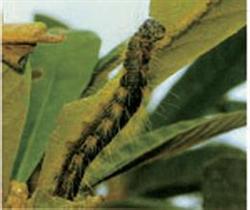
The loquat yellow hairy caterpillar Melanographia flexilineata Hampson, also known as the nodule moth, belongs to Lepidoptera, Noctuidae. In China it is distributed in production areas such as Nanjing, Anhui, Jiangxi, Hubei, Sichuan, Taiwan, China, Hainan, Guangdong, Guangxi and others. Besides damaging loquat, it also damages plants such as white fig and jackfruit. Damage characteristics...
-
How to do cross-pollination in eggplant? A detailed explanation of the management technique key points
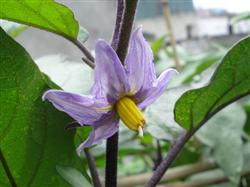
The most suitable temperature for eggplant flowering and fruiting is 25-30°C. Below 17°C or above 40°C, fertilization and fruiting cannot occur. The flowers open at around 6 a.m., and the anthers begin to split after 7 a.m., so the suitable pollination time each day is after 8 o'clock. For cross-pollination, on the afternoon of the day before the female parent's flower opens, select buds whose corolla has emerged to 1/2 of the bud, light purple, and not yet open, and emasculate them. Emasculation must be thorough to avoid false hybrids. On the next day, when the male parent's flowers open, collect pollen (pollination with pollen from flowers opening on the same day gives the highest fruit-setting rate), and smear the pollen onto the stigma of the female parent. The paired eggplant (2 fruits) and the four-door fruit (1 fruit) should be selected for crossing. After the crossed fruit sets, all other buds should be removed. According to experiments, repeated pollination can increase the seed yield of F1 (i.e., the first hybrid generation) by 10%.
-

Facility eggplant cultivation management: beware of common mistakes
In winter, when cultivating eggplant in facilities, vegetable growers still make some mistakes in the management process, which should be improved. Mistake one: not planting grafted seedlings in new greenhouses. Many vegetable growers believe that in newly built greenhouses there are few root-knot nematodes and few pathogens of Verticillium wilt, Fusarium wilt and bacterial wilt, so high yields can still be obtained without planting grafted eggplant seedlings, but...
-

Key points for the daily management of snow pea cultivation
Daily management of snow pea cultivation
-
January eggplant pest and disease control and management technical points
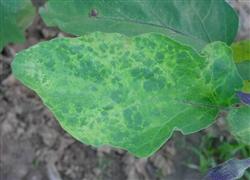
For eggplants raised as seedlings in early spring, the main focus is controlling soil-borne diseases: damping-off, Rhizoctonia rot and sclerotinia rot. To disinfect the seedbed soil, mix 50 kg of seedbed soil with 20 g of 68% Jinlei water-dispersible granules and 10 ml of 2.5% Shileshi suspension concentrate, sieve and blend the soil, then fill nutrient pots with it, or spread it over the seedling bed. During the seedling stage, spray 0.1%-0.2% monopotassium phosphate, ...
-
Never relax management after harvesting large cherries
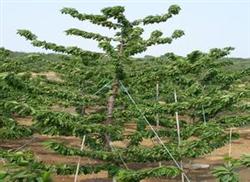
Large cherries in Shaanxi are basically harvested by May-June, and management is often relaxed after harvest. You should know that it is precisely after harvest that the effective period of cherry flower bud differentiation occurs. Balanced and timely nutrient supply to the tree plays a very important role in restoring tree vigor and forming flower buds. In the main cherry production areas of Baqiao in Xi'an and Tongchuan, growers all have rich experience...
-
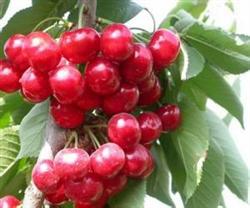
What are the key technical points for summer management of sweet cherry trees?
Summer is a critical period for the growth of sweet cherry trees, and pests and diseases are also very likely to occur, so fruit growers should pay attention to the summer management of sweet cherry trees. Doing the following points well will allow sweet cherry trees to smoothly pass through this growing season in summer. Pinching In summer, sweet cherry trees grow vigorously, and excessive leaves and branches have a certain impact on the fruiting of the following year...
-
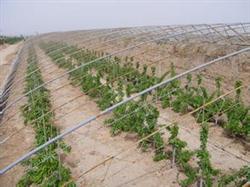
Detailed Explanation of Greenhouse Management Techniques for Sweet Cherry
1. Soil, Fertilizer and Water Management Sweet cherry is a shallow-rooted tree species with vigorous root respiration, so the requirements of water, fertilizer, air and heat needed for root growth should be met as much as possible. Each growing season requires at least 4 to 5 intertillages, with a depth of 5 to 10 cm being appropriate, which both removes weeds and preserves soil moisture, activates the soil and enhances permeability. After harvest, shallow plowing should be carried out...
-
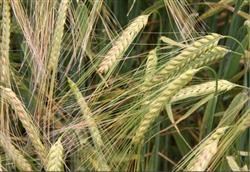
Key Technical Points and Cultivation Management Methods for Beer Barley Planting
Beer barley is a special type of barley used for brewing beer. Beer is nutritious and is known as "liquid bread", and there is great market demand for it. There are many barley varieties used for brewing both in China and abroad, mainly including Zaoshu No. 3, Aizao No. 3, Humai No. 4, Zhoumai No. 1, Zhepi No. 1, Yan 75-21, Manker, Ante, the Sisi system, and others...
-
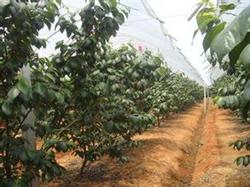
Do not relax post-harvest management of cherries; grower friends should take it seriously
I. Focus on summer pruning. While removing the film, promptly cut back the canopy and carry out heavy pruning. 1. Cut back the canopy. This method can reduce the overall height of each cherry tree canopy by 50-80 cm respectively, preventing the tree from growing taller and taller and affecting the ventilation and light conditions inside. 2. Cut and thin the main branches. Heavy cutting is required...
条件筛选