What are the key technical points for spring grape management?
Spring is the season when grapes bud and unfold leaves, canes extend, and clusters form and flowers set fruit. Strengthening spring grape management can improve grape yield and quality. From mid-to-late February to early March, during the budbreak stage, irrigate to promote budbreak and apply quick-acting nitrogen fertilizer. At this stage, orchards with the conditions should irrigate the whole orchard promptly to ensure uniform budbreak. And at this time...
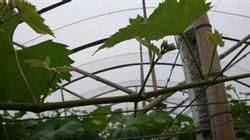
Spring is the season when grapes bud and unfold leaves, canes extend, and clusters form and flowers set fruit. Strengthening spring grape management can improve grape yield and quality.
From mid-to-late February to early March, during the budbreak stage, irrigate to promote budbreak and apply quick-acting nitrogen fertilizer. At this stage, orchards with the conditions should irrigate the whole orchard promptly to ensure uniform budbreak. And this is exactly when flower buds continue differentiating and new shoots begin vigorous growth, requiring large amounts of nutrients. Therefore, apply decomposed human manure and urine mixed with 0.2% urea. This fertilization amount accounts for about 15% of the whole year.
From March to mid-to-late April, carry out shoot positioning, bud removal, flower cluster treatment and disease control. After winter pruning, the winter buds on the fruiting canes usually have 70% to 80% sprouted. At this time, attention should be paid to bud retention. Retaining too many buds easily wastes nutrients, weakens tree vigor and is unfavorable for fruit set; but if too few buds are retained, it easily promotes vigorous growth of canes and, in severe cases, causes flower and fruit drop. Therefore, attention should be paid to bud removal and shoot positioning.
Bud removal: usually when multiple buds sprout on one fruiting cane, keep one bud every 15-20 cm, keep 2-5 new shoots per fruiting cane, and remove the rest from the base. When removing buds, generally remove the flower-cluster-free buds or weak buds among double buds, leaving only one shoot per bud eye. To ensure yield, when the new shoots grow to 4-5 leaves, you may also decide whether to keep or remove them based on whether their first tendril bears a flower cluster, but this wastes more nutrients.
Shoot positioning and vine tying: before flowering, pinch the retained new shoots above the flower cluster, leaving 5 leaves; for shoots without flowers, leave 8 leaves when pinching. After pinching, a large number of secondary shoots sprout. Keep only 1-2 secondary shoots at the top and pinch them repeatedly while leaving 2 leaves, and remove all other secondary shoots. At the same time, tie the vines timely according to cane growth.
Treatment of flower and fruit clusters: to ensure fruit set rate, usually manually remove 1/5 of the tip of the flower cluster, and spray 0.3% boron fertilizer plus 0.5% urea at flowering stage. Five days after flowering, for trees bearing more fruit, carry out manual fruit thinning, then bag them for protection.