-

Key Points of Purslane Planting Technology and Field Management Methods
Purslane Planting Technology
-
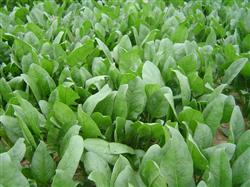
What are the technical measures for spinach sowing management?
After sowing spinach, fasten the greenhouse cover properly. Generally, two waterings are needed for full emergence; 10 days after emergence, water again. Once the two true leaves of spinach unfold, the leaf number, leaf weight, and leaf area increase rapidly. Before 3 to 4 leaves, keep the soil moist, apply 25 kg of ammonium bicarbonate per mu, shallow hoe once, thin out overly dense seedlings, and control water appropriately. In November around "Minor Snow"...
-
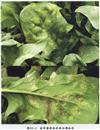
Comprehensive Management and Control Methods for Spinach Downy Mildew
Comprehensive management of spinach downy mildew means integrated management of spinach downy mildew. 1. Fertilizer and water management. Spinach prefers fertile, moist, cool conditions and dislikes drought and waterlogging; it is a fast-growing vegetable. Therefore, during the growing period, sufficient fertilizer and water must be supplied in a timely manner. From sowing to full emergence, the soil must be kept moist to ensure full emergence. At the 3-leaf stage, cultivate and weed, ...
-
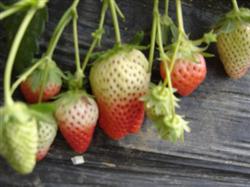
Field management of strawberries must be strengthened after harvest
After the strawberry berries are harvested, the plants enter a stage of vigorous growth, with a large number of runners developing, new crown branches growing faster, and new young plants forming, which is the second peak period of vegetative growth for the year. Afterwards, as the temperature gradually rises, growth begins to slow down, and around the beginning of autumn, flower bud differentiation begins and then the plants shift into the reproductive growth stage...
-
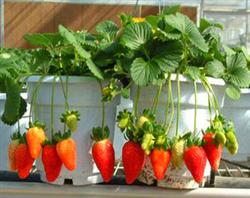
Strawberry Container Cultivation Techniques and Management Methods
Strawberry is a perennial herbaceous plant of the genus Fragaria in the rose family (Rosaceae). Its flowers are white and its fruit red, the plant is short, with leaves growing in clusters, and green leaves set off the red fruit as it creeps along the ground, full of charm. In warm-climate regions it does not shed its leaves in winter, and its flowering and fruiting period is long; from November to May of the following year it has both flowers and fruit, and it can be used to arrange flower beds and flower borders. When the fruit of a potted strawberry is bright red...
-
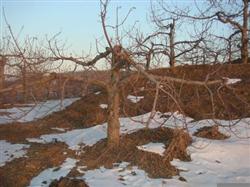
Key summer management techniques after reshaping apple trees
After reshaping, most tree forms in the Weibei area became open-center trunk forms. The open-center trunk form has only 3-5 main branches, a great reduction compared with the large branch count before reshaping, but because the root system below is still fully functional, in the year of reshaping the trees generally (except weak trees) produce vigorous shoots. Therefore we must pay attention to reshaping...
-
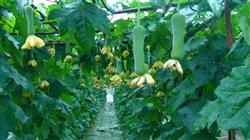
Detailed Explanation of Key Points of Luffa Cultivation and Management Techniques
Sow and raise seedlings in early to mid-March. Local varieties such as Hangzhou iron-skin luffa and Linhai white luffa can be selected, with a seeding rate of 20O-300 grams per mu. April (1) Planting: Luffa prefers fertile soil rich in humus. Deeply plow and level the soil to make beds. Bed width (including ditch) 2.6-3.3 m, one row per bed, hole spacing 50 cm,...
-
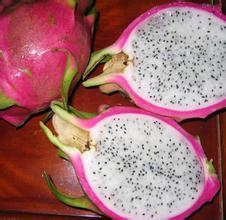
Detailed Explanation of Key Technical Points for Dragon Fruit Cultivation and Management
Depending on the specific variety, dragon fruit belongs to the Cactaceae family, either the genus Hylocereus (Hylocereus undatus) or the genus Selenicereus (Selenicereus megalanthus). It originated in Central and South America, including Costa Rica, Panama, Ecuador, Cuba, and Colombia, as well as Vietnam in Southeast Asia...
-
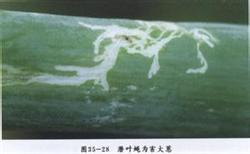
Autumn management of Welsh onions is timely, and key technical points must be mastered
Affected plants show larvae boring into the heart leaves and leaf sheaths of the onion, feeding on the leaf mesophyll and epidermis, and forming grayish-white irregular winding mines. The larvae tunnel through the mines in various parts of the onion leaves, damaging the leaf veins, and in severe cases causing the aboveground part of the Welsh onion to dry up and die. Generally, in areas with severe leafminer damage, agricultural control requires...
-
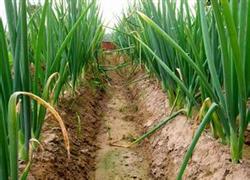
Key Winter Management Techniques for Intercropping Welsh Onions in Wheat Fields
In early autumn the weather turns cool and the onions begin vigorous growth, but the temperature is still relatively high and the plants grow slowly. Their water demand is not high, so they should be watered sparingly. Watering should be done in the morning and evening; never water at noon, as this suddenly lowers the soil temperature and affects root growth. In late August, when the average temperature in North China is below 24°C, Welsh onions...
条件筛选