A Detailed Guide to the Cultivation and Management of Azalea Bonsai
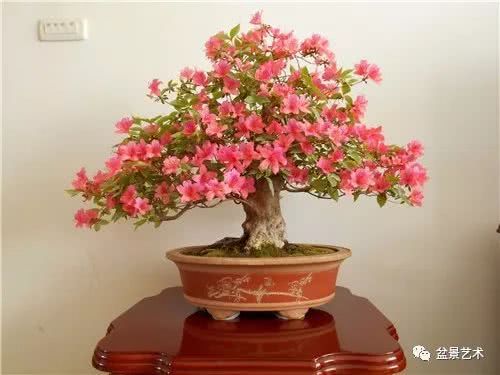
Yingshanhong, also known as azalea, belongs to the genus Rhododendron in the family Ericaceae. It is an evergreen, semi-evergreen, or deciduous shrub or small tree, and is one of the ten most famous flowers of China. When spring returns to the earth and the orioles call and the cuckoos sing, it is exactly the time when azaleas are in full bloom, with clusters of flowers and abundant spring vitality, delighting the eye and the heart.
I. Advantages:
1 Most of the trunk forms are ancient, unusual, and peculiar;
2 Strong sprouting ability and fast growth;
3 Many flowers and bright colors, making it an excellent flowering ornamental variety;
4 The varieties are common and trunk material is easy to obtain;
II. Habits:
1 It prefers a warm, semi-shaded, cool, humid, and ventilated environment; it fears blazing sun and high temperatures;
2 It prefers loose, fertile, humus-rich, slightly acidic soil; it dislikes alkaline and heavy clay soils;
3 Drainage must be smooth; waterlogging is taboo;
4 It is resistant to severe cold;
III. Key Cultivation Points:
1 Collecting the trunk: Although azalea varieties are common, good trunk material often grows in places that are relatively difficult to collect. Dig with great care, protect the root system well, keep the root ball slightly large, and retain the native soil (symbiotic fungi). Collect before or after the flowering period.
2 Trimming the trunk: Trim the slightly large root ball smaller according to cultivation needs, and cut the branches and trunk to the final position in one go. The root ends and branch ends must be sealed to prevent shrinkage.
3 Planting: Sterilize the soil in advance, plant in loose, plain soil, preferably in the ground, and after the root system is well developed (about one year), plant it in soil mixed according to its habits; place it according to its habits. The first year is for keeping it alive, the second year for nurturing the roots, the third year for nurturing the tree, and the fourth year for potting.
4 Fertilizer and water: No fertilizer in the first year, less fertilizer in the second year depending on the situation, normal fertilization in the third year, with light fertilizer applied frequently. Maintain moisture management throughout.
IV. Key Styling Points:
1 In the early stage, shaping is mainly by bending and wiring, with pruning as a supplement.
2 During the peak growing season, cut back as appropriate to promote side branches and dwarf the branches and trunk.
3 Root exposure cannot be rushed; carry it out in conjunction with repotting, once a year.
4 Vary according to the trunk; highlighting the tree's character and individuality is the key to azalea bonsai styling.
V. Key Maintenance Points:
1 Azalea has hard wood, brittle branches, thin bark, fine roots, and high environmental requirements. It is a relatively difficult tree species to grow, and the maintenance process must be meticulous and thorough.
2 Azalea shows a prominent phenomenon of false survival, lasting from as little as one year to as many as 2-3 years. It must be observed carefully, and one must not rush for quick results.
3 Azalea has strong sprouting ability, with vigorous budding on the lower part, which must be removed at any time to ensure nutrient supply to the upper part.
4 Do not keep flower buds in the first year, keep fewer flower buds in the second year, keep an appropriate number of flower buds in the third year, and remove the fruit after flowering.
5 Cultivating with native soil (symbiotic fungi) is one of the keys to survival; controlling flowering in the early stage is the second key; creating a maintenance environment according to its habits is the third key; not rushing for quick results is the fourth key.
6 Azalea branches are brittle and easy to break.
7 Diffused light should be even, and the maintenance position should be relatively fixed.
8 Control the alternating on-year and off-year flowering phenomenon by thinning buds.
9 Implementing artificial light and temperature control to create a micro-season can advance or delay flowering.