-
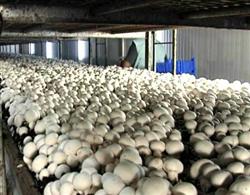
High-Yield Bed-Rack Cultivation Techniques for Button Mushrooms in Mushroom Houses
1. Mushroom house and bed rack structure. The mushroom house is 19.6 m long from east to west, 9 m wide from north to south, with front and rear walls 2.5 m high and gable walls 3.5 m high. The walls are built of bricks with lime mortar. The outside is pointed with cement; the inside is first coated once with lime mortar, then whitewashed once with lime mortar. The front and rear walls have 4 ventilation windows each of 25 cm x 20 cm, positioned above and below facing the walkways, with the first ventilation window 20 cm from the ground. Doors are set at both ends of the front wall, 1.0 m wide and 1.8 m high; the floor is paved with bricks and joints filled with cement. The roof is constructed with bamboo poles and plastic film. The bed racks are 7.8 m long, 1.5 m wide and 2.3 m high, with 5 tiers in total. The first tier is 10 cm from the ground, and the spacing between the tiers above is 55 cm. There is 1 east-west walkway against the front wall, 0.7 m wide; and 10 north-south walkways, each 0.65 m wide. The total cultivation area is 500 sq m.
-
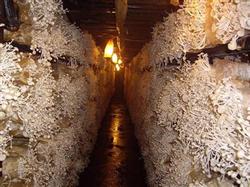
Detailed Explanation of New Technology for Raw Material Cultivation of Enoki Mushroom in Greenhouses
I. Morphological Characteristics The fruiting bodies grow in clusters. The cap diameter is 2-15 cm, hemispherical, with the margin incurved, later gradually expanding to flat. The stipe is straight, 2-13 cm long, 2-8 cm in diameter, roughly equal in thickness from top to bottom. The stipe is solid in the early stage and hollow in the later stage. There are 2 types of varieties, white and yellow. The white type is suitable for processing...
-
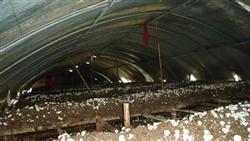
Detailed Explanation of Key Points for Button Mushroom Greenhouse Cultivation Techniques
1. Greenhouse specifications: 20 m long, 12 m wide, covering an area of 1.2 mu (including mixing yard, living quarters, roads, etc.), with 8 bamboo racks of 8 layers each inside, and a planting area of 1000 sq m. 2. Compost formula (for 1000 sq m): rice straw 22500 kg, cow manure 3000 kg, rapeseed cake 1000 kg, compound fertilizer 400 kg, urea 1...
-
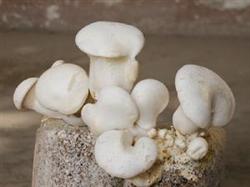
How to prevent deformed mushrooms in white king oyster mushrooms? Cause analysis and solutions
1. Unreasonable room and shed structure. White king oyster mushroom cultivation sites are divided into indoor mushroom rooms and outdoor mushroom sheds. Because of unreasonable design, air often does not circulate and severe oxygen deficiency occurs, causing the aerobic white king oyster mushroom to develop deformities. An ideal mushroom shed should face south from the north or face east from the west. The room or shed should not be too large. Generally, a rectangular shed room should hold 300... per shed.
-
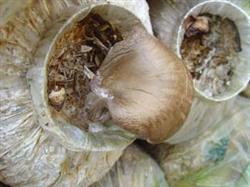
Spent oyster mushroom substrate can be reused, turning waste into treasure through secondary use
Experts point out that oyster mushroom soft rot is mainly manifested by the white mycelium of the oyster mushroom growing in a spider-web pattern on the surface of the bed, spreading rapidly, covering the bed surface, and surrounding the fruiting bodies. Once the base of the fruiting body is surrounded by mycelium, it becomes infected; the pathogen spreads upward along the stipe, ultimately resulting in the fruiting body stopping growth, with its color turning dark, and rapidly...
-
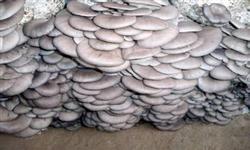
Two-stage fruiting method can be used for oyster mushroom cultivation
Symptoms of tumor-cap mushroom: the fruiting body develops and grows slowly, and granular or tumor-like protrusions appear on the cap. When the disease is severe, the cap becomes rigid and shrinks, the mushroom texture hardens, and the fruiting body stops growing and developing. Control: choose medium-to-low temperature varieties for cultivation, strengthen greenhouse insulation and heating measures, and properly control the greenhouse fruiting temperature. Usually...
-
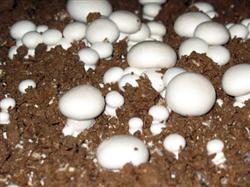
What are the common problems during the mycelial growth stage of button mushrooms? Analysis of causes and control measures
Contaminant fungi and their control methods. The ink cap mushroom, commonly known as the wild mushroom, has these morphological characteristics: the cap is initially bullet-shaped or oval, jade white, grayish white or yellowish white, with most of the surface covered in scales, and a slender, hollow stem. When mature, the cap expands, the gills gradually turn from white to black, and finally autolyze together with the cap into an ink-like liquid. Control method: properly compost the growing substrate...
-
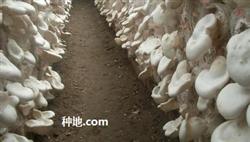
How to Achieve High Yield in Greenhouse Cultivation of Bai Ling Gu (White King Oyster Mushroom)
How can high yield be achieved in greenhouse cultivation of Bai Ling Gu? What methods can be used? Bai Ling Gu, also known as Bai A Wei Mo (White Ferula Mushroom), is a large, fleshy, flat mushroom of extremely fine quality that originally grew wild in arid grasslands. After artificial cultivation, it is just as rich in protein and amino acids as the wild mushroom, with the highest content of glutamic acid and arginine...
-
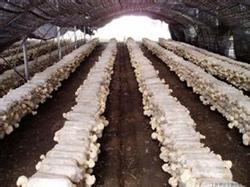
How is lion's mane mushroom cultivated in plastic greenhouses?
How is lion's mane mushroom cultivated in plastic greenhouses? Please explain. Lion's mane mushroom (Hericium erinaceus) is a mid-to-high-grade edible fungus with a distinctive flavor and high nutritional and health value. As people's living standards improve, the market for fresh lion's mane mushroom is gradually expanding. Popularizing lion's mane mushroom cultivation can both meet people's consumer needs and help mushroom farmers...
-
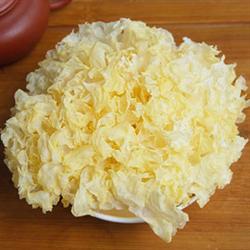
What season is suitable for cultivating white fungus (Tremella fuciformis), and what are the commonly used formulas?
What season is suitable for cultivating white fungus (Tremella fuciformis), and what are the commonly used formulas? Please give an introduction. Cultivating white fungus requires selecting a suitable cultivation period based on its biological characteristics and in combination with the climate environment of the cultivation region. Usually, inoculation and cultivation are arranged in spring from March to April and in autumn from September to October. If temperature can be regulated, it can be cultivated all year round....
条件筛选