How to Achieve High Yield in Greenhouse Cultivation of Bai Ling Gu (White King Oyster Mushroom)
How can high yield be achieved in greenhouse cultivation of Bai Ling Gu? What methods can be used? Bai Ling Gu, also known as Bai A Wei Mo (White Ferula Mushroom), is a large, fleshy, flat mushroom of extremely fine quality that originally grew wild in arid grasslands. After artificial cultivation, it is just as rich in protein and amino acids as the wild mushroom, with the highest content of glutamic acid and arginine...
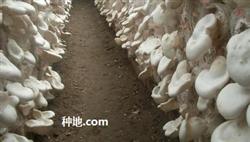
How can high yield be achieved in greenhouse cultivation of Bai Ling Gu? What methods can be used?
Bai Ling Gu, also known as Bai A Wei Mo (White Ferula Mushroom), is a large, fleshy, flat mushroom of extremely fine quality that originally grew wild in arid grasslands. After artificial cultivation, it is just as rich in protein and amino acids as the wild mushroom, with the highest content of glutamic acid and arginine. In addition, it is also rich in vitamin D and various mineral elements, making it a natural health-promoting and rare edible mushroom.
In recent years, because the production of bulk edible mushroom products (oyster mushrooms, shiitake mushrooms, enoki mushrooms, button mushrooms, etc.) has increased too quickly and too sharply, especially in our country, their prices have been declining steadily, directly affecting the income of mushroom farmers. However, some rare mushroom varieties have shown very good market returns, and Bai Ling Gu ranks first among them. It is worth noting that our country has joined the WTO, the national gate has been opened, and today's world has become a unified internationalized large market. With the operation of the market economy, this will directly affect the development of all industries in our country, so the development of the edible mushroom industry in our Shanxi Province must also undergo necessary adjustments in structure, varieties, and production volume in accordance with the operating rules of the market economy. For this reason, in 1999 we successively introduced and improved the cultivation technology of this rare mushroom together with relevant researchers from the Shanxi Institute of Biology and the Chinese Academy of Sciences, and in 2001 carried out batch demonstrative commercial cultivation, achieving very good economic returns. Therefore, we believe that the promotion of this technology will play a very positive role in adjusting the rural industrial structure, driving regional economic development, and helping farmers escape poverty and become prosperous.
The high-yield cultivation technology for Bai Ling Gu in plastic greenhouse facilities is a mature technology with a certain degree of innovation, suitable for northern greenhouse cultivation, gradually improved through more than three years of introduction experiments and large-scale demonstrative production in collaboration with the Shanxi Institute of Biology and relevant researchers from the Chinese Academy of Sciences.
Its cultivation process is: material selection, preparation of synthetic substrate, bagging, sterilization, cooling, inoculation, mycelial culture, fruiting management, finished product processing, preservation and sale.
Main cultivation features: 1. Artificial multi-factor synthetic cultivation substrate: mainly using industrial and agricultural waste such as cottonseed hulls, corncobs, sawdust, etc.
2. Short bag mushroom sticks: using 17 cm x 33 cm plastic bags to make mushroom sticks (fruiting sticks).
3. Double mushroom wall micro-channel liquid replenishment and soil covering management technology.
The above three features concentrate the essence of this cultivation technology. It adopts the conventional bag cultivation method for growing mycelium, and also innovates the double mushroom wall micro-channel liquid replenishment and soil covering management technology. The use of this technology not only greatly reduces the contamination rate during the mycelial growth period, shortens the mycelial growth period of the mushroom sticks, and ensures the finished product rate of the mushroom sticks, but most critically, it increases biological efficiency by 30%-50% compared with conventional cultivation technology. This technology can make full use of the characteristics of northern greenhouses and the agricultural and sideline product waste of Shanxi and rural surplus labor, thereby ensuring the implementation of this technology. Using this technology, we conducted several batches of small-scale and pilot-scale trials, and in 2001 carried out the first large-scale commercial production (20,000 sticks), obtaining good returns, with biological efficiency reaching more than 70%, ranking at the leading level domestically and internationally. When cultivating Bai Ling Gu with this technology, for every 0.5 kg of dry material input, more than 0.35 kg of fresh mushrooms can be harvested. One mu of greenhouse can cultivate 2 batches per year, totaling 80,000 bags, with 0.35 kg of dry material per bag, producing approximately 16,000-20,000 kg of fresh mushrooms. At the current average wholesale market price of 7.5 yuan per kg, a profit of 120,000-150,000 yuan can be obtained, and the profit is quite considerable.
Click to get more Bai Ling Gu cultivation techniques
Click to get more edible mushroom cultivation techniques