-

Detailed Explanation of Mushroom Cylinder Cultivation Technology in Cold Greenhouses (Part 1)
I. Sowing Time: In the Xinbin area, from March 20 to April 10, preferably completed before Qingming Festival. When the temperature inside the greenhouse reaches above 5°C, cylinder production and cultivation can begin. II. Ingredient Mixing and Sterilization. Formula 1: Broadleaf sawdust 87%, wheat bran 8%, rice bran 8%, cornmeal 3%, gypsum 1%, with a moisture content of 58%-62%. Formula 2: Broadleaf sawdust 50 kg, wheat bran 10 kg, gypsum 1 kg, with a moisture content of 58%-62%. 1. Mixing: The mixed material should be sterilized promptly and must not be left for more than 2-3 hours, to avoid the growth of contaminant bacteria that could result in incomplete sterilization.
-
What are the preservation techniques for shiitake mushrooms? Introduction to commonly used methods
Shiitake mushrooms have a relatively high respiration rate, and in environments with high temperatures and dryness they lose water very easily, causing the fruiting bodies to shrivel; if the ambient humidity is high, they are prone to rot. The preservation and handling methods for fresh shiitake mushrooms are introduced as follows: 1. Low-temperature preservation. When the fruiting bodies are 60% mature, stop watering for 1 day, and harvest on the next morning or before noon. When harvesting, pinch the very bottom of the base of the fruiting body and twist gently to remove it; avoid pulling the stipe so that it breaks or the cap separates from the stipe, or so that substrate is pulled off with it. After harvesting, spread the fresh mushrooms in a single layer in the workroom, light a stove
-
Key Technical Points for Mycelium Running Management of Greenhouse Field-Grown Shiitake Mushrooms
After inoculation, stack the spawn bags in the incubation room for mycelium running. When the mycelium has grown to 6 cm wide, turn the stack; at 6-8 cm, turn the stack a second time. Arrange them in a triangular pattern to prevent overheating of the logs. 1. Piercing holes for aeration: If the mycelium around the edges is found to be shrinking, with the color changing from white to pale yellow and the mycelial coat thickening, this indicates that the mushroom logs are short of oxygen, and the first hole-piercing for aeration must be carried out. Make 3-4 holes around the inoculation point, 1.5-2.0 cm deep, to promote normal mycelial germination. After the mycelium has fully covered the entire bag, carry out a second hole-piercing for aeration, on both sides
-
Detailed explanation of year-round production technology for multiple mushroom species in one greenhouse
In 2001, our county began large-scale promotion of white beech mushroom (Pleurotus nebrodensis) production technology throughout the county. The white beech mushroom belongs to the medium-low temperature type of edible fungi, fruiting within the range of 5-20°C. Before fruiting, the white beech mushroom must undergo a low-temperature stimulation process, which determines that the fruiting period in our county is from late November to late March of the following year, causing the mushroom greenhouse to sit idle from April to November around summer, and the biological conversion rate of the white beech mushroom is also relatively low. Starting from 2002, our county began trial
-
How to do a good job of disinfection and sterilization treatment for edible mushroom greenhouses
In edible mushroom cultivation, the most important thing to pay attention to is the problem of disease and pest control, and the essence of the problem, in the final analysis, is actually a matter of prevention. Therefore, in the entire production process of edible mushrooms, always adhering to the principle of "prevention first" is very necessary for every producer. Through hotline consultation content, combined with the actual situation of surveys, the author found that quite a few mushroom farmer friends are very vague about the disinfection (sterilization) and killing (bacteria) treatment of mushroom greenhouses, or even indifferent to it. Some, although already somewhat aware, have treatment measures that
-
Main Problems and Cause Analysis in Pleurotus pulmonarius Cultivation
At present, the cultivation area of Pleurotus pulmonarius in our city has exceeded 50 million bags, making it one of the main edible mushroom varieties cultivated in our city, with good cultivation prospects and benefits. Pleurotus pulmonarius cultivation can be carried out year-round through low-temperature treatment in cold storage. However, due to improper season, variety, culture medium, temperature treatment and water control, phenomena such as failure to fruit or death of mushroom buds often occur. Through years of cultivation practice, we have explored and summarized the above problems for the reference of peers. 1 Variety selection Currently, the main variety cultivated in our city is the Pleurotus pulmonarius series introduced from Taiwan, China by Luoyuan
-
Technical Methods for Bag Cultivation of Edible Mushrooms in Mushroom Houses and Mushroom Sheds
1. Cultivation site and setup. Bag cultivation uses the shelf cultivation method in mushroom houses (sheds). Choose a clean, well-ventilated room; set up 4 to 5 tiers of bed frames indoors, with a tier spacing of 50 cm and the bottom tier 30 cm above the ground. Place the mushroom bags upright in a single layer on the shelves, with 100 bags per sq m. 2. Cultivation materials and formulas. (1) 23% mixed sawdust, 23% cottonseed hulls, 28% bean stalk powder, 19% wheat bran, 5% cornmeal, 1% sucrose, 1% calcium carbonate; (2) 36% mixed sawdust, 25% cottonseed hulls, bean
-
Building cozy foreign-style mushroom houses to achieve year-round mushroom production
Fengdu Town in Gutian County, Fujian Province, has taken breaking through the seasonal cultivation of mushrooms as a difficult problem to overcome in developing the edible fungi industry, increasing investment in science and technology, building European-style "foreign mushroom houses," changing traditional cultivation methods, and achieving off-season constant-temperature cultivation and year-round production. At the site, rows of distinctive European-style "foreign mushroom houses" can be seen; they are a newly built edible fungi production base of Gutian County "Gugu Yizu" Biotechnology Co., Ltd., covering an area of 20 mu, with a total of 24 modern specialized rooms, and each mushroom house is equipped with a large
-
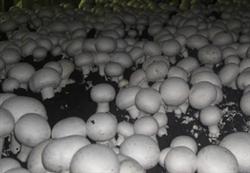
Cultivation Techniques for Intercropping Button Mushrooms in Winter-Warm Greenhouses with Cucumbers
To increase greenhouse income, we used the temperature and humidity conditions and limited space inside the greenhouse to carry out a three-dimensional planting trial of vegetables and button mushrooms. From October 1996 to May 1997, in a 420 sq m greenhouse, without affecting vegetable cultivation, we grew 200 sq m of button mushrooms, producing 2080 kg of button mushrooms, ...
-
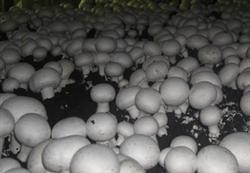
Cultivation Techniques for Interplanting Button Mushrooms in Greenhouse Cucumbers
Greenhouse standards required for this technique: build a greenhouse about 60 m long and 7 m wide, in a location with fertile soil, convenient irrigation and drainage, and unpolluted water. After the greenhouse is built, apply a heavy dose of organic barnyard manure plus potassium and phosphorus fertilizers, deep-plow and level the soil, and give it one thorough watering. Then evenly spray every corner inside the greenhouse with 0.5% dichlorvos, ...
条件筛选