Detailed Explanation of New Technology for Raw Material Cultivation of Enoki Mushroom in Greenhouses
I. Morphological Characteristics The fruiting bodies grow in clusters. The cap diameter is 2-15 cm, hemispherical, with the margin incurved, later gradually expanding to flat. The stipe is straight, 2-13 cm long, 2-8 cm in diameter, roughly equal in thickness from top to bottom. The stipe is solid in the early stage and hollow in the later stage. There are 2 types of varieties, white and yellow. The white type is suitable for processing...
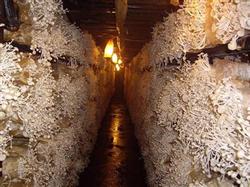
I. Morphological Characteristics
The fruiting bodies grow in clusters. The cap diameter is 2-15 cm, hemispherical, with the margin incurved, later gradually expanding to flat. The stipe is straight, 2-13 cm long, 2-8 cm in diameter, roughly equal in thickness from top to bottom. The stipe is solid in the early stage and hollow in the later stage. There are 2 types of varieties, white and yellow. The white type is suitable for processing into canned products in bottles, and the yellow type is suitable for fresh consumption and processing into dried products.
II. Biological Characteristics
1. Temperature
The optimum temperature for mycelial growth is 16-28°C, with the most suitable temperature being around 23°C. Growth stops below 4°C and above 34°C, and mycelium dies when the temperature exceeds 37°C. The temperature for fruiting body formation is 4-24°C, the suitable growth temperature is 5-16°C, and the most suitable temperature is around 13°C. If the temperature is too high, the caps tend to open prematurely and rot easily.
2. Humidity
The suitable water content in the substrate is 60%-70%, with the optimum being 65%; during mycelial colonization, the relative air humidity should be 60%-70%. For fruiting, the suitable relative humidity is 80%-90%.
3.pH
The suitable pH is 6-7, with the optimum pH being 6.5. Since the pH of the substrate drops by about 0.5 after sterilization, adjusting the pH of the raw material to 7.0 is most suitable.
4. Light
The mycelium does not require light, but the fruiting bodies need scattered light; fruiting bodies cannot form without light. If the light is too strong, the stipes become thick and short, the stipe tissue becomes fibrous, the caps open prematurely, and the stipes turn brown, reducing their commercial value.
5. Air
Enoki mushroom is a carbon dioxide-resistant type. If fresh and sufficient oxygen is supplied, the mycelium and fruiting bodies develop well; when the carbon dioxide concentration exceeds 1%, the stipes become slender and needle-tip mushrooms appear; when the carbon dioxide concentration reaches 5%, fruiting bodies cannot form at all.
6. Nutrition
Enoki mushroom is a wood-rotting edible fungus, with the most suitable carbon-to-nitrogen ratio of 20:1.
III. Spawn Production
1. Stock culture
The most suitable medium formulas are: ① Water 1000 ml, potato (peeled) 200 g, sucrose 20 g, potassium dihydrogen phosphate 0.6 g, magnesium sulfate 0.5 g, agar appropriate amount; ② Water 1000 ml, glucose 30 g, peptone 2 g, potassium dihydrogen phosphate 0.6 g, magnesium sulfate 0.5 g, 0.1 g vitamin B1, agar 20 g; ③ Water 1000 ml, rice straw (boiled extract) 200 g, sucrose 3 g, ammonium sulfate 3 g, agar 20 g.
2. Mother spawn and cultivation spawn
The most suitable formulas: ① Broadleaf tree sawdust 73%, organic matter (wheat bran, rice bran, cornmeal or soybean cake powder) 25%, gypsum 1%, sucrose 1%; ② Cottonseed hulls 88%, wheat bran 10%, sucrose 1%, gypsum 1%; ③ Wheat grains (or corn grains) 99%, gypsum 1%. Dry material : water = 10:12-13. The stock culture becomes fully colonized in 7-10 days, and the mother spawn and cultivation spawn become fully colonized in about 30 days. Follow conventional procedures for spawn production.
IV. Cultivation
1. Cultivation substrate formulas
① Cottonseed 85%, wheat bran 13%, gypsum 1%, calcium carbonate 1%.
② Sawdust 77%, wheat bran (or cornmeal, rice bran, soybean cake powder) 20%, sucrose 1%, gypsum 1%, calcium carbonate 1%.
2. Preparation of fermented substrate
① Mixing materials: Mix the main materials such as cottonseed hulls, organic matter, sawdust, and water-insoluble auxiliary materials such as gypsum and calcium carbonate evenly when dry. Dissolve water-soluble auxiliary materials such as sucrose in water and sprinkle over, then sprinkle water and mix evenly.
② Building the pile: The pile width is 1-1.5 m, height 1.2 m, and the length depends on the amount of material and the site. The difference in pile width between top and bottom should not exceed 20 cm. Cover the surface with straw curtains to retain heat and moisture.
③ Turning the pile: Turn the pile 2-3 times. Start timing when the temperature at 20 cm from the surface reaches 60°C, maintain for 48 hours, then turn the pile. Principle of turning: top to bottom, inside to outside. After the material temperature reaches 60°C, maintain for another 48 hours, and preferably turn the pile once more.
④ Standard for high-quality substrate: When the substrate is filled with white feathery mycelium and has a distinctive bread-like aroma, it is high-quality substrate. There must be no musty or foul odor. After the substrate is fully fermented, spray 0.1%-0.2% carbendazim.
3. Fumigating the greenhouse
Fumigate once 3-4 days before loading the substrate: formaldehyde 5-8 ml/cubic meter, sulfur 15 g/cubic meter, or smoke agent 3-4 g/cubic meter; fumigate once more after loading the substrate, and ventilate promptly.
4. Spawning
The spawn bed width is 80-100 cm, and the substrate thickness is 15-17 cm. Before spawning, spray the ground once with insecticide and fungicide. While spreading the substrate, press it down slightly. Use 2 layers of spawn, one in the middle and one on top. The spawn amount is 10%-15% of the dry material, with 2/5 used in the middle and 3/5 on the surface and around the sides. After spawning, sprinkle a thin layer of substrate on the surface, cover with straw curtains, spray carbendazim, and then cover with plastic film to seal.
5. Mycelial colonization management
Control the temperature at around 23°C, and the relative air humidity at 60%-70%. Ventilate the greenhouse frequently. At the same time, shake the plastic film on the substrate surface once each morning and evening to allow ventilation. After about 30 days, the mycelium becomes fully colonized and turns gray, indicating physiological maturity.
6. Primordia induction
Uniform primordia are the key to obtaining high yield and quality. First, control the temperature at around 13°C; fruiting is very difficult below 8°C, and fruiting bodies are sparse above 18°C. Control the humidity at 90%, and uncover the film for ventilation for 10 minutes each day, so that the mycelium changes from grayish-white to snow-white and brown droplets appear, at which point primordia can form.
7. Yield-promoting measures after primordia formation
In order to eliminate the apical dominance of enoki mushroom, promote the potential lateral buds on the stipe to tiller and regenerate a very large number of mushroom primordia, obtain more fruiting bodies, and achieve increased yield, the following measures can be taken: ① Ventilation-drying wilting method (i.e., regeneration method): When the mushrooms grow to 2-3 cm, uncover the film, ventilate and dry so that the caps wilt while the stipes still retain some firmness. Then cover the film again and prop it up, and provide suitable temperature and humidity. Dense primordia will appear in about 4 days. ② When the mushrooms grow to about 3 cm, cut off the tips and caps, press the stipe bases onto the spawn bed, provide suitable temperature and humidity, and increase the carbon dioxide concentration. Dense primordia will also appear in about 4 days.
8. Harvesting
Harvesting standards for fruiting bodies: For export, the stipe length is 10-15 cm; for domestic sale, the stipe length is 25 cm and the caps must not have opened. When harvesting, hold the spawn bed with one hand and gently pull off the mushroom bodies with the other. Then pick out residual mushrooms, cover with plastic film, and after the mycelium resumes growth, a second flush can be produced.
V. Points to Note
1. Causes of abnormal phenomena
① Caps sticking together, burr-like mushrooms, and stacked mushrooms are caused by insect damage, so insect control should be strengthened.
② Black spots and soft rot are caused by molds.
③ Rust spots and brown rot are caused by bacteria.
④ Cluster branching (only stipes grow, with no caps or very small caps): caused by high carbon dioxide concentration or excessive humidity.
⑤ The substrate becoming wet-rotten and dark brown in color is caused by nematodes.
⑥ Milky white, grayish-white, pale yellow, or pink viscous substances appearing on the substrate surface are caused by myxobacteria.
2. Yield-promoting measures are the key to increasing production, but these measures are limited to the first flush only and must not be used for the second or third flush.
3. The fermented substrate must reach the standard of full decomposition; this measure is the key to successful cultivation.
4. Maintain regular sanitation in the greenhouse, promptly clean up residual and diseased mushrooms, and frequently spray fungicides and insecticides, especially fungicides.