Spent oyster mushroom substrate can be reused, turning waste into treasure through secondary use
Experts point out that oyster mushroom soft rot is mainly manifested by the white mycelium of the oyster mushroom growing in a spider-web pattern on the surface of the bed, spreading rapidly, covering the bed surface, and surrounding the fruiting bodies. Once the base of the fruiting body is surrounded by mycelium, it becomes infected; the pathogen spreads upward along the stipe, ultimately resulting in the fruiting body stopping growth, with its color turning dark, and rapidly...
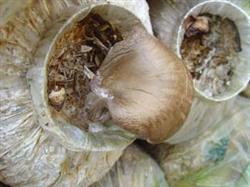 In oyster mushroom cultivation, the substrate after inoculation is often rendered unusable due to contamination by foreign fungi, caused by severe environmental pollution, inadequate disinfection of the mushroom house, careless operation, or aging of the spawn. To avoid wasting raw materials, the following two methods can be used to treat contaminated substrate:
1. Pasteurization method: For every 100 kg of contaminated substrate, use 6000-7000 g of lime and 400-500 g of 25% carbendazim, and adjust the contaminated substrate to a moisture content of 65%. After mixing thoroughly, pile the substrate as high as possible, use a 4 cm thick wooden stick to punch vertical holes down to the bottom of the pile, punching one hole every 30-40 cm, and pull it out with a twisting motion. After punching, cover with plastic film and ferment. When the substrate temperature rises to 60-70°C, turn the pile. After re-piling, turn the pile two more times following the previous method, then spread the pile to cool down, and inoculate with vigorous spawn at a rate of about 15%.
2. Atmospheric pressure sterilization method: First, sun-dry the contaminated substrate, raking it with a rake while drying, for a total of 2-3 days. Mix according to 100 kg of contaminated substrate, 3000 g of lime, and 300 g of carbendazim, adjust the moisture content to about 60%, bag it, and sterilize under atmospheric pressure for 10-12 hours, then hold for 12 hours. After cooling to room temperature, inoculate with spawn of appropriate age.
After inoculation, keep the incubation room temperature at 15-20°C; the mycelium can develop normally, and the bags will be fully colonized in about 35 days, with mushroom primordia appearing at 40 days, and mushrooms can be harvested after another 4-5 days. The development time is 5-7 days later than normal substrate, and 2-3 flushes of mushrooms can be harvested, with a biological efficiency of 70-80%.