What are the common problems during the mycelial growth stage of button mushrooms? Analysis of causes and control measures
Contaminant fungi and their control methods. The ink cap mushroom, commonly known as the wild mushroom, has these morphological characteristics: the cap is initially bullet-shaped or oval, jade white, grayish white or yellowish white, with most of the surface covered in scales, and a slender, hollow stem. When mature, the cap expands, the gills gradually turn from white to black, and finally autolyze together with the cap into an ink-like liquid. Control method: properly compost the growing substrate...
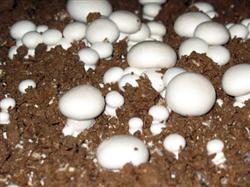 -- After spawning, the mycelium does not germinate, does not colonize the substrate, grows poorly, and even shrinks and dies. ① Spawn: the spawn used is aged or degenerated; poor quality; damaged by high temperature or high humidity; carrying disease and pest pathogens; unsuitable temperature type, etc. Mushroom growers must be very careful when purchasing spawn. ② Substrate: improper formulation of the growing substrate, an imbalanced carbon-to-nitrogen ratio leading to insufficient nitrogen or excessive nitrogen fertilizer, making it difficult for the spawn to establish and grow and causing damage. The substrate should be formulated reasonably, the fermentation process strictly controlled, nitrogen-containing chemical fertilizers added at the first turning of the pile, exhaust gases removed before spawning, and the pH checked. ③ Humidity: the substrate is too wet or too dry before spawning. If too wet, the mycelium gets insufficient oxygen and its vigor declines; if too dry, the mycelium struggles to colonize the substrate and shrinks from water loss. If the substrate is covered with plastic film for mycelial growth after spawning, failure to remove the film and ventilate in time will "drown" the surface spawn. Attention must be paid to controlling the moisture of the substrate; at the third turning of the pile, it can be adjusted by spreading the material out to air-dry or by adding water. ④ Temperature: the mycelial growth temperature is too high or too low. Incomplete secondary fermentation causes the pile temperature to rise after spawning; the substrate temperature is not lowered below 30°C before spawning; excessively high shed temperature during the mycelial growth stage, and so on, can all cause high-temperature "mycelial burning." When the shed (substrate) temperature is below 8°C, the spawn also struggles to grow. ⑤ Pests: damage by pests such as mites and nematodes. When the pest population density reaches 500,000 per sq m, the mycelium will break, shrink and die. The fermentation process must be strictly controlled, especially the secondary fermentation; the casing soil must be disinfected.
-- Mycelium overgrows after casing. After the mushroom bed is cased, the fluffy mycelium grows vigorously and often emerges above the soil surface, forming a dense, water-impermeable white "mycelial mat" that consumes nutrients and hinders normal mushroom production. The main causes are: ① improper substrate formulation with excessive nitrogen; or over-matured substrate with too many readily available nutrients, leading to excessive vegetative growth after spawning. ② Exposure to high temperature and high humidity with poor ventilation; spawning too early, so that the substrate temperature remains above 20°C for a long time after spawning, which favors mycelial growth but is unfavorable for fruiting body formation. ③ When using aerial-type varieties, too much aerial mycelium was selected during spawn production; the production spawn was cultured at too high a temperature, resulting in excessive aerial mycelium at the upper part of the bottle mouth. ④ The casing soil moisture is dry inside and wet outside. A reasonable formula should be selected. When the mycelium grows out of the casing soil, ventilation should be strengthened, temperature and humidity reduced, and "mushroom-setting water" sprayed in time to favor primordium formation. Watering should not be too rapid, and is best done in the cool of morning and evening. Once mycelial overgrowth is found, promptly use a small knife or bamboo strip to lightly scratch the mycelium or remove the mycelial mat, and re-cover with a layer of casing soil.
-- Mycelium does not grow onto the casing soil after watering is adjusted. 5-10 days after casing, the mycelium does not grow onto the soil, appearing grayish white and thin and weak; in severe cases, no mycelium can be seen on the bed surface, and the substrate surface even turns black. The main causes are: ① Watering too rapidly or too heavily, with water seeping into the substrate, causing the mycelium in the substrate layer and the soil layer to become disconnected, creating a "sandwich layer." Continuous watering adjustment at high temperatures above 25°C. Ventilation is also not timely, keeping the mycelium in a high-temperature, high-humidity, oxygen-deficient state for a long time, causing the mycelium to decline, turn yellow and lose vigor. ③ A false-wet phenomenon in which the soil layer has too little water content. ④ Poor insulation performance of the mushroom house or excessive wind exposure of the bed surface soil layer. ⑤ Excessive or overly concentrated pesticide spraying on the substrate surface or soil layer, causing phytotoxicity. ⑥ Infection and destruction by diseases and pests. ⑦ Large differences in the pH of the soil layer. Appropriate adjustments should be made according to the above causes.