How to prevent deformed mushrooms in white king oyster mushrooms? Cause analysis and solutions
1. Unreasonable room and shed structure. White king oyster mushroom cultivation sites are divided into indoor mushroom rooms and outdoor mushroom sheds. Because of unreasonable design, air often does not circulate and severe oxygen deficiency occurs, causing the aerobic white king oyster mushroom to develop deformities. An ideal mushroom shed should face south from the north or face east from the west. The room or shed should not be too large. Generally, a rectangular shed room should hold 300... per shed.
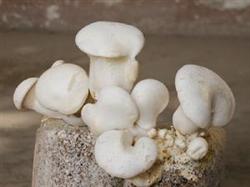
1. Unreasonable room and shed structure. White king oyster mushroom cultivation sites are divided into indoor mushroom rooms and outdoor mushroom sheds. Because of unreasonable design, air often does not circulate and severe oxygen deficiency occurs, causing the aerobic white king oyster mushroom to develop deformities. An ideal mushroom shed should face south from the north or face east from the west. The room or shed should not be too large. Generally, a rectangular shed room should hold 3000 bags or 5000 bags per shed. Ventilation openings should be set below both sides along the length, built with bricks to a 24cm x 24cm opening, with 1 ventilation opening every 1m. The ventilation openings on both sides along the width should be level with each other. The door film at both ends of the mushroom shed should be able to open and close. The top of the shed should be covered with anti-drip film plus straw curtains or shade netting.
2. Improper stacking of the mushroom wall. If the bags are brought into the shed and stacked too high and too densely, if sticky soil is filled between the mushroom walls, and if the film is cut improperly, all of these will lead to poor air permeability. To achieve timely fruiting and good mushrooms, the "five requirements" must be met: (1) Timing must be accurate: in early to mid-December, when the bags are physiologically mature, transfer them to primordium induction; (2) Stacking the wall must be stable: stack the bags 6 to 7 layers with a slight tilt, bottom width 120cm, top width 80cm, wall length 280cm, and leave a 60 to 80cm working path between mushroom walls; (3) Cutting the film must be moderate: cut the film at one inward end of the bag, and cutting 2/3 is appropriate; leave 1.5 to 2cm uncut at the exposed outer end to protect and surround the growing mushrooms; (4) The filling soil must be good: use sticky soil plus sandy loam, mixed with 1% lime and 0.5% compound fertilizer to make nutrient soil; (5) Make air holes well: after filling 3cm of soil on top of the mushroom wall, use mud to form a water-holding ring about 10cm deep, and every 40 to 50cm make a hole 3cm wide and deep enough to reach a position 2 to 3 bags from the bottom of the mushroom wall, to facilitate ventilation and irrigation.
3. Congenital nutritional deficiencies. A formula lacking nutrients, souring of the culture medium, and evaporation of water in the bag can easily cause deformed mushrooms. The bag is the culture medium for the growth and development of the white king oyster mushroom fruiting body, and the quality of the substrate affects the quality of the white king oyster mushroom. To produce more high-quality mushrooms, the following should be done: (1) Raw materials should be fresh and free of mildew; (2) The formula should be reasonable; (3) Use lime powder as an additive and it must not exceed 5%; (4) Understand the fermentation mechanism, add 0.3% fermentation agent during fermentation, ferment for 7 days, turn the pile 3 times, then transfer to bagging, sterilization, cooling, and inoculation.
4. Inaccurate grasp of the expected fruiting time. Artificially inducing primordia before the mycelium is mature will cause premature fruiting and deformities. From the inoculation date, when the cumulative mycelium cultivation time reaches 90 days, the surface mycelium of the bag is thick and white, and the substrate is slightly elastic, it indicates that the mycelium is mature. At this time, arranging the bags and building the wall is best.
5. Primordium induction techniques are not in place. After the mycelium is physiologically mature, it still needs 0 to 13% low-temperature stimulation for 10 to 15 days. During this period, it also needs 5 to 7 days of temperature difference stimulation above 10°C before the primordium can differentiate into mushroom buds. If the low-temperature resting period for the mycelium is insufficient and the temperature difference stimulation is not enough, the development of the fruiting body will be inhibited and deformed.
6. Failure to pay attention to bud thinning. If the mushroom buds are too dense and are not thinned, the mushroom bodies crowd each other when fruiting, resulting in deformities. Use a sharp knife to cut off excess young buds. Generally, leave 1 to 2 buds per bag, and no more than 3 at most. Select the superior and remove the inferior, keep the strong and remove the weak, and thin where dense and keep where sparse. After bud thinning, maintain the temperature at 13 to 18°C, not lower than 8°C, and not higher than 20°C, and maintain humidity at 85% to 90%.
7. Poor management during the fruiting period. If temperature, light, and air are not well regulated during the fruiting period, deformed mushrooms will also appear. Therefore, during the fruiting period, temperature, oxygen, and light must be well regulated.