-
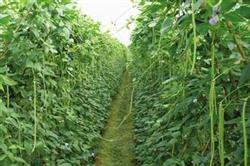
Field management of winter-planted beans is crucial, and growers should pay close attention to it.
For raising bean seedlings, direct sowing was mostly used in the past; on the basis of fully protecting the roots from cold damage, it ensures uniform and strong seedlings; it allows early sowing, early harvest, and an earlier market launch. In production, nutrient pots are mostly used for raising seedlings, and 50-cell plug trays can also be used, sowing 2~3 seeds per cell, watering thoroughly, and controlling the temperature reasonably. The seedling age is about 25 days...
-
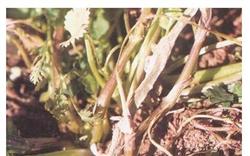
Cilantro Field Management Methods
Cilantro sclerotinia rot: in recent years, as the cilantro planting area has continued to expand, especially because crop rotation is difficult in protected cultivation, the pathogen has accumulated more and more, and the damage has become increasingly serious, becoming a major obstacle in cilantro production. 1. Symptom identification: cilantro sclerotinia rot mainly damages the base of the stem, followed by the leaves. At first, ...
-
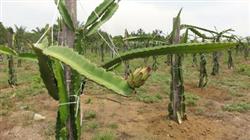
What are the key field management techniques for dragon fruit?
Dragon fruit begins to flower and bear fruit about 12-14 months after planting, and can flower 12-15 times per year. The fruiting period runs from April to November, and fruit can be harvested 30-40 days after the flowers fade. A single fruit generally weighs 500-1000 grams. In the second year after planting, each column produces more than 20 fruits, and by the third year it enters the full fruiting stage. With a relatively high level of management, 667 sq m...
-
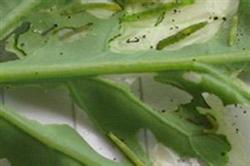
What are the field management measures for wheat and rapeseed during the overwintering period?
The diamondback moth is one of the main pests on rapeseed. In the central Jiangsu region, it can occur 3-4 generations in a single rapeseed growing season, with overlapping generations. When temperatures rise above 12°C (March-April), it is the peak period of damage. When rapeseed seedlings have 8-10 leaves, field inspections should be carried out. When larvae reach 20 or more per square meter, pesticide control should be applied immediately, ...
-
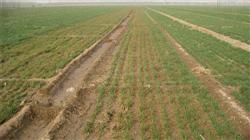
Spring Field Management Measures for Winter Wheat in Northern Xinjiang
Green-up Stage Management: After the beginning of spring (late March to early April), carry out spring harrowing in a timely manner, with a harrowing depth of 5 cm. Harrowing with a smoothing harrow or diagonal harrowing is preferable. Green-up fertilizer should be applied just before or at the early stage of wheat green-up, and it is advisable to apply more to weak seedlings, less or none to strong seedlings, and none to excessively vigorous seedlings. For wheat fields where the total number of stems per mu before winter is less than 400,000 and the wheat seedlings are growing weakly, late...
-
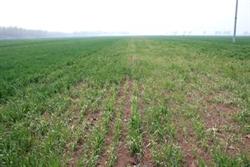
Key Technical Points for Spring Field Management of Dryland Wheat
I. Causes of Wheat Seedling Death in Winter and Spring 1. Internal causes refer to the ability of the wheat plant itself to resist cold and drought. Using varieties with poor cold resistance easily leads to seedling death. In individual cases, wheat seedlings sown too early that have reached the two-glume stage of spike differentiation before winter have weakened cold tolerance and often suffer severe seedling death when exposed to freezing injury. Some late and weak seedlings, having accumulated...
-
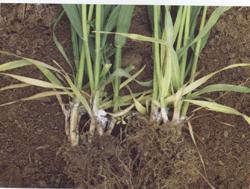
Four protection measures for wheat spring field management
I. Occurrence and harm of wheat sharp eyespot. Wheat sharp eyespot is a fungal disease mainly transmitted through soil. With the improvement of yield levels, the promotion of high-yielding varieties, and wheat field management with heavy water and heavy fertilizer, its harm has become increasingly serious. The pathogen of wheat sharp eyespot has a wide host range; besides infecting wheat, it can also...
-
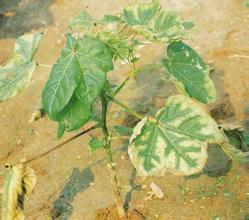
A Complete Analysis of Key Cotton Field Management Techniques
Water and fertilizer are the two most active factors in cotton production measures, and the regulation and control of water and fertilizer play a very important role in determining cotton yield. However, some cotton farmers are unrealistic and, in pursuit of higher cotton yields per unit area and higher cotton-growing profits, blindly irrigate and fertilize, causing cotton yields to decline, and in some cotton fields water...
-
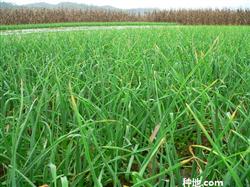
Detailed Explanation of Key Technical Points for Spring Field Management of Garlic
How to manage garlic in spring? Please introduce the water and fertilizer management of garlic after it turns green in spring, which is the key to a bumper garlic harvest. As the weather warms and the plants turn green, water and fertilizer uptake gradually increases, especially during the bolt-bearing stage and the bulb enlargement stage, which are the peak periods of water and fertilizer demand for garlic. Therefore, throughout the entire growth period of garlic, timely irrigation and topdressing should be carried out according to soil moisture, soil fertility and seedling conditions...
-
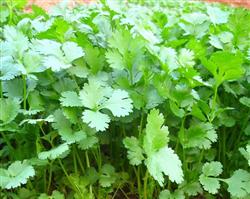
What are the open-field coriander planting and management methods?
How do you manage open-field coriander planting? Please advise. The open-field coriander planting management methods you can refer to are as follows: First, coriander has a long germination period; it takes about 9-10 days from sowing to emergence. During the coriander germination period, if there is sudden clear weather after rain, a layer of "pot crust" is likely to form on the seedbed, seriously affecting...
条件筛选