Key Technical Points for Spring Field Management of Dryland Wheat
I. Causes of Wheat Seedling Death in Winter and Spring 1. Internal causes refer to the ability of the wheat plant itself to resist cold and drought. Using varieties with poor cold resistance easily leads to seedling death. In individual cases, wheat seedlings sown too early that have reached the two-glume stage of spike differentiation before winter have weakened cold tolerance and often suffer severe seedling death when exposed to freezing injury. Some late and weak seedlings, having accumulated...
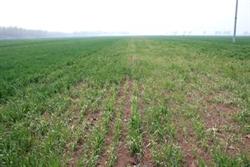 First, compaction and hoeing, and harrowing before the thaw. Combining compaction with hoeing can crush clods, seal cracks, settle the soil, raise and conserve soil moisture, promote root development, and improve the wheat's own drought resistance. Harrowing before the thaw has the same effect: it can break up soil crust in the wheat field, close cracks, form a fine surface soil layer, prevent wind drying, freezing injury and seedling death, and reduce water evaporation from the wheat field. In the Northwest wheat region, whether irrigated or dryland wheat fields, early spring harrowing should be carried out. For lush seedling fields, after the soil thaws in spring, deep inter-row tillage should be used to cut roots and control excessive growth; for weak seedling fields, shallow hoeing is suitable to raise soil temperature and promote the recovery of weak seedlings.
Second, apply fertilizer in early spring while there is moisture. In early spring, when the soil returns to slurry or after light rain, apply nitrogen fertilizer with a fertilizer drill or by opening furrows. This has a prominent effect on increasing the number of spikes per mu and grains per spike, raising grain weight, and increasing yield. Where no phosphate fertilizer was applied as base fertilizer, diammonium phosphate should be applied together with nitrogen fertilizer.