What are the field management measures for wheat and rapeseed during the overwintering period?
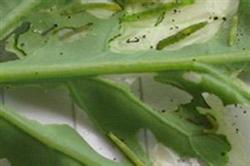
The diamondback moth is one of the main pests on rapeseed. In the central Jiangsu region, it can occur 3-4 generations in a single rapeseed growing season, with overlapping generations. When temperatures rise above 12°C (March-April), it is the peak period of damage. When rapeseed seedlings have 8-10 leaves, field inspections should be carried out. When larvae reach 20 or more per square meter, pesticide control should be applied immediately, ...
 Since the end of autumn sowing this year, temperatures across the province have generally been on the high side, rainfall has been evenly distributed in time and space, soil moisture is good, and the growth and development of wheat and rapeseed in the fields have accelerated. By the beginning of the overwintering period, the wheat seedling condition had caught up with the same period last year, and the rapeseed seedling condition was the best for the same period in recent years. However, at present, the imbalance in wheat and rapeseed seedling conditions across the province is still prominent, with a high proportion of both large and small seedlings. In production, measures such as controlling excessive growth, promoting sturdy growth, and preventing freezing to protect seedlings should be effectively implemented to ensure the safe overwintering of wheat and rapeseed in the fields.
Pre-winter climatic conditions and their effects
1. Suitable rainfall distribution and moderate rainfall are beneficial to the growth and development of wheat and rapeseed. This year, soil moisture across the province is relatively good. Since October, there have been many rainy days, but rainfall has not been heavy, and the distribution of rain has been suitable. According to data from the provincial meteorological department, from early October to mid-December, the provincial average rainfall was 105.7 mm, slightly less than normal; among this, rainfall in the Huaibei region, which is normally drier, was abundant at 118.2 mm, an increase of 32.6% over normal; rainfall in the central Jiangsu region was 111.6 mm, slightly less than normal; rainfall in the Jiangnan region was 81.4 mm, a decrease of 40.5% from normal. The continuous cloudy-rainy wet (waterlogged) damage that often occurs in rice-stubble wheat areas in central Jiangsu and Jiangnan did not occur, making this a rare year in the province's history without either drought or excessive wetness.
2. The abnormally high temperatures in November were beneficial to the transformation and upgrading of weak seedlings from late sowing and late transplanting. From October to mid-December, the accumulated temperature across the province was 1014.4°C, an increase of 95°C over normal. The accumulated temperatures in Huaibei, central Jiangsu, and Jiangnan increased by 71°C, 99°C, and 114°C over normal, respectively. Among these, temperatures in November were abnormally high, with the provincial daily average temperature at 13.8°C, 3.6°C higher than the same period in normal years, falling within the significantly high range and marking the highest value for the same period since 1961. The accumulated temperature in November increased by 108°C over normal, with accumulated temperatures in Huaibei, central Jiangsu, and Jiangnan increasing by 45°C, 81°C, and 119°C over normal, respectively. Calculated according to the accumulated temperature required for each leaf to grow (75°C for wheat; 70°C for rapeseed from 6-9 leaves and 55°C for 10-13 leaves), theoretically 0.6-1.6 additional leaves could be produced, equivalent to compensating for a delay of about 10 days in sowing or transplanting, which is beneficial to the transformation and upgrading of late-sown wheat and late-transplanted rapeseed seedlings and reduces the proportion of weak and small seedlings. At the same time, the proportion of excessively vigorous seedlings also increased.
3. Temperatures have been on the low side since mid-December, and the overwintering period has arrived early. After the end of November, affected by cold wave weather, temperatures began to drop significantly. Especially in mid-December, the daily average temperature was 1-2°C lower than normal, and the province experienced 5 consecutive days with daily average temperatures below 3°C from north to south. Wheat and rapeseed growth in various places successively entered the overwintering period, about 5 days earlier than normal, which is beneficial for controlling the growth of excessively vigorous seedlings, but poses a greater potential freezing damage threat to weak and small seedlings.
Seedling condition characteristics during the overwintering period
1. The overall wheat seedling condition is better than last year, dryland wheat is significantly better than last year, and there are relatively more excessively vigorous seedlings. According to the summary of seedling condition statistics from various cities during the overwintering period on December 20, the provincial average basic seedlings per mu for wheat was 234,000, 15,000 more than last year; the average leaf age was 4.4 leaves, 0.1 leaf more than last year; the average total tillers per mu was 489,000, 55,000 more than last year. Among these, in the Huaibei region, the average basic seedlings per mu was 249,000, 8,000 more than last year; the average leaf age was 4.7 leaves, 0.2 leaf more than last year; the average total tillers per mu was 584,000, 75,000 more than last year. In the central Jiangsu region, the average basic seedlings per mu was 212,000, 32,000 more than last year; the average leaf age was 3.7 leaves, 0.1 leaf more than last year; the average total tillers per mu was 340,000, 12,000 more than last year. In the southern Jiangsu region, the average basic seedlings per mu was 197,000, 20,000 more than last year; the average leaf age was 3.4 leaves, 0.1 leaf more than last year; the average total tillers per mu was 272,000, 26,000 more than last year. According to seedling condition ranking statistics, excessively vigorous seedlings accounted for 8.4%, 3.1 percentage points more than last year; first-class seedlings accounted for 35.8%, 5.5 percentage points more than last year; second-class seedlings accounted for 36.5%, 6.6 percentage points less than last year; third-class seedlings accounted for 19.3%, 2 percentage points less than last year. Compared with mid-November, excessively vigorous, first-class, second-class, and third-class seedlings increased by 2.8 and 5 percentage points and decreased by 1.2 and 6.6 percentage points, respectively.
2. The rapeseed seedling condition during the overwintering period is significantly better than last year. According to the overwintering period survey on December 20, the provincial average density of transplanted rapeseed was 7,125 plants per mu, basically flat compared with last year; the average leaf age was 12.8 leaves, the number of green leaves was 8.7, the plant height was 27.4 cm, the root crown diameter was 1.4 cm, and the spread was 40.8 cm, increasing by 0.9 leaf, 1.3 leaves, 3.7 cm, 0.5 cm, and 5.4 cm respectively compared with the same period last year. The provincial average density of directly sown rapeseed was 18,010 plants per mu, an increase of 2,270 plants compared with last year; the average leaf age was 10.4 leaves, the number of green leaves was 8.5, the plant height was 26.8 cm, the root crown diameter was 0.8 cm, and the spread was 31.9 cm, increasing by 1.9 leaves, 1.7 leaves, 6.1 cm, 0.2 cm, and 8.7 cm respectively compared with the same period last year. According to seedling condition ranking statistics, the proportions of first-class, second-class, and third-class seedlings were 45.6%, 38.1%, and 16.3%, respectively, increasing by 11.7 percentage points, decreasing by 2.9 percentage points, and decreasing by 8.8 percentage points compared with the same period last year. The absolute area of third-class seedlings was 884,000 mu, a decrease of 623,000 mu from last year, or 41.5%. Compared with last year, the proportion of third-class seedlings that grew excessively and bolted early was relatively high this year.
Field management measures during the overwintering period
In view of the current overall good wheat and rapeseed seedling conditions, but the relatively high proportion of seedlings at both extremes (excessively vigorous seedlings and third-class seedlings), field management measures during the overwintering period should focus on preventing freezing and protecting seedlings, and conscientiously carry out work such as pressing and mulching, clearing ditches and regulating soil moisture, and applying supplementary fertilizer according to seedling condition, to ensure the safe overwintering of wheat and rapeseed.
Strengthen pressing and mulching. Strengthening the pressing and mulching of wheat is important work for preventing freezing and protecting seedlings. Pressing should be carried out on sunny days at the end of a cold spell and the beginning of a warm one, when temperatures rise. In addition to pressing excessively vigorous seedlings with older leaf age and larger populations, for wheat fields with a large amount of rice straw returned to the field, because the surface soil layer is loose and prone to moisture loss, cold wave weather is especially likely to cause exposure of wheat tillering nodes and death of seedlings from suspended roots. Every possible mechanical or manual measure should be taken to carry out appropriate field pressing to improve moisture retention and freezing resistance. For no-till direct-sown and rice-field broadcast-sown wheat, mulching can be strengthened by applying more farmyard manure or by using ditch mud as mulch. Straw mulching also has the effect of increasing temperature, preserving moisture, and preventing freezing, generally using 150-200 kg of rice straw per mu for even mulching. For no-till transplanted rapeseed, the soil should be loosened and the roots earthed up to protect the roots, preserve warmth, and prevent freezing.
Clear ditches and regulate soil moisture. Our province has relatively abundant rainfall, especially in the Huainan region, which often experiences continuous cloudy and rainy weather, very easily leading to field waterlogging, an important obstacle factor affecting high wheat yields. Therefore, for fields where the ditch system is still not complete or the standard is low, full use should be made of the winter slack period and the favorable opportunity of laborers returning home during the Spring Festival to make an extra effort to clear the internal and external three ditches, ensure the ditch system is unobstructed, eliminate the hidden danger of waterlogging during the overwintering period, prevent severe waterlogging caused by continuous cloudy and rainy weather in winter and spring, and avoid alternating freezing and thawing worsening waterlogging and freezing damage.
Apply supplementary fertilizer according to seedling condition. For first-class and second-class wheat fields that were sown at the appropriate time, have moderate basic seedlings, a good foundation, normal growth, and sufficient population, no fertilization is needed at present; for late-sown and late-emerging fields and fields with insufficient stem and tiller numbers, 5-7.5 kg of urea per mu can be applied, and "fertilizer promotion and labor promotion" should be combined to promote the transformation and upgrading of seedling condition. For weak and small seedlings and red stunted rapeseed seedlings from late sowing and late transplanting, 5-7 kg of urea per mu should be added to promote seedling transformation; for rapeseed in the field that has locally turned yellow due to waterlogging and has thin, small plants, a small amount of nitrogen fertilizer can be applied to "lift yellow patches and promote balance"; for rapeseed fields that are growing excessively and have already bolted, measures such as removing the bolt or topping the main stem can be taken to control excessive growth, and fertilizer should be applied early after the beginning of spring to prevent premature exhaustion. If relatively severe freezing damage occurs, injury-repair fertilizer may be applied as appropriate to promote recovery growth.