-
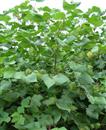
Cotton field management measures for the next stage: how Xiantao does it
(1) The mid-season boll survey results are: the city's specialized cooperative cotton planting area is 10438 ten-thousand mu, with an average density of 1640 plants per mu, plant height 134.9 cm, 19.7 fruiting branches, and per plant there are already 15.25 mature bolls, 18.03 small bolls, 2.4 flowers, 27.56 buds, 11.81 shed, with a shedding rate of 17.66% (total fruiting nodes 66.85)...
-
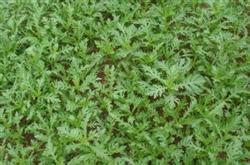
Field management measures and technical key points for garland chrysanthemum
When thinning is done well, garland chrysanthemum not only yields more, but also does not bend, giving good quality. Besides selecting and keeping seedlings of uniform growth, attention should also be paid to suitable thinning timing. If thinning is done too early, it easily wastes a second round of work, because seeds sown into the ground do not all grow at the same time; some seedlings have already emerged, while others...
-
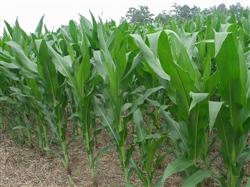
What are the key points for field management in the late stage of spring corn?
1. Choose good varieties. Choosing good varieties is the key to achieving a corn harvest; be sure to choose varieties introduced by formal agricultural technology departments, or varieties that have been approved by the provincial seed approval committee. In 2006, what we introduced was "Changxin No. 1," introduced from elsewhere by Danleng County Changxin Seed Co., Ltd. Per mu...
-
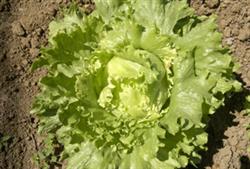
Key Field Management Techniques for Head Lettuce in Summer
First of all, pay attention to fertilizer and water management. Because summer temperatures are high, light is intense, ground evaporation is great, and crop transpiration is also high, frequent watering is needed in the early stage after transplanting to keep the soil moist. Entering the rainy season of July to August, after each heavy rain, drainage should be carried out promptly and cool water should be applied to lower the temperature, so as to protect the leaves. In the later stage of growth, water should be properly controlled, ...
-
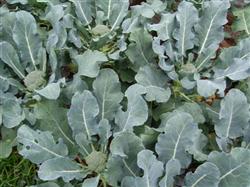
Detailed Explanation of Broccoli Cultivation Techniques and Field Management Key Points
Broccoli, also known as stem broccoli, Italian kale, green cauliflower, tree cauliflower, tender-stem cauliflower, etc., is a variety of cabbage and an annual or biennial herbaceous plant. Its green flower heads are used for food. It has good flavor and high nutritional value. Its fresh green and crisp texture and refreshing taste have been recognized by...
-
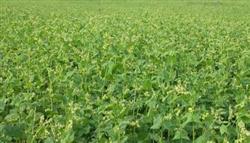
Key Cultivation Techniques and Field Management of Golden Buckwheat Explained
Golden buckwheat is the dried rhizome of the Polygonaceae plant golden buckwheat, also known as bitter buckwheat, wild bridge buckwheat and heaven buckwheat. Its nature is cool, its taste pungent and bitter, and it has the effects of clearing heat and detoxifying, activating blood and resolving stasis, and strengthening the spleen and draining dampness. It is mainly produced in Shaanxi, Jiangsu, Zhejiang, Hubei, Hunan and other provinces, and can also be cultivated in the East China region. I. Morphological characteristics...
-
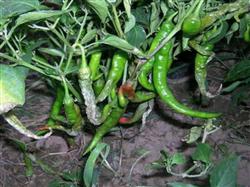
Key Field Management Techniques for Spring-Planted Peppers
In open fields, this disease is mainly of the leaf rot type, while in protected cultivation it is mainly of the root rot type. In protected cultivation, pepper Phytophthora blight mostly invades from the root crown, and the diseased part is dark brown. Sunken or shrunken, the lesion can encircle the stem and cause root death, and the plant wilts. In greenhouses, the pathogen is mainly spread by irrigation water, and disease centers mostly form in low-lying, waterlogged, and soil...
-
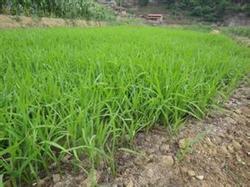
Key Field Management Techniques After Transplanting Dry-Raised Rice Seedlings to the Paddy Field
1. Prepare the field carefully so that the field is level and the soil is puddled, with not even a inch of water exposing the mud. 2. Fertilization principle: apply a heavy basal fertilizer and skillfully apply panicle-grain fertilizer. Apply no less than 1500 kg of farmyard manure per mu. When harrowing the field, apply phosphate and potassium fertilizers plus 70% of the nitrogen fertilizer as a one-time basal application, 20% of the nitrogen fertilizer as tillering fertilizer, and 10% as panicle fertilizer (apply 5-10 days before heading). ...
-
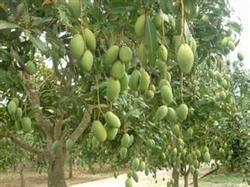
Detailed Explanation of Field Management Techniques for Pollution-Free Mango
I. It can flower and bear fruit in all four seasons of the year. The first crop flowers from late February to late March and the fruit ripens from late June to late July; the second crop flowers in late April and the fruit ripens in late July; the third crop flowers from late July to early August and the fruit ripens in late November; the fourth crop flowers in late September and the fruit ripens from March to April of the following year. II...
-

Detailed Explanation of Key Field Management Techniques for Peppers
Field Management Techniques for Peppers
条件筛选