What are the key points for field management in the late stage of spring corn?
1. Choose good varieties. Choosing good varieties is the key to achieving a corn harvest; be sure to choose varieties introduced by formal agricultural technology departments, or varieties that have been approved by the provincial seed approval committee. In 2006, what we introduced was "Changxin No. 1," introduced from elsewhere by Danleng County Changxin Seed Co., Ltd. Per mu...
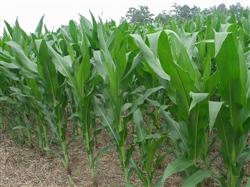 Apply ear fertilizer well. Ear fertilizer is the most important topdressing during corn growth. It is applied at the large trumpet stage of corn, and on some earlier plants the "tassel" can be felt. The timing of ear fertilizer application can also be determined according to the number of days after sowing. Generally, open-field spring corn is given ear fertilizer 60-65 days after sowing (late-maturing varieties), 58-60 days (medium-maturing varieties), and about 50 days (early-maturing varieties). Ear fertilizer is mainly quick-acting nitrogen fertilizer, with the application amount being 50-60% of the total nitrogen amount. Generally, 10-15 kg of urea is applied per mu. If phosphorus and potassium fertilizers were not applied in the base fertilizer and seedling fertilizer, 10 kg each of phosphorus and potassium fertilizers can also be added at this time. Ear fertilizer can be applied in furrows between two rows of corn or by hole application, and the soil should be covered immediately after application to prevent fertilizer volatilization and loss. Fields with insufficient early growth or uneven growth should be fertilized early, while vigorously growing fields should be fertilized later.
Clean the ditches and earth up. Combine ditch cleaning and earthing up with ear fertilizer application. Placing the soil from ditch cleaning at the base of the corn helps improve the corn's lodging resistance and also helps drought resistance and waterlogging prevention. When earthing up, note that clay loam should not be earthed up after rain; earthing up after rain will cause soil compaction and poor aeration, resulting in insufficient soil air, so wait until the surface soil is dry before earthing up. Dryland without irrigation conditions should not be earthed up; otherwise, due to drought, especially in the later stage, soil moisture will evaporate too much and affect corn growth.
Remove excess ears. Fields with relatively high fertility and low density are prone to multiple ears per plant, especially fresh-eating waxy corn and sweet corn. Except for a few plants with particularly good growth that can keep 2 ears per plant, generally keeping one ear per plant is enough to reduce nutrient consumption and improve the marketable rate of corn ears. However, note that when removing excess corn ears, do not damage or remove the ear-position leaves, otherwise the loss will outweigh the gain. For some fresh-eating sweet corn varieties, excess tillers should also be removed to prevent nutrient consumption.
Prevent and control diseases and insect pests. The late heart-leaf stage is the suitable period for controlling corn borers. When the rate of mosaic plants reaches more than 25%, control should be carried out. It is best to pour medicine into the heart or apply granules to the trumpet opening, or spray with BT powder at 800-1000 times dilution. For northern and southern corn leaf blight, at the early stage of disease, spray with 64% Sandofan wettable powder at 1000 times dilution or 80% Sandofan wettable powder at 600-800 times dilution, etc., once every 7-10 days, for 1-2 sprays.
Harvest at the right time. The harvest period for fresh-eating corn can be set at 22-25 days after pollination and silking. The harvest period and fresh-keeping period of sweet corn are relatively short, and it is required to be picked and sold, eaten, and processed on the same day; if stored too long, the quality declines. Ordinary hybrid corn harvested for dry grain is generally harvested 40 days after pollination.