Cotton field management measures for the next stage: how Xiantao does it
(1) The mid-season boll survey results are: the city's specialized cooperative cotton planting area is 10438 ten-thousand mu, with an average density of 1640 plants per mu, plant height 134.9 cm, 19.7 fruiting branches, and per plant there are already 15.25 mature bolls, 18.03 small bolls, 2.4 flowers, 27.56 buds, 11.81 shed, with a shedding rate of 17.66% (total fruiting nodes 66.85)...
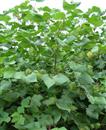
(1) The mid-season boll survey results are: the city's specialized cooperative cotton planting area is 10438 ten-thousand mu, with an average density of 1640 plants per mu, plant height 134.9 cm, 19.7 fruiting branches, and per plant there are already 15.25 mature bolls, 18.03 small bolls, 2.4 flowers, 27.56 buds, 11.81 shed, with a shedding rate of 17.66% (total fruiting nodes 66.85), 25010 mature bolls per mu, an estimated 19.4 autumn bolls per plant, and an estimated total of 56826 bolls per mu for the year. Compared with the same period last year, this result shows "four increases, two decreases, one flat, two declines." Four increases: plant height up 0.2 cm, small bolls per plant up 10.6, flowers up 1.02, buds up 6.08. Two decreases: mature bolls per plant down 10.25, estimated annual mature bolls per mu down 5401. One flat: number of fruiting branches unchanged. Two declines: shedding per plant down 13.88, shedding rate down 13.88 percentage points.
(2) From the above survey results, the main reason this year's mid-season bolls are fewer than last year's is that sowing and transplanting were delayed, which delayed the cotton growth and development process. Since August, cotton growth and development has been steady with strong potential. As long as field management is strengthened and the weather in the later period is normal, a good harvest can be expected. Looking at the field growth, the current cotton production situation cannot be viewed optimistically. This year, cotton on spring fallow land, after oilseed rape, and after wheat is growing well; however, a considerable portion of cotton fields, due to insufficient production inputs, excessive nitrogen fertilizer or inadequate fertilization, have a high shedding rate and an obvious trend of premature aging, and pests such as the tobacco cutworm, mirid bugs, cotton bollworm, and red spider mite are still occurring heavily.
(3) Based on this year's growth survey, calculating on average 125 bolls per jin of seed cotton and a 38% lint turnout, the estimated citywide lint yield per mu is around 86.37 kg. Current cotton field management should focus on preserving mid-season bolls, striving for autumn bolls, striving for boll weight, and preventing rotten bolls, with the following five points carried out specifically:
1. Proactive chemical control. Some fields show a meeting of fertilizer and water with vigorous growth, so proactive chemical control is necessary. For cotton fields that have not been regulated or not adequately regulated after topping, recently spray 15-20 ml of mepiquat chloride per mu or 4-5 g of chlormequat dissolved in 30 kg of water. This can effectively control ineffective buds, reduce shading, enhance the stress resistance and light penetration of cotton plants, enhance photosynthesis, and promote the transfer of nutrients to cotton bolls.
2. Thorough pruning and leaf removal. The continuous cloudy days with little sunlight in August led to high humidity in cotton fields. To prevent rotten bolls in the lower part, for overly vigorous cotton fields, remove empty branches, old leaves, and superfluous buds, and pinch off side tips, to reduce the degree of shading in cotton fields, improve ventilation and light conditions, and lower field humidity.
3. Foliar topdressing. This year, cotton inputs have generally been low, so in conjunction with pest control, foliar spray 1% urea or a mixture of 1% urea + 0.2% potassium dihydrogen phosphate, once every 5-7 days, for 3-4 consecutive times. For fields severely deficient in boron, spray 0.2% Weili boron to ensure the nutrients needed for cotton plant growth.
4. Promptly pick endangered and rotten bolls. For fields with overly vigorous growth and excessive shading in the lower part, promptly pick endangered and rotten bolls, both to control the spread of pathogens and to reduce the degree of loss.
5. Comprehensive pest and disease control. Establish the mindset of fighting disasters to secure a harvest. First, clear ditches and drain water to lower field humidity. Second, control pests scientifically. According to the control thresholds for different pests, select the right pesticides and control them promptly. At present, the key pests are the tobacco cutworm, mirid bugs, the fourth generation of cotton bollworm, and red spider mite. At the same time, do not neglect the control of other pests, and eliminate pests at the newly hatched stage to ensure a cotton harvest.