-
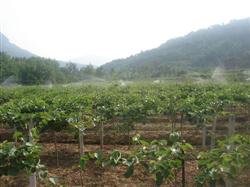
A Comprehensive Analysis of Key Kiwifruit Cultivation Techniques
Kiwifruit belongs to the genus Actinidia in the family Actinidiaceae. It is a deciduous climbing vine fruit tree, rich in various vitamins and nutrients, known as the "king of fruits," and holds high economic and cultivation value. It is suitable for growing in mild climates with abundant rainfall, fertile soil, and lush vegetation, in deep, well-drained, moderately moist black humus soil or sandy loam with a pH of 5.5-7 (slightly acidic soil)...
-
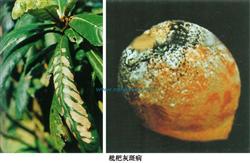
Comprehensive Control Methods and Key Technical Points for Loquat Gray Leaf Spot
Loquat gray leaf spot, also known as "ring spot." It is the most important disease of loquat. It attacks branches, leaves, flowers, and fruit. There are two types: acute and chronic: in the chronic type, leaf spots are initially light brown circular spots; later they join into irregular large spots, with small black dots scattered on them. On young shoots, the disease starts as small water-soaked brown...
-
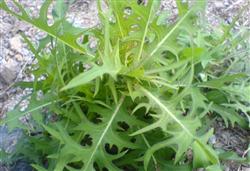
Detailed Explanation of Cultivation Techniques and Comprehensive Utilization Methods of Wild Lettuce
Wild lettuce, also known as mountain lettuce, bitter chicory, and duck feed, is a herbaceous plant of the Asteraceae family, growing by roadsides, in wilderness, and on hillsides. Its seedlings and tender stems and leaves are suitable for eating, and it is a wild vegetable with development value. 1 Botanical characteristics and biological traits: A biennial herbaceous plant, with white milky sap, 80-150 cm tall. Stem erect,...
-
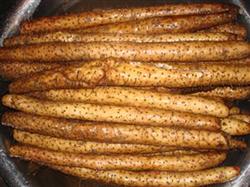
What are the nutritional properties of Chinese yam? A comprehensive guide in one article
Chinese yam, also known as huai shan, huai yam, huai Chinese yam, shuyu, Buddha's palm potato and so on, belongs to the Dioscoreaceae family and is a perennial vegetable. Chinese yam contains a large amount of protein, various vitamins, beneficial trace elements and carbohydrates. In addition, it also contains relatively many medicinal and health-promoting components, such as mucopolysaccharides, allantoin, dioscin, choline, salt...
-
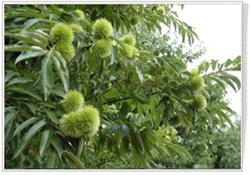
How to Grow Chestnuts for High Yield? A Comprehensive Guide to Cultivation Techniques
I. Close Planting. Reasonable close planting not only increases early yields and delivers economic returns as quickly as possible, but also facilitates intensive management of the orchard. Planting density: the spacing between plants and rows is generally 2m x 4m, 3m x 4m or 3m x 5m; the specific density should be determined by the characteristics of the rootstock, the characteristics of the scion, or the site conditions. The investment in establishing the orchard can be recovered within 6 years after planting...
-
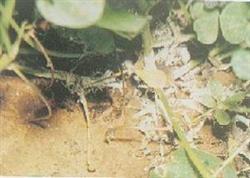
What are the comprehensive control measures for peanut southern blight?
Peanut southern blight is a soil-borne fungal disease that occurs from the pod swelling stage to the maturity stage of peanuts. After the peanut roots, pods and stem bases are infected, they initially show brown soft rot, with white silky mycelium at the root-stem area above ground (hence the name southern blight), along with rapeseed-like sclerotia; the stems and leaves turn yellow and gradually die, and the peanut pods...
-
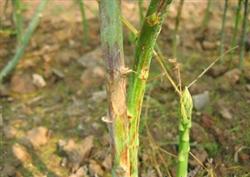
Comprehensive Control Methods and Techniques for Asparagus Pests and Diseases Explained in Detail
For pest and disease control, scientific control measures must be adopted, pollution-free control techniques vigorously promoted, and highly toxic and high-residue pesticides banned, so as to effectively control pest and disease damage while keeping pesticide residues in the product within limits. In control, adopt the measures of "prevention first, comprehensive control" and carry out early prevention in good time. (1) Agricultural...
-
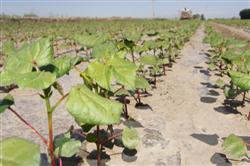
How to comprehensively prevent and control cotton seedling diseases? Master these key points
There are many types of cotton seedling diseases, and they cause severe damage. Among them, the most common and most damaging are damping-off and anthracnose. The incidence rate is generally 20%-30%, and in severe cases reaches 50%-90%. Especially with low temperatures and continuous rain in early spring, cotton seedlings grow weakly and emerge slowly, making them highly susceptible to infection by pathogens, causing large numbers of rotten seeds, diseased seedlings...
-
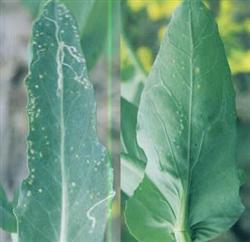
Comprehensive Control Techniques for White Rust of Rapeseed
The pathogen of rapeseed white rust is Albugo candida, a disease commonly occurring on rapeseed and cruciferous vegetables in the Yangtze River basin, often occurring together with rapeseed downy mildew on the same flower stalk. I. Symptoms: All aboveground organs of rapeseed are susceptible throughout the entire growth period. Pale green small spots first appear on the leaf surface, later turning yellow...
-
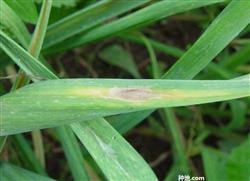
What is garlic mosaic virus disease? A comprehensive guide to this disease
What is garlic mosaic virus disease? How to prevent and control it, please advise. Garlic mosaic virus disease: 1. Symptoms In the early stage of the disease, intermittent yellow dotted lines appear along the leaf veins, which later connect into long stripes of alternating yellow and green. Plants become stunted, and the central leaves of some plants are wrapped by adjacent leaves, showing curled deformity and unable to fully extend for a long time, causing the leaves to twist...
条件筛选