-
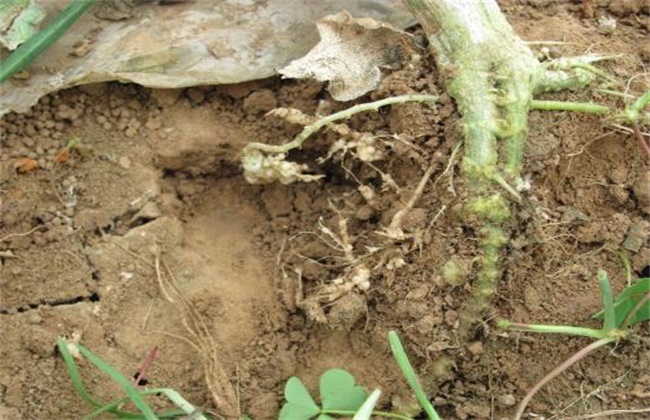
What are the physiological characteristics of watermelon? A comprehensive guide
Physiological characteristics of watermelon
-
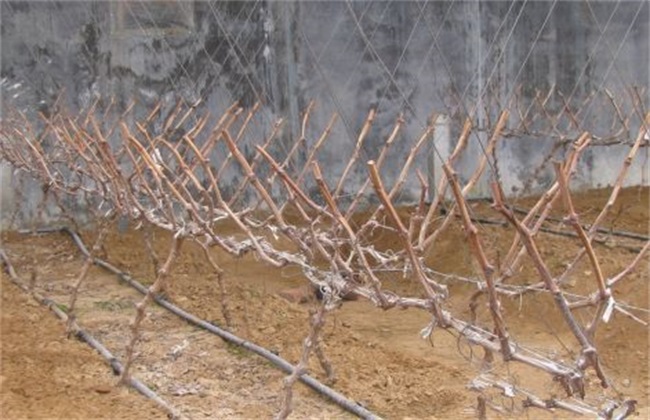
A Comprehensive Analysis of the Key Points of Grape Pruning Techniques
Key Points of Grape Pruning Techniques
-

What are the characteristics of the Red Lotus Calyx Apricot? A comprehensive analysis of its varietal traits
What are the characteristics of the Red Lotus Calyx Apricot? The Red Lotus Calyx Apricot, also known as the Thin-Shell Apricot, is mainly produced in the Licheng and Changqing areas of Shandong, with a history of more than 200 years. It is an extra-early-maturing fresh-eating variety. This variety has a vigorous tree habit, an open tree form, rapid growth and strong adaptability. It bears fruit mainly on short fruit branches, with medium productivity. The fruit is medium to large, with an average single-fruit weight of 45 g and a maximum of 70 g. It is oval, with a flat and slightly sunken top and a prominent suture. The skin is orange-red, rarely with patchy purplish-red blush, and glossy. The skin is relatively thick, and the flesh is orange-red, with a fine
-
Comprehensive Analysis of Key Technical Points for Establishing an Apricot Orchard for Kernel Production
Apricot trees are fruit trees that love sunlight, tolerate drought, and fear waterlogging and frost. Therefore, the orchard should be established in a sunny and high, dry location, and must not be established on shady slopes, waterlogged lowlands, or valley bottoms where cold air easily settles. Apricot trees are long-lived fruit trees; generally, even 100- to 200-year-old trees still bear abundantly, so the planned spacing between plants and rows should be relatively large. However, considering the need for early high yields, temporary trees can be set up at the time of orchard establishment, and gradually thinned out or transplanted as the trees age. The spacing for permanent rows can be designed at 4 m x 6 m, and for temporarily densified orchards at 2 m x 3 m, with temporary trees dealt with promptly by around 10 years of age. When planning, soil and fertilizer-water conditions must also be considered.
-
A Comprehensive Analysis of the Current Status of New Peach Variety Breeding in China
I. Breeding of Fresh-eating Peach Varieties with Different Maturity Periods The breeding of fresh-eating peach varieties has always occupied a dominant position in China. Over the past 50 years, a large number of excellent new varieties (lines) with different maturity periods have been bred, which to a certain extent has changed the situation of overly concentrated market supply. 1. Breeding of early-maturing varieties. Since there are relatively few early-maturing peach varieties in production, early maturity and high quality have become the main goals of peach breeding. Through the efforts of breeders, a number of excellent early-maturing varieties have been bred using crossbreeding and bud sport selection methods. Most of these new varieties
-
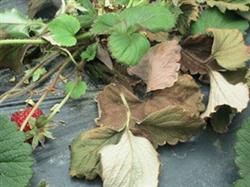
The Harm of Strawberry Verticillium Wilt and Its Comprehensive Control Methods
Strawberry Verticillium wilt is a soil-borne disease. It has been an important factor affecting and troubling the expansion of strawberry production in recent years. Because strawberry is a perennial plant, continuous cropping in the same field for many years causes a large accumulation of pathogens in the soil, and combined with factors such as declining varietal disease resistance and poor field management, it leads to strawberry...
-
A Comprehensive Analysis of Key Kiwifruit Cultivation Techniques
Kiwifruit belongs to the genus Actinidia in the family Actinidiaceae. It is a deciduous climbing vine fruit tree, rich in various vitamins and nutrients, known as the "king of fruits," and holds high economic and cultivation value. It is suitable for growing in mild climates with abundant rainfall, fertile soil, and lush vegetation, in deep, well-drained, moderately moist black humus soil or sandy loam with a pH of 5.5-7 (slightly acidic soil)...
-
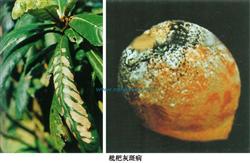
Comprehensive Control Methods and Key Technical Points for Loquat Gray Leaf Spot
Loquat gray leaf spot, also known as "ring spot." It is the most important disease of loquat. It attacks branches, leaves, flowers, and fruit. There are two types: acute and chronic: in the chronic type, leaf spots are initially light brown circular spots; later they join into irregular large spots, with small black dots scattered on them. On young shoots, the disease starts as small water-soaked brown...
-
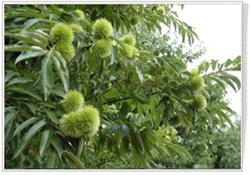
How to Grow Chestnuts for High Yield? A Comprehensive Guide to Cultivation Techniques
I. Close Planting. Reasonable close planting not only increases early yields and delivers economic returns as quickly as possible, but also facilitates intensive management of the orchard. Planting density: the spacing between plants and rows is generally 2m x 4m, 3m x 4m or 3m x 5m; the specific density should be determined by the characteristics of the rootstock, the characteristics of the scion, or the site conditions. The investment in establishing the orchard can be recovered within 6 years after planting...
-

How to carry out comprehensive care for bananas during the flowering and fruiting stage?
How should bananas be given comprehensive care during flowering and fruiting? Are there any good methods? We also ask netizens to help guide us. Zhongdi Web has compiled the reasons for and methods of comprehensive care for bananas during flowering and fruiting, listed below for the reference of our many netizens. Reasons for comprehensive care of bananas during flowering and fruiting: Comprehensive care technology for bananas during flowering and fruiting refers to...
条件筛选