-
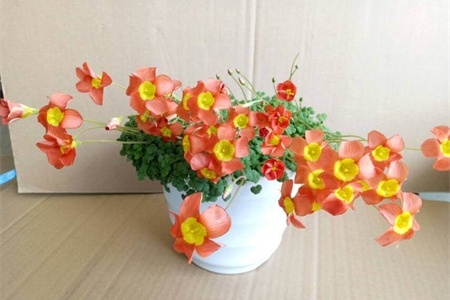
What Plants Have Three-Lobed Leaves? A Comprehensive Roundup of Common Varieties
What plants have three-lobed leaves
-
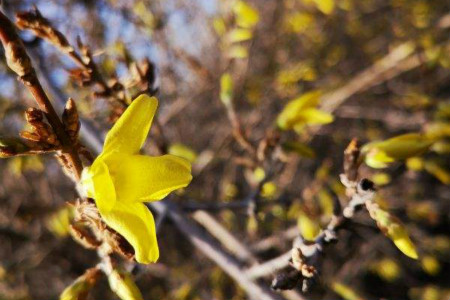
Is Forsythia Toxic? A Comprehensive Analysis of Its Benefits and Effects
Is Forsythia Toxic, and What Benefits and Effects Does It Have
-

Is the mosquito repellent plant useful? A comprehensive analysis of its real mosquito repellent effect
Is the mosquito repellent plant useful?
-

What are the characteristics of tulips? A comprehensive analysis of their growth features
Tulips are also known as grass musk and foreign lotus. Their characteristics are: 1. They prefer warm, moist, sunny or semi-shaded environments. They have strong cold resistance, and in winter, with proper protection, the bulbs can overwinter in the open field. They dislike the intense summer heat, so from June to September the aboveground parts gradually wither and enter dormancy. The optimal growth temperature for tulips is 15-18°C, the rooting temperature needs to be above 5°C, and the suitable temperature for flower bud differentiation is 17-23°C; above 35°C it will be inhibited. About one month after the mother bulb blooms, it gradually withers, while new
-
Overview of Hydrangea: A Comprehensive Guide to Hydrangeas
Hydrangea, also known as xiuqiu or ziyanghua, is a plant of the genus Hydrangea in the family Saxifragaceae. The flowers of hydrangea are pure white and full, large and beautiful, and their color can be red or blue, making them pleasing to the eye and refreshing to the spirit. It is a common potted ornamental flowering plant. Hydrangea is native to China and Japan. It was introduced to the United Kingdom in 1736. In Europe, cultivation is relatively common in the Netherlands, Germany, and France, and red, blue, purple, and other colored hydrangea varieties can be seen in flower shops. There are also quite a few hydrangeas planted in the ground in small courtyards and in front of buildings. At present, Germany's Rampp Jungpflanzen
-
What are the pharmacological effects of lily? A comprehensive analysis of its medicinal value
[Source] The dried fleshy scales of Lilium lancifolium Thunb., Lilium brownii F.E.Brown ex Miellez, or Lilium brownii F.E.Brown ex Miellez var. viridulum Baker, plants of the genus Lilium in the family Liliaceae. The first is commonly called "Longya lily" and the latter two are commonly called "Su lily". [Original plant] 1. Lilium lancifolium is a perennial herb, with a bulb nearly broadly spherical, 4-8 cm in diameter; scales fleshy, broadly ovate, 2.5-5 cm long, 1.4-2.5 cm wide, white; stem 0.8-1.5 m tall, with purple stripes, covered with white cottony hairs. Leaves alternate, oblong-lanceolate or lanceolate, 5-20 cm long, 0.5-2 cm wide, gradually smaller upward and bract-like, often with bulbils in the leaf axils. Flowers in summer; usually 3-6 flowers arranged in a terminal raceme; pedicels 6.5-9 cm long, purple, with white cottony hairs; flowers nodding, trumpet-shaped, tepals 6, in 2 whorls, lanceolate, recurved, orange-red, with purple-black spots; outer tepals 6-10 cm long, 1-2 cm wide; inner tepals slightly wider, with papillose and fimbriate projections on both sides of the nectary; stamens 6, filaments 5-7 cm long, pale red, anthers oblong, purple, about 2 cm long; ovary cylindrical, 1.5-2 cm long, style slender, stigma 3-lobed. Capsule narrowly oblong-ovate, 3-4 cm long. Grows in moist environments. Distributed in our province and Hebei, Shaanxi, Gansu, Shandong, Zhejiang, Jiangxi, Henan, Hubei, Hunan, Sichuan, Guizhou, Yunnan, Xizang and other provinces and regions. Mostly cultivated. Also distributed in Japan and Korea. 2. Lilium brownii is a perennial herb, with a spherical bulb, 2-4.5 cm in diameter; scales lanceolate, 1.8-4 cm long, 0.8-1.4 cm wide, white; stem 0.7-2 m tall, with purple stripes or small papillose projections on the lower part. Leaves scattered, lanceolate to linear, 7-15 cm long, 1-2 cm wide, smaller upward and bract-like, with 5-7 veins, entire, glabrous. Flowers in May-June; flowers solitary or several arranged in a nearly umbellate inflorescence; pedicels 3-10 cm long, slightly curved; flowers trumpet-shaped, tepals 6, in 2 whorls, fragrant, milky white, slightly purple outside, spotless, spreading outward or with tips curved outward but not revolute, 13-18 cm long; outer tepals 2-4.3 cm wide, apex acute; inner tepals 3.4-5 cm wide, with small papillose projections on both sides of the nectary; stamens 6, filaments 10-13 cm long, curved upward; anthers oblong; ovary cylindrical, 3.2-3.6 cm long, stigma 3-lobed. Capsule oblong, 4.5-6 cm long, about 3.5 cm wide, ribbed, with many seeds. Grows on hillsides, under shrubs, roadsides or by streams. Distributed in our province and the southeastern, central, southwestern and southern regions of China. 3. Lilium brownii var. viridulum differs from Lilium brownii in its oblanceolate to obovate leaves. Grows on hillsides and in rock crevices. Distributed in our province and Gansu, Shaanxi, Henan, Hebei provinces and all provinces and regions from East China and South China to Southwest China. Wild or cultivated.
-
Impatiens variety introduction, a comprehensive guide in one article
1. Top-headed impatiens, also known as cut-top impatiens. It is a variety of Impatiens balsamina. Flowers are terminal on the main stem or branch tips. Flowers are large and double. Branches spread out, forming a bushy plant. 2. Dwarf impatiens is a variety of Impatiens balsamina. The plant is relatively short, with a height of 20-30 cm. 3. Dragon-claw impatiens is a variety of Impatiens balsamina. The side branches are winding and extend horizontally. 4. Impatiens walleriana, also known as glass emerald. It is a common species in the same genus. A perennial herbaceous plant, mostly grown as an annual or biennial. Plant height 20-30 cm. Stems are semi-transparent, fleshy, thick, and much branched. Leaves are ovate
-
A comprehensive guide to rhododendron leaf spot disease
Round lesions, or irregular polygonal lesions, dark brown, 1mm-5mm in diameter. In the later stage, the central tissue of the lesions turns grayish white. When the disease is severe, the lesions merge with each other, causing the leaves to turn yellow and drop early. Under moist environmental conditions, many small brown mold spots grow on the underside of the leaf spots, namely the conidia and conidiophores of the pathogenic fungus. Pathogen and current disease situation: it is Cercospora rhododendri Fer., Deuteromycotina, Hyphomycetes
-
What are the values and uses of the Chinese honey locust? A comprehensive analysis
The Chinese honey locust has a broad crown and dense shade, and a relatively long lifespan, making it very suitable as a shade tree and a greening tree for roadsides and surrounding areas. In addition, the fruit of the Chinese honey locust is rich in saponin, so its decoction can be used as a substitute for soap; the seeds can be pressed for oil, which can be used as a lubricant and for making soap, and medicinally it has the effects of treating ringworm and relieving constipation; both the thorns and the pods can be used medicinally; boiling the leaves and pods in water can also kill red spiders. The wood of the Chinese honey locust is hard, rot-resistant and wear-resistant, but it cracks easily, and freshly cut wood has a very strong odor, so it can only be used for furniture, columns and piles in construction, and handles and grips on implements.
-
What are the morphological characteristics of the Chinese honey locust? A comprehensive guide in one article
Deciduous tree, up to 15-30 m tall, trunk bark grayish-black, shallowly longitudinally fissured, trunk and branches often bearing thorns, thorns conical and mostly branched, thick and stiffly straight, branchlets grayish-green, lenticels prominent, winter buds often superimposed, once even-pinnately compound leaves, with 3-7 pairs of alternate leaflets, leaflets oblong-ovate, apex obtuse-rounded, base rounded, slightly oblique, thin leathery, margins finely toothed, both sides of the midrib on the underside and the petiole covered with white short pubescence, polygamous flowers, axillary, racemes, pedicels densely tomentose, calyx bell-shaped and tomentose, flowers yellow-white,
条件筛选