-
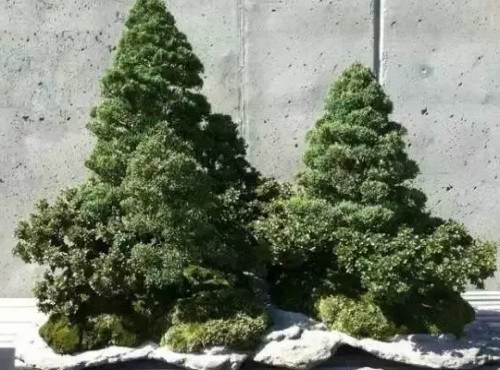
A detailed guide to making forest-style bonsai, easy for beginners to learn
Forest-style bonsai mainly reflects the composite image of the beauty of a group of trees. Although the selection of plant forms is not as strict as with other bonsai, the image of group beauty is expressed through the combination of individual trees. Therefore, each tree in a forest-style bonsai must also be able to show its individual beauty within a unified composition.
-
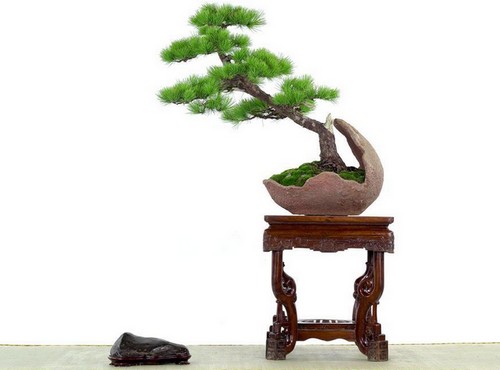
Detailed Explanation of the Methods and Steps for Making Literati-Style Bonsai
Literati-style bonsai is more about expressing oneself, while Suren-style is more about one's relationship with the world, placing oneself within the whole world. Therefore, in terms of the styling expression of bonsai, literati-style bonsai wins through various kinds of elegance and refinement, and what it expounds is how the tree form itself stretches out, elegant and refined
-
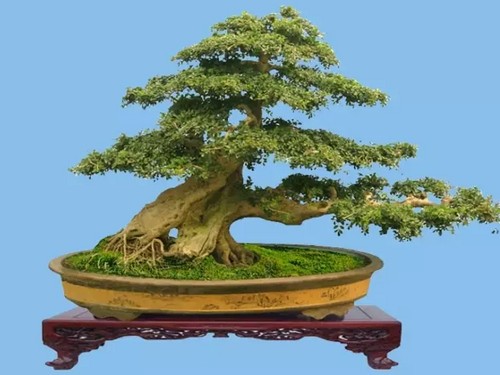
How to make a Fraxinus hupehensis forest-style bonsai
A Fraxinus hupehensis forest-style bonsai is made by planting multiple specimens together in one pot, so that they set each other off and form an artificial natural community, recreating the beautiful scenery of a sea of trees. It wins by the overall beauty of the natural combination, rather than displaying the individual characteristics of each tree
-
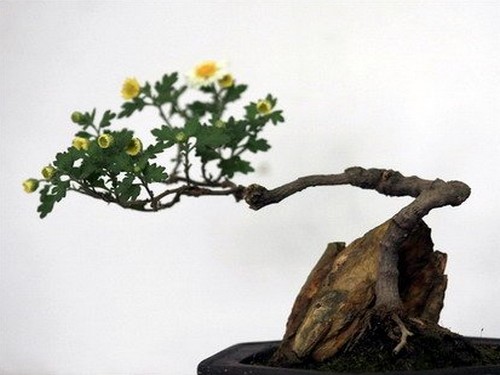
How to create different styles of chrysanthemum bonsai
The chrysanthemum is a perennial herbaceous flower of the genus Chrysanthemum in the family Asteraceae. Its stems are herbaceous and become slightly woody toward the end of growth. After flowering each year, the above-ground parts wither, leaving the perennial roots to overwinter, and new shoots sprout the following spring. The stems are upright or semi-trailing, with short fine hairs on the surface, and tend to branch readily. Under natural growing conditions, they can reach 80-150 cm in height.
-
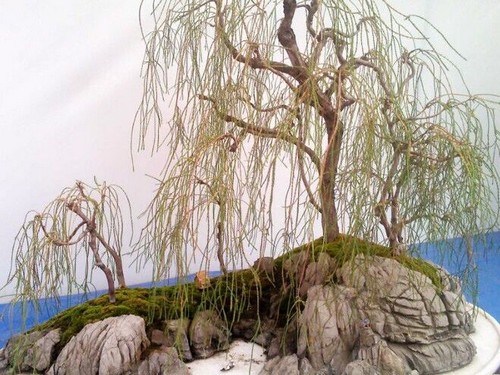
How to Make a Weeping Willow-Style Bonsai from Tamarisk
Tamarisk, also known as Guanyin willow, also known as Xihe willow. Its trunk is not very large, with reddish stems and slender branches, and leaves as fine as silk threads, graceful and lovely. It flowers three times a year, with flower spikes 2 to 3 cun (about 6.7-10 cm) long, pink in color and shaped like smartweed flowers, hence it is also called three-spring willow. Its flowers open whenever it rains, and it is suitable for planting by water and beside ponds. If rain is coming, the tamarisk rises first to respond to it, so it is also called the rain master.
-
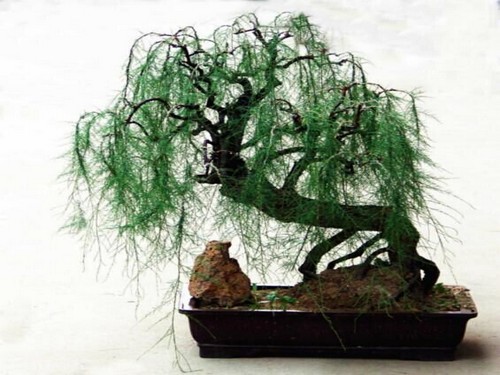
How to create a pine-style bonsai design with tamarisk
It is known that tamarisk is an excellent material for creating "weeping willow style" bonsai, and the soft, graceful charm it expresses is especially beloved. I had originally intended to learn from Master Wang Xuanmin and also create a weeping willow style bonsai with tamarisk, but the tamarisk material now in hand is of the tall-trunk, upright type, particularly stiff and strong. How could it express the graceful, lithe softness! What to do?
-
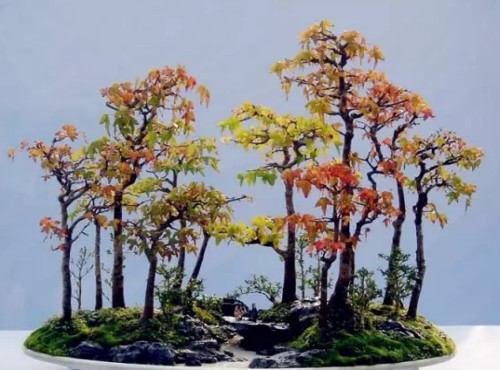
Four taboos to remember when making and caring for forest-style bonsai
Among bonsai there is a special form of presentation called the forest style. This form of bonsai cleverly combines mountains, stones and trees to fully reveal the beauty of a forest, like a beautiful landscape painting. But in the process of making and caring for forest bonsai, there are four taboos to observe. First taboo: one-size-fits-all. The materials used for forest-style bonsai are generally small-leaved shrubs
-
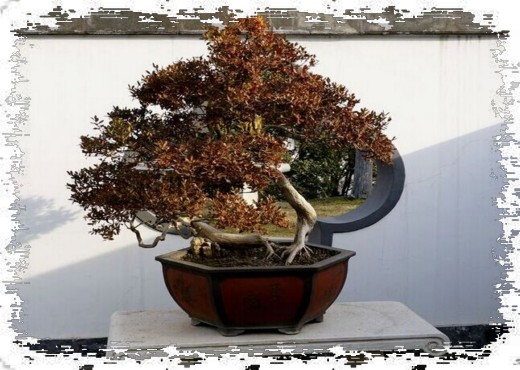
What are the characteristics of the artistic style of Jinling bonsai?
Bonsai is a traditional art of our country, with a long history and a distant origin. It originated in the Tang Dynasty, developed in the Song Dynasty, and flourished in the Ming and Qing Dynasties. Among these, the Jinling bonsai artistic style is rich and distinctive, determined by the materials and techniques used. 1. Jinling bonsai selects materials with emphasis on plants native to the region or suitable for local growth and local mountain stones.
-

The complete guide to avocado recipes: how to make avocado delicious, home-style recipes, Xiachufang, 7 ways to eat avocado. Have it once in a while, that's enough. I really don't believe it helps with weight loss.
3. Spread the avocado paste onto the toast and press it down firmly, then cut and serve. 4. Avocado croissant 1. Cut the avocado open, remove the pit, and slice it into small pieces; 2. Use a serrated knife to cut the croissant in half, but do not cut all the way through; 3. Tuck the avocado slices into the croissant. Salad is the most delicious, try avocado vegetable salad. 3. Avocado soup Avocado soup is made with avocado as the ingredient. Difficulty index: ★★ Steps: 1. Peel, pit, wash, and cut the avocado into chunks; finely chop the onion. 2.
-
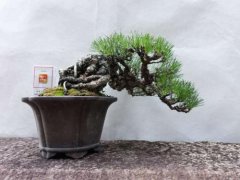
Can Black Pine Be Grown in Red Soil? An Introduction to the Prices of Styled Black Pines and One-Year-Old Black Pine Seedlings
Black pine is a fairly common pine seedling. Do you know that this kind of pine is usually used to make styled bonsai? Do you know how much a styled black pine costs? How much does a one-year-old black pine seedling cost? A one-year-old black pine seedling costs 0.2 yuan each.
条件筛选