-
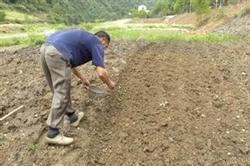
How to apply base fertilizer when sowing peanuts and soybeans
Some farmers apply no fertilizer at all when sowing these crops, and this planting habit is one of the important reasons why peanut and soybean yields remain stagnant. Although legume crops can use the nitrogen-fixing function of rhizobia to absorb nitrogen from the air to supplement nutrition, their nitrogen fixation amount is only enough for 2/3-1/2 of the total absorption, and phosphorus and potassium nutrients...
-
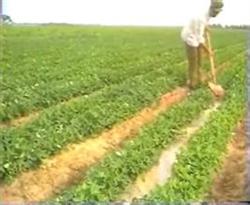
Key Technical Points and Fertilization Methods for Topdressing Peanuts and Soybeans
Carrying out topdressing of peanuts and soybeans at the mid-to-late growth stages according to different conditions is an important measure for raising the overall yield level. I. Peanuts: Peanut topdressing is mainly done at the pegging stage, when the nitrogen-fixing ability of peanut rhizobia has gradually declined, while the plants have entered the peak period of nutrient uptake. Topdressing can be carried out in two situations:...
-
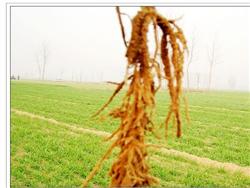
What Is Soybean Cyst Nematode Disease? A Detailed Guide
What is soybean cyst nematode disease? How to prevent and control soybean cyst nematode disease: (1) Damage and symptoms Soybean cyst nematode disease is also called verticillium wilt, commonly known as "fire dragon seedling". It is a worldwide soybean disease, and large areas of occurrence are found in the major soybean-producing countries: the United States, Brazil, China and Japan. In China it mainly occurs in...
-
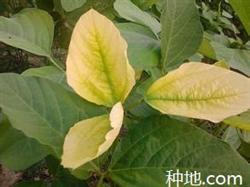
What Causes Soybean Yellowing? A Detailed Guide to Prevention and Control
What is soybean yellowing and how should it be prevented and controlled? The main causes of soybean yellowing are as follows: First, soybean cyst nematode disease. This disease occurs mainly in plots where soybeans have been grown continuously for many years and in areas with a low groundwater table. After infection at the seedling stage, the leaves turn yellowish-brown and growth is stunted; in severe cases, the entire plant withers and dies. After infection at the adult plant stage,...
-
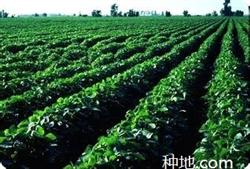
What to Do About Severe Soybean Lodging? A Detailed Guide to Practical Remedies
What measures can increase soybean yield? The more detailed the answer, the better. To increase soybean yield, you can use the following methods: 1. Thinning: On the basis of full emergence, thin the seedlings when the two opposite unifoliate leaves have unfolded, which generally increases yield by 10-20%. 2. Seedling pressing: When the first trifoliate leaf of some soybean seedlings has unfolded, choose a sunny...
-
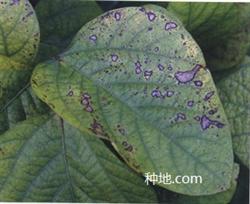
What is soybean frogeye leaf spot? A detailed guide to prevention and control methods
What is soybean frogeye leaf spot and how do you prevent and control it? Looking for guidance. Soybean frogeye leaf spot: (1) Damage and symptoms. Soybean frogeye leaf spot, also known as brown spot, leaf spot or frog-eye disease, is a worldwide disease and an important disease in China's main soybean-producing regions, especially severe in the three northeastern provinces. The pathogen is in eastern Heilongjiang...
-
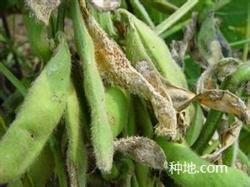
What is soybean sclerotinia and how to prevent and control it
What is soybean sclerotinia and how to prevent and control it? Help! Soybean sclerotinia mostly occurs from July until before maturity. The symptoms are that moist green lesions first appear at the base of the stem, then quickly expand, after which cottony mycelium grows on the lesions, the epidermis splits into a hemp-like texture, and black mouse-dropping-shaped "sclerotia" form inside and on the surface of the stem...
-
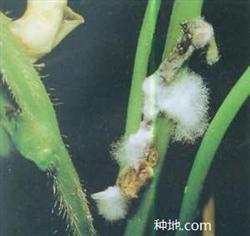
What fertilizer is soybean lacking and how can you tell?
What methods are used to treat soybean sclerotinia rot? Soybean sclerotinia rot mostly starts at the branching point on the middle and lower part of the plant's main stem. The lesions are water-soaked, irregular in shape, light brown or nearly white, and can encircle the stem and spread upward and downward. The part above the diseased area often dies, and the stem can also break. When humid, the diseased area produces cottony white mycelium,...
-
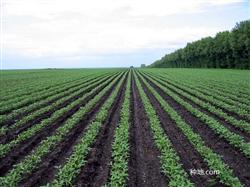
How to fertilize soybeans? A detailed explanation of scientific fertilization methods
How should soybeans be fertilized? What are the fertilizer requirements of soybeans? The nutrient uptake pattern of soybeans. The growth and development of soybeans is divided into the seedling stage, branching stage, flowering stage, pod-setting stage, seed-filling stage and maturity stage. The whole growth period is 90 to 130 days, and its nutrient uptake pattern is as follows: nitrogen uptake rate. The emergence and branching stages account for 15% of the total nitrogen uptake during the whole growth period...
-
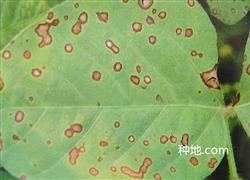
What does continuous and alternating soybean cropping mean? Read this article and you will understand
How should soybean leaf spot disease be prevented and controlled? What are the causes of the disease? 1. Distribution Soybean leaf spot disease occurs in Sichuan, Henan, Shandong, Jiangsu and other places in China, and occurs more often in autumn soybeans. 2. Symptoms The lesions on the leaves are light brown to grayish white, irregular, with dark brown edges. In the later stage, the lesions develop...
条件筛选