-
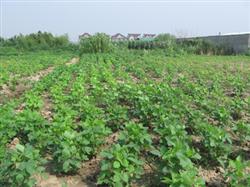
Correct methods for using herbicides in soybean fields
When choosing herbicide varieties for soybean fields, safety to the crop and low risk of herbicide injury come first; the second consideration is the control effect on weeds, that is, the control effect must be good. Under the condition of good control effect, choose varieties with lower drug costs as much as possible. The weeds in soybean fields fall into two major categories: grass weeds and broadleaf weeds. Grass weeds...
-
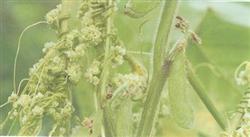
Dodder Control Methods and Technical Key Points in Soybean
Dodder, also called yellow silk vine or tangling silk vine, is a malignant weed. It harms many crops and can cause total crop failure in soybean, and it occurs commonly in all regions. (1) Morphology: The stem of soybean dodder is yellow, orange-yellow or yellow-green, smooth and hairless, thread-like, and coils leftward around the host stem. The leaves are reduced to membranous scales. The flowers...
-
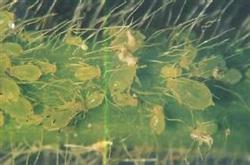
What are the pollution-free soybean diseases and their control methods?
The soybean aphid is one of the major pests of soybean, with adults and nymphs piercing and sucking sap on the top leaves, tender leaves and tender stems of the soybean plant. In severe cases they cover the stems and leaves, and can also attack tender pods, causing stunted plants, reduced fruiting branches and pod numbers, and lower 1000-grain weight; when severe at the seedling stage, the entire plant can die, and in outbreak years if not controlled in time...
-
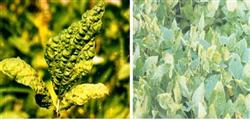
What are the control methods for soybean mosaic virus disease?
Suihua City in Heilongjiang Province is a major soybean-producing area, with a perennial soybean planting area of nearly 300,000 hectares. In recent years, the occurrence of soybean mosaic virus disease has shown a trend of worsening year by year, occurring in most fields, with the disease incidence rate in the field generally around 4.8%, and reaching over 20% in severe cases; the rate of brown (black) mottled seeds in soybean grain is over 10%,...
-
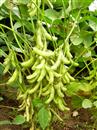
Spring Corn Stubble Transplanting Soybean Cultivation Technique
I. Characteristics and Traits Soybean prefers warmth; seeds begin to germinate at 10-12°C, with 15-20°C being optimal; the optimal growth temperature is 20-25°C; the optimal temperature during flowering and pod-setting is 20-28°C. At low temperatures, pod-setting is delayed, and below 14°C flowering cannot occur; if the temperature is too high, the plant ends growth prematurely. Seed germination requires relatively more water; during the flowering period...
-
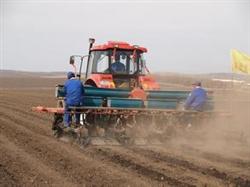
Detailed Explanation of Spring Soybean Cultivation Techniques and Management Points
I. Precipitation and temperature conditions from last winter to this spring. In the autumn and winter of last year, the northeast region suffered severe drought, with precipitation lower than normal and insufficient soil moisture. From January to October 2007, the average precipitation in Heilongjiang Province was 402 mm, 20% less than the same period in previous years. In addition, the widespread "dry sealing of the soil" at the onset of winter this year is not conducive to soil moisture retention...
-
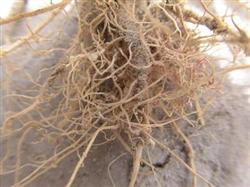
What are the technical measures for soybean pest and disease control
Soybean cyst nematode disease, commonly known as "fire dragon seedling," is a soil-borne, devastating soybean disease. The western part of our province is a severely affected area of this disease. In mild cases, yield is reduced by about 10%; in severe years, yield can be reduced by 30%-50%, and in serious cases, there may even be total crop failure. Soybean cyst nematode mainly damages soybean roots. Affected plants are stunted and poorly developed, and at the seedling stage are susceptible...
-
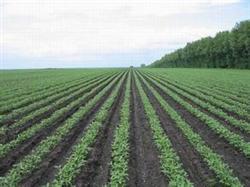
Do soybeans actually need to be pressed after sowing?
Whether soybeans need to be pressed after sowing depends on the soil moisture conditions. When the subsoil moisture is good, the surface soil moisture is poor, and the soil is dry and loose, pressing after sowing helps the seeds make close contact with the soil and eliminates air pockets; it will not cause the soil above the soybeans to crust over, and it helps the seeds absorb water and germinate, so emergence will be faster. You can press while sowing. ...
-
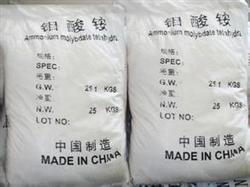
Key Technical Points and Methods for Applying Molybdenum Fertilizer to Soybeans
Molybdenum is a trace element essential for nitrogen metabolism in crops, and especially essential for the process by which nitrogen-fixing bacteria fix atmospheric nitrogen, so the effect of applying molybdenum fertilizer to legume crops is consistent. Xiao County has about 300,000 mu of soybeans planted year-round, and according to tests by the Suzhou City Soil and Fertilizer Station, 95% of the soil in Xiao County is deficient in molybdenum. In response to this situation, the Xiao County Soil and Fertilizer Station...
-
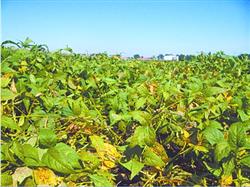
How to prevent soybean lodging? A detailed guide to practical prevention methods
Lodging in the late growth stage of soybeans affects soybean yield and quality, and is not conducive to harvesting. The first thing to consider as a cause is whether the variety is suitable. Some varieties have taller plants and thinner stems, are suited to plots with medium to low water and fertilizer, and belong to the barren-tolerant type. If plant density is too high, field ventilation and light penetration are poor, plant stems are thin and weak, tall but not sturdy, and lodging is easily caused.
条件筛选