What does continuous and alternating soybean cropping mean? Read this article and you will understand
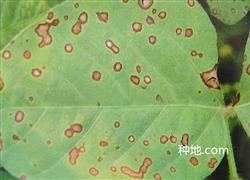
How should soybean leaf spot disease be prevented and controlled? What are the causes of the disease? 1. Distribution Soybean leaf spot disease occurs in Sichuan, Henan, Shandong, Jiangsu and other places in China, and occurs more often in autumn soybeans. 2. Symptoms The lesions on the leaves are light brown to grayish white, irregular, with dark brown edges. In the later stage, the lesions develop...
 What is continuous and alternating soybean cropping and how is it prevented and controlled?
Reasonable crop rotation, minimizing continuous cropping as much as possible, and maintaining an appropriate proportion of alternating cropping is the fundamental way to solve the harm of continuous and alternating soybean cropping, which is to adhere to a reasonable crop rotation system. When continuous and alternating soybean cropping is unavoidable at present, continuous cropping and alternating cropping (planting in alternate years) should be distinguished, continuous cropping should be minimized, and alternating cropping should be used appropriately. Continuous and alternating soybean cropping must not be used in windy, sandy and saline-alkali soil areas, on barren sloping upland and ridge land, and in plots with severe cyst nematode disease, sclerotinia disease and root maggot. Flat land and second low-lying land with high organic matter content can be selected for planting continuous and alternating soybean cropping, and continuous cropping can only be for one year. For plots developed late with high organic matter content, although appropriate continuous cropping is possible, the number of continuous cropping years must not be too many.
Select varieties with strong stress resistance Domestic and foreign research and practice have proved that selecting disease-resistant or disease-tolerant varieties is an effective measure to reduce the impact of continuous and alternating cropping on soybean yield and quality. In addition, different varieties should be reasonably matched and rotated in planting to reduce the harm of continuous and alternating cropping. Switching the varieties used can effectively reduce the harm of continuous and alternating cropping.
Reasonable tillage, increased fertilizer application, and improvement of the soybean growth environment Continuous and alternating soybean cropping, especially continuous cropping for many years, leads to compacted and hardened soil, lack of reasonable aggregate structure, and decreased fertility. In soil tillage, it is necessary to adhere to a soil tillage system combining subsoiling, plowing, harrowing and rotary tillage, with subsoiling as the main method, and vigorously promote the subsoiling tillage method. Increasing the application of organic farm manure can not only balance the supply of soybean nutrients, but also improve the poor soil environment caused by continuous and alternating cropping, and is an effective measure to slow yield losses. Because available nitrogen content in continuous and alternating cropping plots is reduced, root nodules are sparse, and nitrogen fixation capacity is weakened, applying nitrogen fertilizer as topdressing at the soybean seedling stage or flowering stage has a very obvious effect when basal nitrogen fertilizer is insufficient. Urea can be applied as topdressing at 30-60 kg/hectare at the soybean three-leaf stage, or urea can be applied as topdressing at 67.5 kg/hectare at the beginning of flowering, with yield increases of more than 10% in both cases.
Appropriately increase sowing density Because diseases and insect pests are more severe in continuous and alternating cropping plots and the soil environment deteriorates, it is extremely unfavorable to soybean growth and prone to causing missing seedlings. Therefore, for continuous and alternating cropping plots, the sowing amount should be appropriately increased, generally by 8%-10% compared with normal-stubble soybeans, and sowing quality should be improved to increase the number of preserved seedlings.
Strengthen field management and control diseases, insect pests, and weeds If soybean growth is poor in the early stage, apply 10 kg of urea, 1500 grams of monopotassium phosphate and 66 grams of potassium sulfate per hectare, dissolved in 500 kg of water, for foliar spraying. For plots where microelement fertilizer was not used as seed fertilizer or for seed dressing, microelement fertilizer can be appropriately sprayed.
Click to view more soybean planting techniques
Click to view more grain crop planting techniques