What fertilizer is soybean lacking and how can you tell?
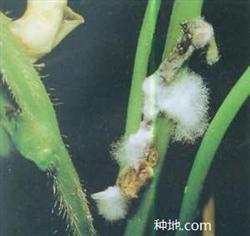
What methods are used to treat soybean sclerotinia rot? Soybean sclerotinia rot mostly starts at the branching point on the middle and lower part of the plant's main stem. The lesions are water-soaked, irregular in shape, light brown or nearly white, and can encircle the stem and spread upward and downward. The part above the diseased area often dies, and the stem can also break. When humid, the diseased area produces cottony white mycelium,...
 How can you tell what fertilizer soybean is lacking? How do you distinguish between them?
I. Nitrogen deficiency
1. Symptoms
When soybean is deficient in nitrogen, the leaves turn green, growth is slow, and the leaves gradually turn yellow.
2. Remedial measures
Nitrogen fertilizer should be applied as topdressing in time, with 5-7.5 kg of urea applied per mu, or a 1%-2% urea water solution used for foliar spraying, sprayed about once every seven days, for a total of 2-3 sprays.
II. Phosphorus deficiency
1. Symptoms
With phosphorus deficiency there are few root nodules, the stems are slender and elongated, the lower leaves of the plant are dark green, thick, uneven, and narrow and long; when phosphorus deficiency is severe, the leaf veins turn yellow-brown, and later the whole leaf turns yellow.
2. Remedial measures
Phosphorus fertilizer should be applied as topdressing in time, with 12.5-17.5 kg of superphosphate applied per mu, or a 2%-4% superphosphate water solution used for foliar spraying, sprayed about once every seven days, for a total of 2-3 sprays.
III. Potassium deficiency
1. Symptoms
With potassium deficiency, irregular yellow spots appear from the leaf margins of old leaves and gradually expand, while the area near the midvein and other parts of the leaf remain green, and the seeds are often shrunken and deformed.
2. Remedial measures
4-6 kg of potassium chloride can be applied per mu, or a 0.1%-0.2% potassium dihydrogen phosphate water solution used for foliar spraying, sprayed about once every seven days, for a total of 2-3 sprays.
IV. Molybdenum deficiency
1. Symptoms
The leaf color is pale yellow, growth is poor, and nitrogen deficiency symptoms appear; when severe, the midvein dies and the leaves become deformed.
2. Remedial measures
A 0.05%-0.1% ammonium molybdate water solution can be used for foliar spraying.
V. Iron deficiency
1. Symptoms
In the early stage, the upper leaves turn yellow and are somewhat curled, while the leaf veins remain green; when iron deficiency is severe, the newly grown leaves, including the veins, turn almost white, and brown spots quickly appear near the leaf margins, while the old leaves turn yellow, wither, and fall off.
2. Remedial measures
A 0.4%-0.6% ferrous sulfate water solution can be used for foliar spraying.
VI. Boron deficiency
1. Symptoms
With boron deficiency, soybean grows slowly, the young leaves turn pale green, the leaves are deformed, the internodes are shortened, the meristem at the stem tip dies, and the plant cannot flower.
2. Remedial measures
A 0.1%-0.2% borax water solution can be used for foliar spraying.
Click to view more soybean cultivation techniques
Click to view more grain crop cultivation techniques