What is soybean sclerotinia and how to prevent and control it
What is soybean sclerotinia and how to prevent and control it? Help! Soybean sclerotinia mostly occurs from July until before maturity. The symptoms are that moist green lesions first appear at the base of the stem, then quickly expand, after which cottony mycelium grows on the lesions, the epidermis splits into a hemp-like texture, and black mouse-dropping-shaped "sclerotia" form inside and on the surface of the stem...
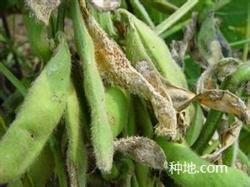
What is soybean sclerotinia and how to prevent and control it? Help!
Soybean sclerotinia mostly occurs from July until before maturity. The symptoms are that moist green lesions first appear at the base of the stem, then quickly expand, after which cottony mycelium grows on the lesions, the epidermis splits into a hemp-like texture, and black mouse-dropping-shaped "sclerotia" form inside and on the surface of the stem. This disease is especially severe under cloudy and rainy, overly humid conditions, or when plants are planted too densely or grown in continuous cropping. This disease mainly overwinters as sclerotia in the soil or in seeds. The following year, under suitable temperature and high humidity conditions, apothecia grow, and spores are carried by wind to soybean plants for primary infection, after which mycelium grows from the lesions and causes repeated infection.
After this disease occurs, spray 1500-2250 grams of 40% dimethachlon wettable powder per hectare diluted in 450-600 kg of water, or spray 500-600 grams of 50% carbendazim wettable powder per hectare diluted in 450-600 kg of water. To effectively prevent soybean sclerotinia, when selecting seeds before sowing, take care to remove sclerotia mixed in with the seeds; on affected plots, burn the soybean plants, carry out deep plowing to bury the sclerotia deep underground, implement rational crop rotation, and try to avoid continuous cropping or back-to-back cropping.
Click to see more soybean planting techniques
Click to see more grain crop planting techniques