How to fertilize soybeans? A detailed explanation of scientific fertilization methods
How should soybeans be fertilized? What are the fertilizer requirements of soybeans? The nutrient uptake pattern of soybeans. The growth and development of soybeans is divided into the seedling stage, branching stage, flowering stage, pod-setting stage, seed-filling stage and maturity stage. The whole growth period is 90 to 130 days, and its nutrient uptake pattern is as follows: nitrogen uptake rate. The emergence and branching stages account for 15% of the total nitrogen uptake during the whole growth period...
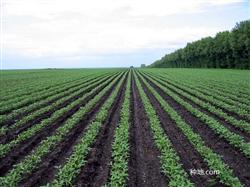
How should soybeans be fertilized? What are the fertilizer requirements of soybeans?
The nutrient uptake pattern of soybeans. The growth and development of soybeans is divided into the seedling stage, branching stage, flowering stage, pod-setting stage, seed-filling stage and maturity stage. The whole growth period is 90 to 130 days, and its nutrient uptake pattern is as follows: nitrogen uptake rate. The emergence and branching stages account for 15% of the total nitrogen uptake during the whole growth period, branching to full bloom accounts for 16.4%, full bloom to pod-setting accounts for 28.3%, and the seed-filling stage accounts for 24%. The period from flowering to seed filling is the peak period of nitrogen uptake by soybeans. Phosphorus uptake rate. The seedling stage to early flowering accounts for 17%, early flowering to seed filling accounts for 70%, and seed filling to maturity accounts for 13%. Soybeans need the most phosphorus in the middle stage of growth. Potassium uptake rate. The cumulative potassium uptake before flowering accounts for 43%, flowering to seed filling accounts for 39.5%, and from seed filling to maturity 17.2% of potassium still needs to be absorbed. It can be seen that the period from flowering to seed filling is both the peak period of dry matter accumulation in soybeans and the peak period of nitrogen, phosphorus and potassium nutrient uptake.
Key technical points for soybean fertilization. The fertilization system for soybeans generally consists of base fertilizer, seed fertilizer and topdressing. The principle of fertilization is to ensure that soybeans have sufficient nutrition while also giving play to the nitrogen-fixing role of rhizobia. Therefore, whether in the early or late stage of growth, nitrogen application should not be excessive, so as not to affect rhizobia growth or cause lodging. But on the other hand, the mistaken notion that "soybeans have rhizobia, so they do not need nitrogen fertilizer" must also be corrected. Fertilization should achieve a reasonable combination of major elements such as nitrogen, phosphorus and potassium fertilizers with trace elements such as boron and molybdenum, and use both slow-release and quick-acting fertilizers.
Applying organic fertilizer as base fertilizer is a key measure for increasing soybean yield. In rotated land, organic fertilizer can be applied to the preceding grain crop, and soybeans then use its residual effect. This is conducive to nodulation and nitrogen fixation and increases soybean yield. When planting soybeans in low-fertility soil, 10 kg each of superphosphate and potassium chloride can be added as base fertilizer, which is beneficial for increasing soybean yield.
For seed fertilizer, generally 10 kg to 15 kg of superphosphate per mu or 5 kg of diammonium phosphate is used as seed fertilizer, and 0.4 to 0.6 kg of borax is added to boron-deficient soil. Since soybeans are dicotyledonous crops, the seeds have difficulty pushing through the soil at emergence, so seed fertilizer is best applied below or to the side of the seeds, and the seeds must never be allowed to come into direct contact with the fertilizer.
Topdressing. Practice has shown that during the soybean seedling stage, when root nodules have not yet formed or nodule activity is weak, an appropriate amount of nitrogen fertilizer can make the plants grow robustly, and applying a small amount of nitrogen fertilizer as appropriate at the early flowering stage is also necessary. The amount of nitrogen fertilizer is generally 7.5 to 10 kg of urea per mu. In addition, spraying 0.2% to 0.3% potassium dihydrogen phosphate aqueous solution or superphosphate aqueous solution on the leaves during the flowering stage can increase the nitrogen content of the seeds and has an obvious yield-increasing effect; spraying 0.1% aqueous solutions of borax, copper sulfate and manganese sulfate during the flowering stage can promote full seeds and increase the oil content of soybeans.
Click to see more soybean cultivation techniques
Click to see more grain crop cultivation techniques