-
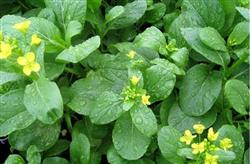
What are the benefits of using organic fertilizer in combination?
Organic fertilizer is an indispensable source of nutrients in vegetable production. It plays an important role in building soil fertility, supplying nutrients and improving the quality of vegetable products, and it is receiving increasing attention in pollution-free vegetable production. However, there are still some misconceptions in the application of organic fertilizer at present, so the author puts forward some application...
-
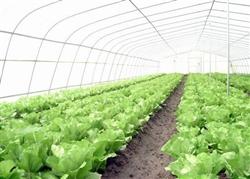
Why is it not advisable to apply too much organic fertilizer to vegetables?
Traditional agriculture holds that vegetable fields should be heavily fertilized with organic fertilizer, and some vegetable growers even believe that the more organic fertilizer, the better. However, according to the results of many experiments carried out in various places in recent years, appropriately increasing the application of organic fertilizer can effectively control the nitrate content of vegetables, while blindly increasing the application of organic fertilizer will cause the nitrate content of vegetables to exceed the standard. Vegetable nitrate...
-
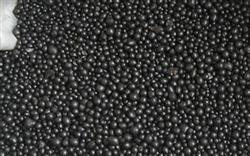
The application of organic fertilizer should be done in moderation; more is not always better
Biological organic compound fertilizers, which combine organic fertilizers with inorganic fertilizers and come with various microorganisms or high-energy compounds, have been launched on the market and are very popular among farmers, with fairly obvious effects. First, they can improve the physical and chemical properties of the soil, enhance water and fertilizer retention performance, and increase the ability to supply fertilizer continuously; second, they can significantly inhibit cotton, melon...
-
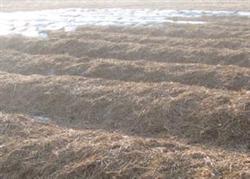
How to Make Organic Fertilizer from Rice Straw and Stalks
Not using chemical fertilizers and pesticides is one of the goals of modern organic agriculture. Through several years of practical experience, the author has found a method of making natural organic fertilizer from original ecological materials. Raw materials: 1500 kg of natural red soil. 150 kg of rice straw, stalks and garbage. Some human excrement and urine or pig, chicken and duck manure. Composting to obtain...
-
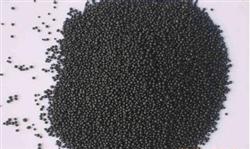
How to identify organic fertilizer? A few practical methods to teach you
1 Water soaking method Take a cup, soak an organic fertilizer sample in water, then use your hand to crush the organic fertilizer soaked in the water, stir it a bit and you can intuitively see the raw materials of the organic fertilizer; then let it sit for a while, if the organic fertilizer and water separate within a short time, it means the organic fertilizer has a high specific gravity and contains more soil. 2 Smell method Carefully...
-
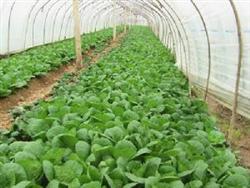
How to choose organic fertilizer correctly? Remember these key points
Fertilizer use should achieve simultaneous vegetable growing and soil fertility building. The ratio of animal manure to plant manure used should preferably be 1 to 1. For each vegetable, generally apply 45 to 60 grams of organic fertilizer per hectare as a base application, and 1500 kilograms of organic special fertilizer per hectare as a top dressing. Apply sufficient base fertilizer, using 80 percent of the total fertilizer amount as base fertilizer, combined with land preparation...
-
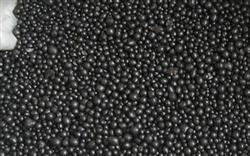
Do organic fertilizers need to be composted before application?
The composting of organic fertilizers occurs through the activity of microorganisms, causing two kinds of changes in the organic fertilizer. On one hand, the organic matter decomposes, increasing the available nutrients in the fertilizer; on the other hand, the organic matter in the fertilizer changes from hard to soft, its texture changes from uneven to uniform, and during composting most weed seeds, pathogens and insect eggs...
-
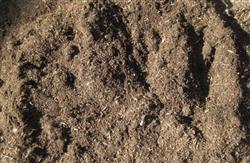
The hidden dangers of improper organic fertilizer application cannot be ignored
Compost is a widely used organic fertilizer in rural China, made by piling up various organic wastes such as straw, fallen leaves, wild grass, aquatic plants, green manure, peat, garbage, river mud, and human and livestock manure. It is divided into two types: ordinary compost and high-temperature compost. 1. Methods of making compost. 1. Ordinary compost:...
-
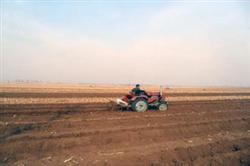
The Benefits of Deep Fertilizer Application and the Correct Application Methods
In recent years, production practice has proven that deep fertilizer application is a technical measure for improving fertilizer efficiency, reducing costs and increasing yields. I. Main forms of deep fertilizer application technology 1.1 Deep application of base fertilizer Use a fertilizing and soil-preparation machine, or add a fertilizer box and fertilizer-discharging device to a moldboard plow or paddy field tillage machine, so that while turning the soil it applies...
-
Rational fertilization is the key to improving the efficiency of fertilizer savings and use
During the growth of crops, one of the most commonly used measures by farmers to increase yields is to apply more fertilizer. As the farming proverb says: "A crop is like a flower; it all depends on fertilizer to thrive," and another saying goes: "Clever planting is not as good as effective fertilization." Both show that farmers attach great importance to applying fertilizer when growing crops. When choosing fertilizers, some...
条件筛选