-
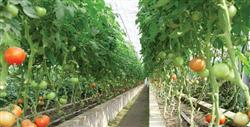
What are the key technical points for foliar spraying of micronutrient fertilizers on vegetables?
Micronutrient fertilizers are indispensable nutrient elements in the growth and development of vegetables. Diluting micronutrient fertilizers and applying them as foliar fertilizer costs little, takes effect quickly and gives high returns. The key technical points are: 1. Spraying concentration. Only a suitable concentration can achieve good results; in particular, the concentration must not be too high, otherwise it is not only useless but harmful....
-
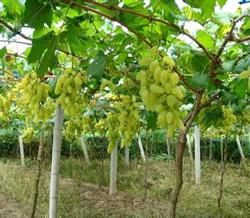
What is the correct method for foliar feeding of fruit trees?
1. Types, timing and amounts of spray fertilizer. Nitrogen fertilizer should generally be used in the early and late stages of fruit tree growth, appropriately combined with phosphorus and potassium fertilizers. An appropriate spray concentration can effectively promote new shoot growth, increase fruit yield, and benefit flower bud differentiation. The concentration for urea is 0.2%-0.3% in the early stage and 0.3%-0.5% in the late stage; decomposed...
-
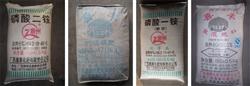
How to tell real phosphate fertilizer from fake? Here are a few practical methods
1. The role of phosphorus: the swelling element (the main nutrient for swelling of crop roots, stems, leaves and fruits), the energy of cell division. Deficiency symptoms: the most direct manifestation is uneven crop sizes in the field, especially obvious in orchards, and now most field crops also show this, with individual plants showing...
-
Over-application of phosphate fertilizer causes many harms, do you know these dangers?
1. Apply according to the soil. Soil conditions are closely related to the effectiveness of phosphate fertilizer. On soils with low organic matter and low available phosphorus content, applying phosphate fertilizer to the vast majority of crops can increase yields, therefore, phosphate fertilizer should be allocated mainly to soils with low organic matter content and phosphorus deficiency, so as to give full play to its fertilizer efficiency. Such as red soil dryland, yellow mud field, ...
-
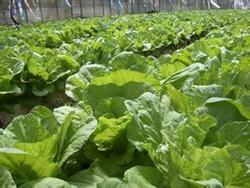
Scientific application methods and technical key points for potash fertilizer
Potassium is one of the three essential fertilizer elements. Many vegetables often require more potassium than nitrogen and phosphorus; well-grown vegetables contain potassium at 2.5%-7% of their dry matter, higher than their nitrogen and phosphorus content. Most vegetables absorb more potassium than nitrogen; for example, the nitrogen-to-potassium ratio absorbed by cucumber is 1:(1.5-1.7), by pumpkin is 1:2.1, and by tomato is 1:...
-
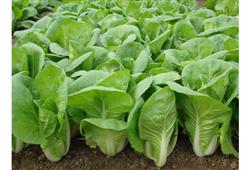
Application Methods of Potassium Fertilizer in Vegetable Cultivation
There are many types of potassium fertilizer, and different types have different application methods. Commonly used potassium fertilizers include potassium chloride, potassium sulfate, potassium-magnesium fertilizer and plant ash. Potassium chloride and potassium sulfate are physiologically acidic fertilizers and should be applied together with lime and organic fertilizer. For chlorine-sensitive crops such as potatoes, potassium chloride and potassium-magnesium fertilizer with high chlorine content should not be applied...
-
Low potassium fertilizer application rates lead to reduced crop yields
Foliar feeding is a fertilization method in which a diluted solution of chemical fertilizers or trace elements is sprayed onto the leaves and absorbed and utilized by the plant through the leaf stomata, so it is also called topdressing outside the roots. The advantages of topdressing outside the roots are: small dosage, rapid and significant fertilizer effect, the fertilizer is not fixed by the soil and is not affected by the absorption function of the root system...
-
How to choose the right potassium fertilizer variety? The key lies in these four points
There are many types of nitrogen-containing fertilizers, such as urea, ammonium sulfate, ammonium bicarbonate, ammonium chloride, ammonium nitrate, etc. The utilization rate of various nitrogen fertilizers differs, and their effects are also different. A new type of nitrogen fertilizer with a high utilization rate - urea ammonium - has entered farmland, greatly improving the nitrogen fertilizer utilization rate. Compared with urea, urea ammonium has the following advantages. First, ...
-
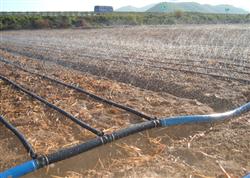
How should phosphorus fertilizer be selected to suit a drip irrigation system?
Phosphorus fertilizer used in drip irrigation systems must be water-soluble. Traditionally used phosphorus fertilizers, such as superphosphate, have monocalcium phosphate as their main water-soluble component, but they also contain other insoluble impurities, so they are not suitable for drip irrigation systems. Monoammonium phosphate, diammonium phosphate, monopotassium phosphate and phosphoric acid are all completely soluble and are very...
-
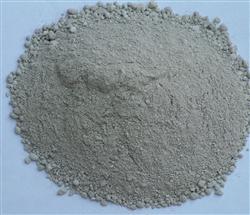
How to tell good phosphate fertilizer from bad? A few practical methods
August to October is the suitable sowing period for autumn crops in the south, such as rapeseed, broad beans, green manure, potatoes and various autumn vegetables, all of which are sown during this period. Experienced farmers know that autumn crops emphasize the application of phosphate fertilizer; this is based on the causal relationship between crops, soil and fertilizer, and is determined by phosphate fertilizer itself...
条件筛选