How to Make Organic Fertilizer from Rice Straw and Stalks
Not using chemical fertilizers and pesticides is one of the goals of modern organic agriculture. Through several years of practical experience, the author has found a method of making natural organic fertilizer from original ecological materials. Raw materials: 1500 kg of natural red soil. 150 kg of rice straw, stalks and garbage. Some human excrement and urine or pig, chicken and duck manure. Composting to obtain...
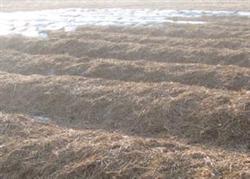
Not using chemical fertilizers and pesticides is one of the goals of modern organic agriculture. Through several years of practical experience, the author has found a method of making natural organic fertilizer from original ecological materials.
Raw materials: 1500 kg of natural red soil. 150 kg of rice straw, stalks and garbage. Some human excrement and urine or pig, chicken and duck manure.
For composting, take 1500 kg of natural red soil, crush it, and take 150 kg of rice straw or stalks of wheat, sorghum and corn (2343, -3.00, -0.13%), mountain grass or combustible garbage, at a ratio of 10:1, and burn the red soil brown with the grass or garbage. After burning, stir the red soil together with plant ash and move it indoors, sprinkling human excrement and urine or pig, chicken and duck manure while moving it, until it is moist, then stir evenly and pile it into a heap. After that, every two days sprinkle on two carrying poles' worth of human excrement and urine, turn it and pile it into a heap again. After 75 consecutive days, leave it for another 15 days and it is ready to use. After 90 days of composting and fermentation, once the microorganisms have decomposed it, the brown manure soil turns dark brown, with a nitrogen content of 5.6%, a phosphorus pentoxide content of 1.3%, and a potassium oxide content of 1.8%. The pH is 7.5, and it is fairly loose and basically has no odor. In this way, the organic fertilizer has been successfully composted and can be applied.
Analysis: why should red soil be used? The soil of the cultivated layer at the site is not dug up, first, to avoid damaging the cultivated land. Second, red soil is rich in acidity and does not contain disease-causing bacteria, insect eggs, etc., nor other substances insoluble in water. After burning, the red soil becomes a symbiotic carrier of nitrogen, phosphorus and potassium fertilizer. In addition, why should the burned red soil manure be moved indoors? Because temperature and humidity, etc. can be controlled artificially, which is conducive to the fermentation of natural organic fertilizer. During the fermentation and decomposition process, the organic fertilizer produces high heat (40°C~75°C), which can kill disease-causing bacteria, insect eggs, etc., and then slowly decomposes at a suitable temperature (40°C~50°C) into half-matured fertilizer. At the same time, during decomposition it can cultivate a large number of beneficial microorganisms, which is conducive to plant absorption.
In short, using the abundant natural resources of rural areas to produce natural organic fertilizer has the advantages of easy access to materials, simple operation, low cost, no pollution, and being conducive to restoring the original ecological balance of nature, so its development prospects are very broad.