-
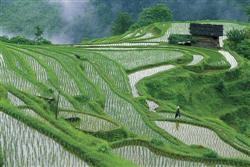
Why is it emphasized that paddy fields should be given more organic fertilizer?
When rice paddies are planted year after year, large amounts of the three major elements nitrogen, phosphorus and potassium, and a certain amount of calcium, magnesium, sulfur, iron and other elements, must continually be taken from the soil every year, and small amounts of trace elements such as chlorine, zinc, manganese, boron, copper and molybdenum must also be absorbed. In addition, the silicon absorbed by rice is about 10 times that of chlorine. A large amount of various nutrients...
-
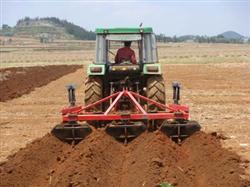
Organic fertilizer application requires careful attention; the same fertilizer can produce very different results
Frost's Descent (Shuangjiang) brings the breath of early winter. Frost's Descent falls in the transition period between autumn and winter; as it arrives, the weather fluctuates considerably, gradually turning colder and frost beginning to form. On the land north of the Yellow River, grass and tree leaves turn yellow and fall, and hibernating insects lower their heads in their burrows and enter a state of dormancy; while in the middle and lower reaches of the Yangtze River and beyond...
-
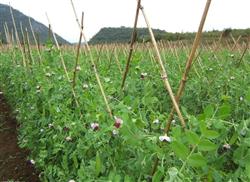
Applying organic fertilizer to vegetables has its rules; more is not always better
Traditional agriculture holds that vegetable fields should be given large amounts of organic fertilizer, and some even believe that the more organic fertilizer, the better. But according to the results of many trials in various places in recent years, appropriately increasing the application of organic fertilizer can effectively control excessive nitrate in vegetables, while blindly increasing organic fertilizer will cause excessive nitrate in vegetables. The nitrate contained in vegetables...
-
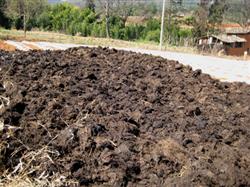
Apply organic fertilizer in moderation, and never apply it blindly in excess.
Composting with microbial agents, compared with traditional composting, has the characteristics of being convenient to ferment, saving labor and time, having low cost, and providing high fertilizer efficiency. The specific method is to use roadsides, field edges and abandoned pits and ponds, add water, urea and microbial agents to wheat and corn straw in a certain proportion, pile them layer by layer, then seal them tightly with soil or mud for decomposition...
-
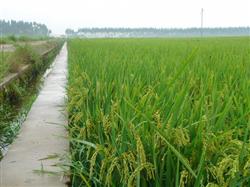
What are the precautions for spraying foliar fertilizer on rice?
Timing is generally most suitable at the late booting, initial heading, grain filling and full heading stages of early rice, and spraying one mu once takes more than an hour. If spraying fertilizer coincides with the heading and flowering stage, it should be sprayed in the morning before flowering and after 4 p.m. Processed liquid fertilizers such as various quick-acting nitrogen, phosphorus and potassium fertilizers, monopotassium phosphate, triacontanol, borax,...
-
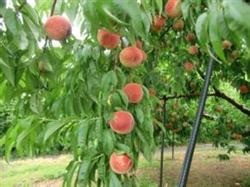
What is the correct method for spraying foliar fertilizer on fruit trees
Foliar feeding of fruit trees means mixing solid fertilizer into a water solution of suitable concentration and spraying it onto the leaves, so that it enters the tree through epidermal cells and stomata and takes effect. This method is simple and easy to carry out, uses little fertilizer, acts quickly, can meet the urgent nutrient needs of fruit trees, and helps correct nutrient deficiency symptoms. Scientific...
-
What are the common preparation methods for foliar fertilizers?
To produce pollution-free vegetables, in addition to selecting excellent varieties, practicing health-promoting cultivation, vigorously applying biological pesticides and rationally using chemical fertilizers, there are also many requirements for the soil conditions of the planting site and the fertilization methods. First, producing pollution-free vegetables requires pollution-free soil. As farmland for producing pollution-free vegetables, there must be good...
-
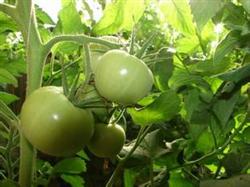
What to do about green-shouldered tomatoes? Increasing organic fertilizer can effectively prevent it
Green-shouldered fruit in tomatoes is a type of rib-blight fruit. There are many causes of green-shouldered tomatoes, and the most important among them is unbalanced fertilization, caused by high nitrogen and low potassium. Excessive application of nitrogen fertilizer with relatively insufficient potassium is the main cause of green-shouldered tomatoes. After tomatoes enter the peak fruiting stage, encountering adverse weather (low temperature...
-
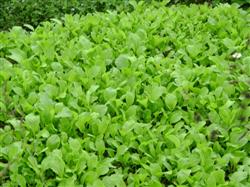
What is the principle of foliar fertilization? Explained clearly in one article
First look at the vegetable type: different vegetable types have different fertilizer requirements. For example, leafy vegetables prefer nitrogen, legumes prefer phosphorus and potassium, Chinese cabbage, cauliflower, radish and others are more sensitive to boron fertilizer, legumes and cruciferous plants are more sensitive to molybdenum fertilizer, short-term vegetables require less fertilizer, vegetables that continuously flower and fruit require more fertilizer, and root and tuber vegetables are sensitive to chloride, ...
-
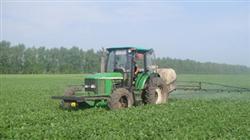
Correct Application Methods and Key Spraying Points for Foliar Fertilizers
1. Different foliar fertilizers have different application concentrations; higher is not always better. 2. Different crops and different growth stages respond differently to foliar fertilizers. 3. Different crops react differently to foliar fertilizers. 4. How well a foliar fertilizer dissolves and its dilution concentration greatly affect the spraying results...
条件筛选